
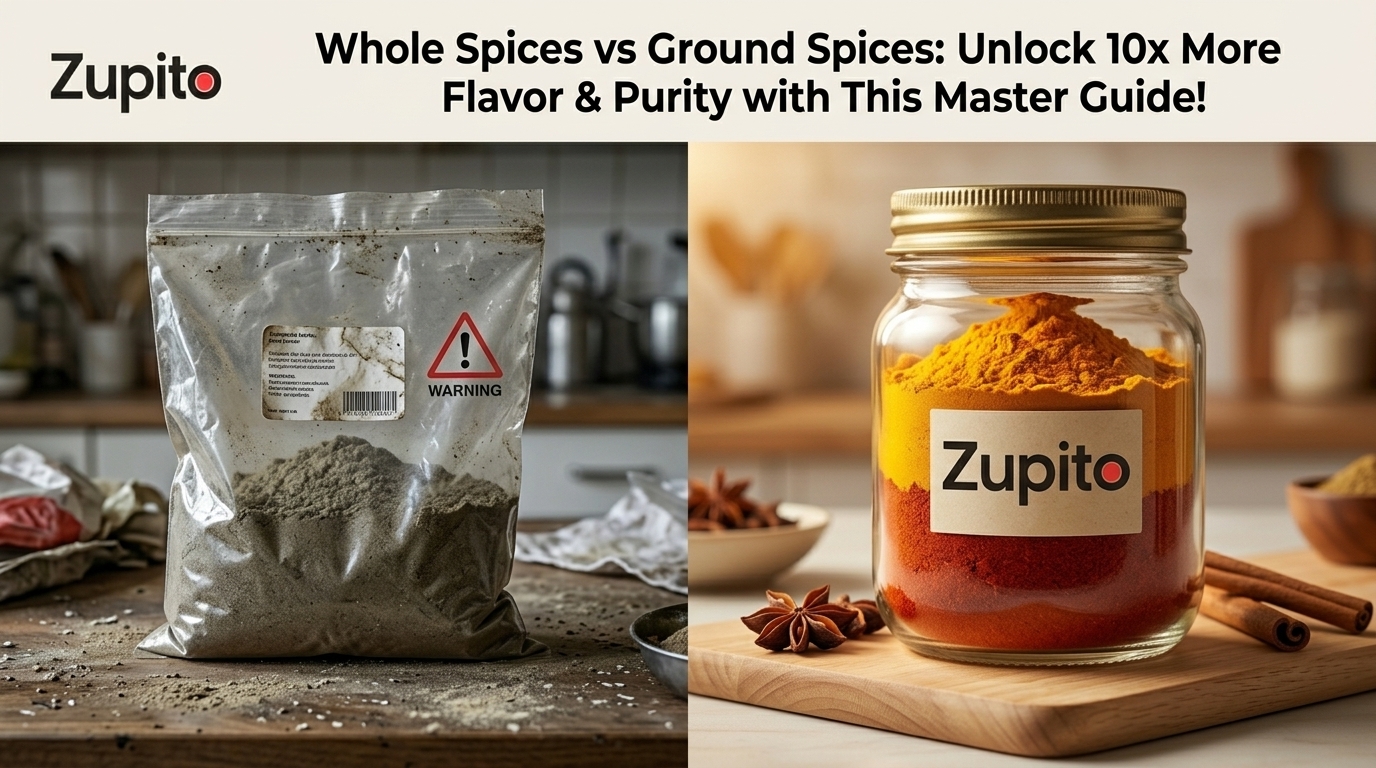
Walk into any modern supermarket, and you are hit with a wall of pre-ground spice packets. They look convenient, but have you ever wondered why your home-cooked curry never tastes as vibrant or aromatic as a restaurant dish? The intense battle between whole spices vs ground spices isn’t just about cooking convenience—it is about the actual life force and chemical integrity of your ingredients.
In this comprehensive spice buying guide, we will dive deep into the science of sabut masale vs pisa masala, analyze the chemical degradation of flavors, and reveal why your current pantry strategy is likely the reason for those “flat” flavors. If you are looking for fresh ground spices that retain their original health benefits, this is the only guide you will ever need.
Table of Contents
The Science of Volatile Oils: Why Freshness Matters
The biggest difference in the whole spices vs ground spices debate comes down to volatile oils—the aromatic compounds (like terpenes, phenols, and esters) that define the flavor, pungency, and therapeutic value of every seed.
The Vault of Nature: Whole Spices
Whole spices (sabut masale) act as nature’s time-capsules. According to research published in the Journal of Food Science, the hard outer casing of seeds like coriander, cumin, or black pepper acts as a biological vault. It protects these delicate oils from oxygen, light, and humidity for years. When you store whole spices, you are effectively locking in the flavor profile until the very moment you need it.
The Fragility of Pre-Ground Powder
Ground spices (pisa masala), by contrast, are extremely fragile. As soon as a spice is ground, its surface area increases exponentially. This exposes the internal volatile oils to oxygen, leading to rapid oxidation. Within just 4 to 6 weeks, a typical pre-ground supermarket packet loses over 50% to 70% of its aromatic potency. By the time it sits on your shelf, you are essentially cooking with “dead” dust.
| Feature | Whole Spices (Sabut Masale) | Ground Spices (Pisa Masala) |
| Shelf Life | 2-3 Years | 3-6 Months |
| Oil Retention | High (Internal) | Low (Exposed) |
| Adulteration Risk | Near Zero | High |
| Flavor Profile | Complex & Punchy | Flat & One-Dimensional |
Why Industrial Processing is the Enemy
Most corporate spice brands rely on high-speed, industrial steel-blade grinders. These machines operate at thousands of rotations per minute, generating massive kinetic friction.
The Heat Threshold (90°C Danger Zone)
When a machine grinds spices at high speed, the temperature inside the chamber can easily cross 90°C. At this temperature, the essential oils—the very things you are paying for—begin to evaporate instantly. You aren’t just buying “ground” spice; you are buying the residue left behind after the flavor has been boiled away.
Authority Note: To understand how this industrial heat destroys these essential nutrients during processing, take a look at our transparent breakdown on How Zupito Cold-Ground Spices are Processed.
The Hidden Reality: Adulteration in Pisa Masala
When you buy cheap, mass-market pisa masala, you are trusting a supply chain you cannot see. The sabut masale vs pisa masala debate is heavily tilted toward “sabut” because it is nearly impossible to fake the appearance of a whole seed.
Mass-market powders often violate safety standards set by the Food Safety and Standards Authority of India (FSSAI).
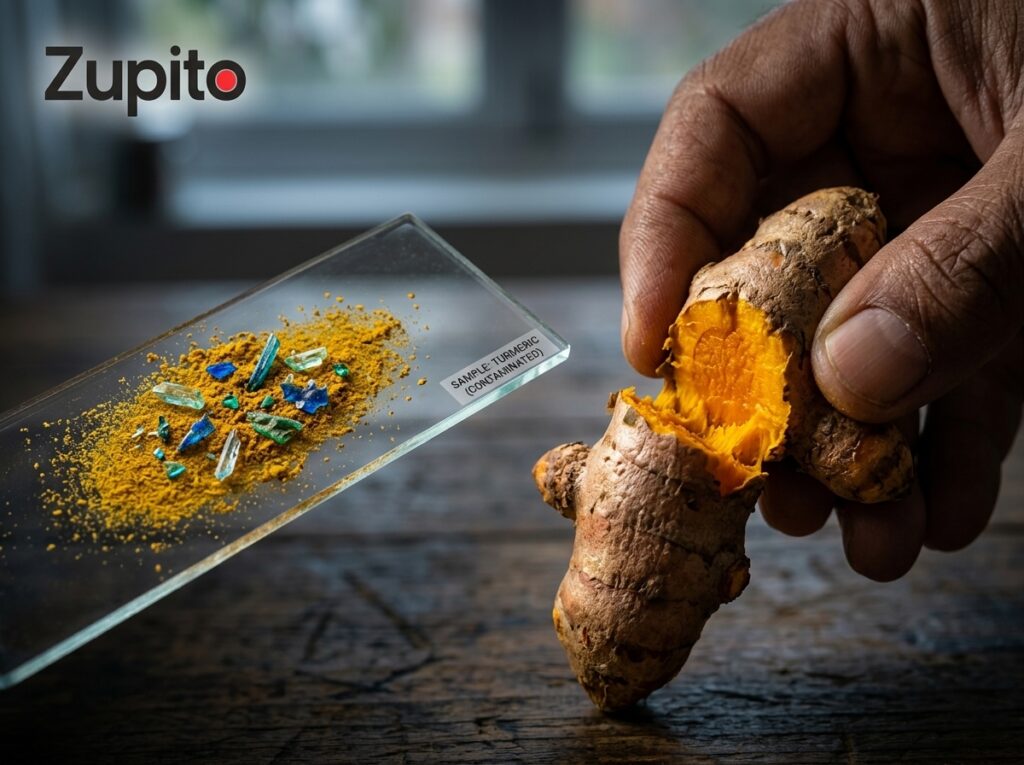
Common Adulterants in Ground Packets:
- Sawdust and Rice Husk: Used to increase bulk weight without cost.
- Artificial Colors: Lead chromate or synthetic dyes used to mimic the vibrant yellow of turmeric or red of chilli.
- Starch Fillers: Corn starch or chalk powder added to increase volume.
By choosing whole spices, you verify the purity yourself. Always check if your brand complies with the Spice Board of India quality guidelines. If you are struggling to identify pure brands, our Best Masala Brand in India: 2026 Comparison Guide breaks down the exact quality standards you should demand.
The 2026 Spice Buying Guide: Pro-Kitchen Strategy
To elevate your cooking to a professional level, you need a disciplined pantry strategy. Here is your roadmap:
- Source Wisely: Always prioritize whole spices. If you must buy powder for convenience, ensure it is labeled Cold-Ground.
- Strategic Storage: Light, heat, and moisture are the enemies of fresh ground spices. Keep your spices in airtight, opaque glass jars.
- The “Toast & Grind” Technique: Even if you use powder, lightly toasting the whole spices in a dry pan for 30 seconds before adding them to your tadka “wakes up” the remaining essential oils.
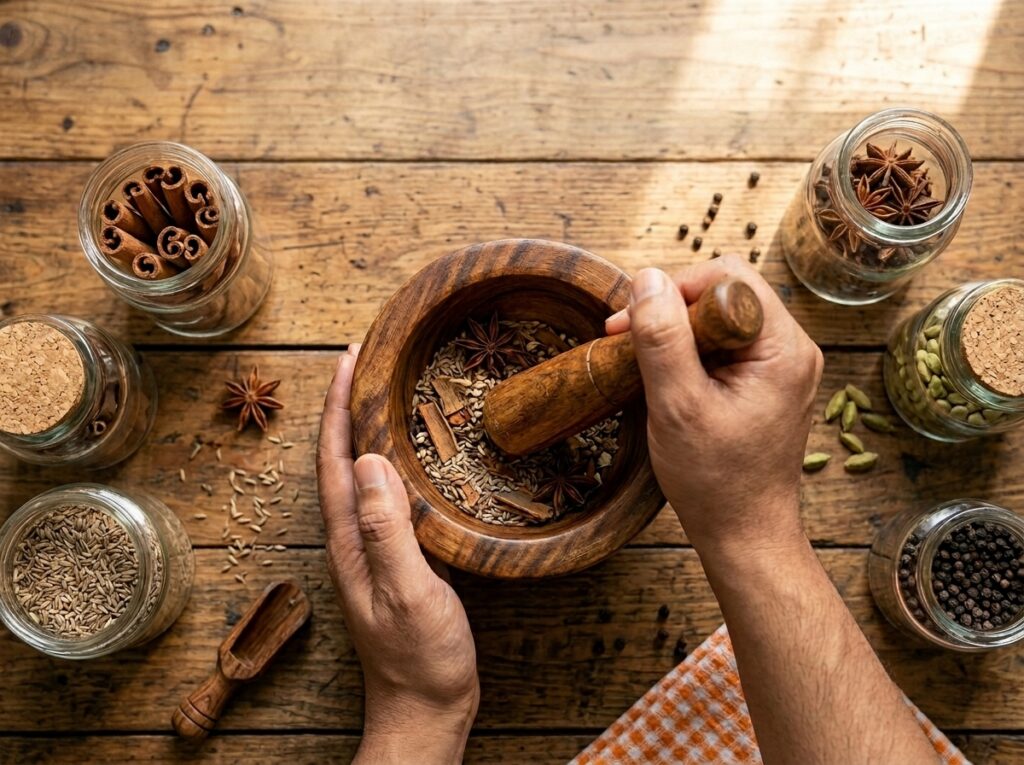
Check out our Coriander Powder for Weight Loss Guide to see how the integrity of your ground spices directly impacts metabolic benefits.
Why Zupito Cold-Ground Technology is a Game Changer
We understand that grinding spices daily isn’t feasible for everyone in 2026. That is why Zupito bridges the gap. Our Cold-Ground Technology grinds spices at controlled, low temperatures. This preserves the integrity of fresh ground spices, giving you the convenience of pisa masala with the aromatic strength of whole spices.
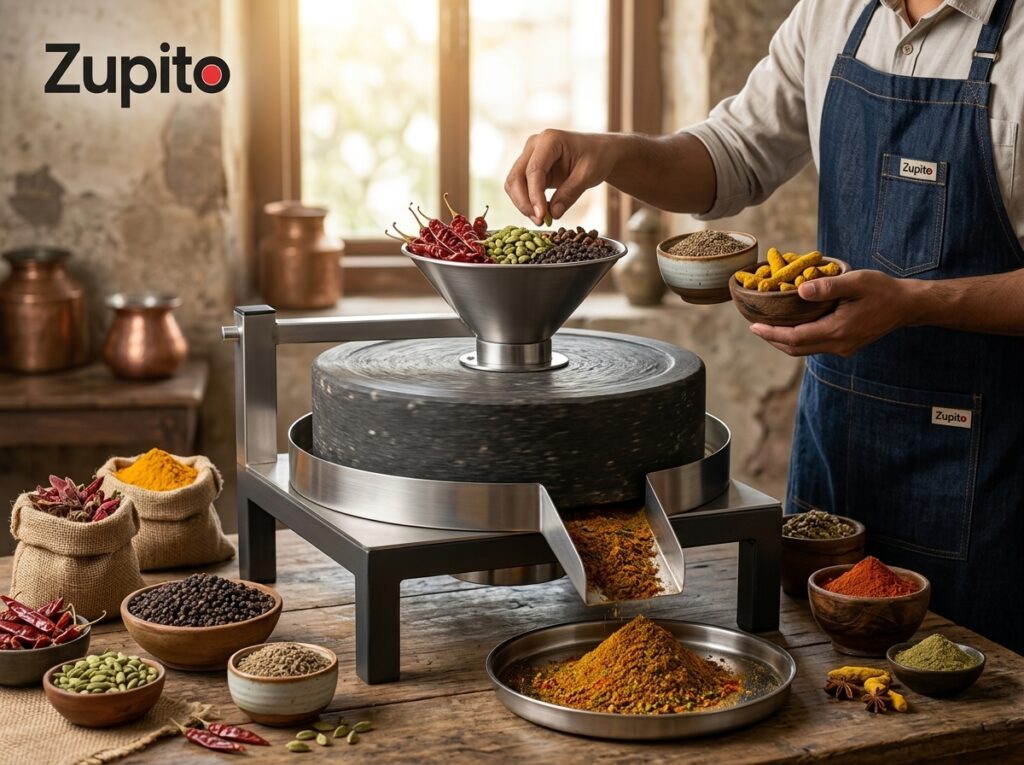
👉 Shop our Zupito Pure Spice Combos here to experience true purity. Don’t forget to try our premium Zupito Mathania Red Chilli Powder—a game changer for any curry!
Advanced Kitchen Application: When to use what?
- Use Whole Spices (Sabut Masale) for: Tadka (tempering), long-simmering curries, soups, and stocks.
- Use Fresh Ground Spices for: Finishing dishes, dry masalas, spice rubs, and quick-cooking gravies.
Frequently Asked Questions (FAQs)
Q1. Which lasts longer: whole spices vs ground spices?
Whole spices can retain their peak potency for 2–3 years if kept in a cool, dark place. Ground spices generally lose their peak flavor within 3–6 months.
Q2. Is sabut masale vs pisa masala just about taste?
No, it is primarily about purity and health. Pisa masala is easily adulterated with cheap fillers, whereas whole spices allow you to verify the quality of the raw ingredient yourself.
Q3. How do I get the benefits of fresh ground spices without a daily grinder?
Look for “Cold-Ground” or “Stone-Ground” spice brands like Zupito. These processes minimize friction heat, preserving the volatile oils that make spices potent.
Q4. What is the best spice buying guide tip for a beginner?
Always buy small quantities, store them in airtight glass jars, and prioritize brands that provide a transparent, cold-ground processing method.
Q5. Can I mix whole spices vs ground spices in one dish?
Absolutely. Using whole spices for the initial tadka (tempering) and a high-quality cold-ground powder for the gravy base creates a complex, professional-level flavor profile.
Leave a Reply