
Walked into the kitchen, turned your back for a second, and accidentally turned a simple meal into a volcano? We’ve all been there. Getting a curry too spicy is every home cook’s nightmare, but it doesn’t mean your meal is ruined. Learning how to reduce spiciness in curry is a vital skill that separates a novice from a pro.
In this guide, we dive deep into the culinary science of heat. Whether you are dealing with an over-enthusiastic hand with the chili or a batch of unexpectedly hot powder, we will show you how to balance spices in food like a professional chef.
Table of Contents
The Culinary Science: Why You Need to Reduce Spiciness in Curry
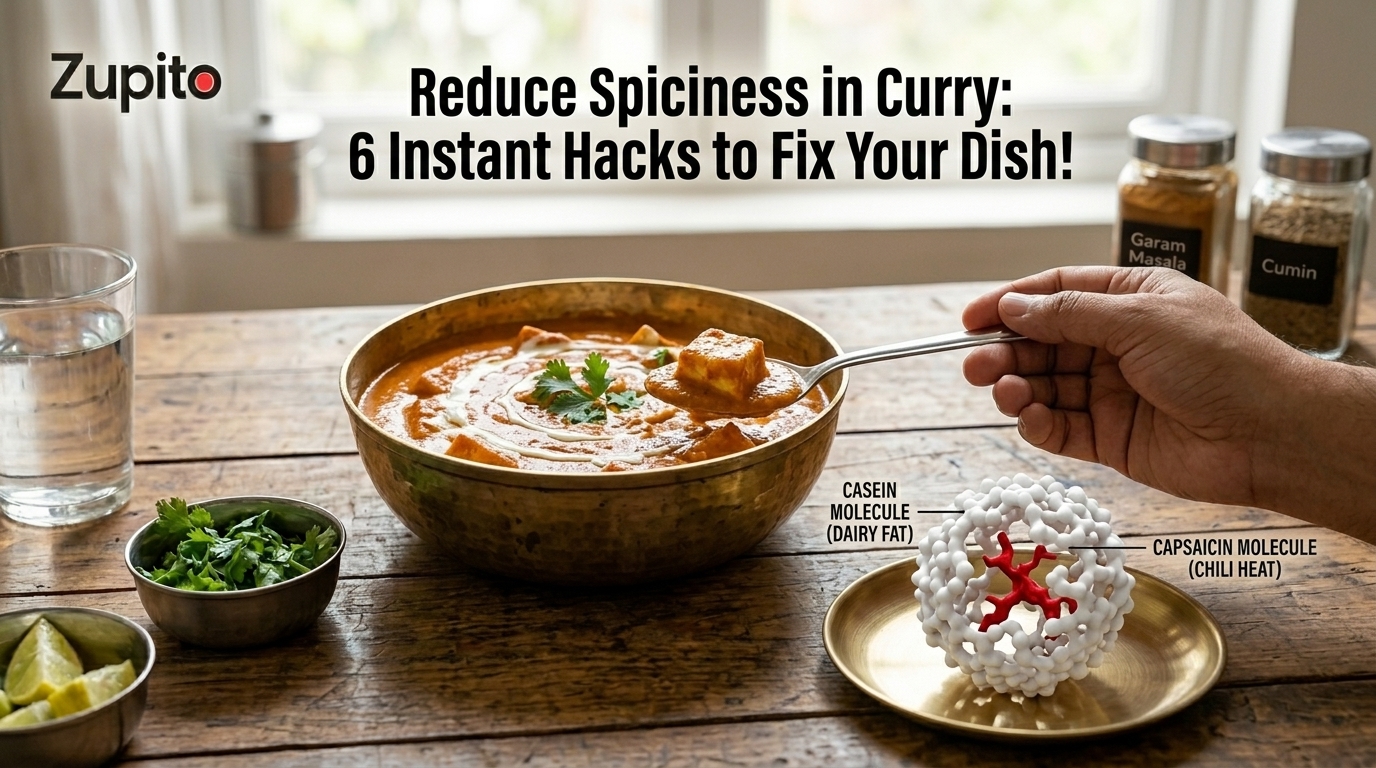
To perform a perfect curry too spicy fix, we must first understand the chemistry behind the burn. The intense “heat” or burning sensation in your dish comes from an organic chemical compound called capsaicin. This is an oil-based alkaloid found inside the white pith and seeds of chili peppers.
Because capsaicin is entirely oil-based, it does not dissolve in water. This explains why chugging water or rinsing your mouth never works—water simply pushes the hot oil around your tongue, spreading the fire and irritating more taste receptors. To effectively perform mirch kam karna (reducing heat), you need ingredients that can either physically bind to the capsaicin molecules or completely mask them.
Think of your cooking pot as a delicate chemical balance. When you accidentally throw off that balance with too many chilies, you have to introduce counter-agents. When you master these specific neutralizing techniques, you learn to balance spices in food dynamically, turning a kitchen disaster into a culinary masterpiece. If you know how the oils bind, it becomes incredibly straightforward to reduce spiciness in curry without diluting the base.
The Dairy Intervention: A Cooling Shield
When your dish hits the “too hot” threshold, dairy is your absolute first line of defense. This is why rich vegetarian delicacies—from Shahi Paneer to rich creamy dals—frequently pair robust ground chilis with sour cream, butter, or yogurt.
Why Dairy Works and How to Apply It
The proteins in dairy products, specifically a protein called casein, act exactly like a chemical detergent on capsaicin. Casein molecules are lipophilic, meaning they bond with the oil-based capsaicin, break it down, and safely pull it away from your taste buds, providing an instant cooling effect. If you are struggling with how to reduce spiciness in curry, a dairy-based fix is the fastest and most reliable solution available.
- Step-by-Step Execution: Turn your stove’s flame to the absolute lowest setting. Stir in 2 to 3 tablespoons of full-fat whisked yogurt, heavy fresh cream, or sour cream. Let it simmer gently for two minutes to integrate into the gravy. This is the ultimate method to reduce spiciness in curry instantly.
- Pro-Chef Tip: Never drop cold dairy straight into a boiling pot, or the milk solids will split and curdle. Always temper your yogurt or cream by mixing a ladleful of the hot curry gravy into it first within a small bowl before slowly pouring the combined mixture back into the main pot. This ensures a velvety smooth finish while you work to reduce spiciness in curry.
Note for Plant-Based Diets: If you are cooking a vegan recipe, heavy coconut milk or coconut cream is your best substitute. Coconut fats are highly effective at coating the palate and masking capsaicin burn while giving the gravy a luxurious, rich texture, helping you reduce spiciness in curry without using dairy products.
The Starch Sponge: Neutralizing Excess Heat
If your dish is a liquid-based gravy, soup, or dal, utilizing dilution through absorbent starches is your strongest strategy to salvage the meal.

The Power of Absorbents
Starchy ingredients function like culinary sponges within a sauce. By introducing neutral mass into the recipe, you are physically lowering the concentration of capsaicin per individual spoonful, making the dish immediately more palatable. It is a fantastic workflow when you need to reduce spiciness in curry but want to avoid modifying the core dairy profile.
- The Raw Potato Hack: Peel a medium-sized raw potato and cut it into thick slices or chunks. Drop these raw chunks directly into your simmering gravy. Let the potatoes cook in the curry for 15 to 20 minutes. As the potato cooks, its cellular structure absorbs the excess chili oils along with a portion of the salt. Once the potato softens, remove the pieces before serving, or mash a small piece into the sauce to act as a natural thickener.
- Add Grains: If you are dealing with a dry stir-fry or a semi-dry dish (like Aloo Gobhi or Bhindi Masala) where a potato won’t work, adding cooked neutral grains like plain white rice, or extra unseasoned sautéed vegetables (like boiled carrots, sweet corn, or bell peppers) can effectively mute the heat. This is a common, time-tested method for mirch kam karna used in households across India to expand the dish’s volume while dampening raw heat, enabling cooks to reduce spiciness in curry naturally.
Sweetness: The Subtle Counter-Balance
Sweetness is the natural flavor enemy of pure spice. Introducing a sweet element to a fiery dish doesn’t mean you have to turn a savory dinner into a sugary dessert; rather, it is about using small profiles to “dull” the harsh edge of the chili.
The Balancing Act
Sweet components don’t chemically destroy capsaicin, but they change how your brain perceives it. Sweetness stimulates a completely different set of taste receptors on your tongue, which actively blocks or distracts your nervous system from sending immediate “pain and heat” signals to the brain.
- How to Implement: Add a very small teaspoon of refined sugar, organic honey, maple syrup, or traditional Indian jaggery (gud) into the pot. Stir thoroughly and let the mixture simmer for 3–4 minutes so the sugars melt and blend seamlessly into the savory flavors.
- Professional Insight: In professional Indian kitchens, long-sautéed, caramelized onion paste is used as a foundational base. The natural sugars released from slow-cooked onions act as a built-in defense mechanism that helps balance spices in food naturally. If your current gravy feels too sharp, you can use these natural sweeteners to reduce spiciness in curry while adding a splash of tomato ketchup or a dash of sweet tomato puree to achieve the same grounding effect.
The Acid Wash: Brightening the Flavor
Sometimes, a dish isn’t just spicy; it’s an aggressively blinding, flat heat. When this occurs, adding an acidic component can distract your taste buds and create a complex, vibrant flavor profile that naturally masks the heat.
Cutting Through the Oil
Acid acts as a sharp contrast to heavy oil. Since capsaicin is an oil-based alkaloid, high acidity helps cut through the heavy texture of the fat, refreshing the palate and making the dish taste lighter and more balanced.
- Top Choices for Acids: A generous squeeze of fresh lime juice, a teaspoon of apple cider vinegar, white vinegar, or a pinch of amchur (dry mango powder).
- The Practical Result: This technique adds a bright “top note” to your cooking, effectively balancing the heavy, deep heat of the chili. This is an incredibly effective trick when you need to reduce spiciness in curry quickly without altering the original thickness or color of your gravy.
Increasing Volume: The Master Chef’s Secret
If you have extra time and spare raw ingredients in your pantry, the absolute best, foolproof curry too spicy fix is simply increasing the overall volume of the dish through dilution.
The Multiplication Strategy
When you double the safe components of a recipe without adding any more chili, you mathematically cut the spice concentration per serving in half.
- The Strategy: Set a separate frying pan on the stove. Sauté a fresh, unseasoned batch of finely chopped onions, ginger, garlic, and tomato puree. Cook this mixture down completely until the oil separates, but do not add any red chili powder or garam masala. Once this base is thoroughly cooked, blend it directly into your overly spicy batch.
- Why Professionals Prefer It: This approach allows you to achieve proper mirch kam karna in large batches without compromising the foundational flavor profile of the dish. It ensures that the texture remains thick, aromatic, and rich rather than becoming watery or overly sweet. It is by far the most organic strategy to reduce spiciness in curry when hosting guests.
Fat Incorporation: The Final Savior
If the dish you are cooking features a thick, nutty, or complex base (such as a royal Shahi Paneer, Paneer Makhani, Veg Korma, or Malai Kofta), adding healthy fats is your ultimate weapon.
- The Execution: Stir in a generous spoonful of smooth cashew paste, almond butter, heavy ghee, or unsalted butter directly into the curry base.
- The Underlying Science: Just like dairy, pure fats dissolve capsaicin molecules rapidly. This is a classic secret pro-chefs use to balance spices in food smoothly without changing the underlying texture or body of the gravy. It wraps the chili molecules in a layer of smooth fat, preventing them from making direct contact with your tongue’s heat receptors. It functions elegantly when your primary goal is to reduce spiciness in curry while elevating the luxury profile of the gravy.
Troubleshooting: Common Mistakes to Avoid
Even when trying their best to balance spices in food, many home cooks fall into bad habits that can ruin the consistency of their dish.
- The Dangerous Water Trap: Never dump plain water or vegetable stock into a pot to reduce spiciness in curry. Water does not dilute capsaicin; it dilutes the overall salt, structure, and depth of the gravy, leaving you with a watery, bland, yet still incredibly spicy mess. Always introduce density through fats, starches, or vegetable purées instead.
- Overheating Your Dairy: As mentioned, boiling yogurt or cream causes separation. If the dairy splits, your curry will look grainy and unappetizing. Keep the heat low or turn off the stove completely before mixing it in to safely reduce spiciness in curry.
- Neglecting the Total Salt Balance: When you add starches, sugars, or dairy to fix the spice, you will also inadvertently dull the salt level of the dish. Once your spice fix has simmered for a few minutes, always taste the gravy again and adjust the salt incrementally to ensure the overall flavor pop remains intact.
Why Quality Matters: The Zupito Difference
Often, the frustrating need to perform heavy mirch kam karna arises from using unpredictable, inconsistent, mass-market spice powders. Many commercially available spices undergo harsh, high-heat industrial grinding processes. This high friction burns away the volatile natural oils that contain the true aroma and flavor of the spice, leaving behind nothing but a flat, harsh, burning heat that easily overpowers a dish.
When purchasing kitchen staples, safety and purity should always be your top priorities. Ensure your spices comply strictly with FSSAI safety standards, and always look for transparency in manufacturing and sourcing, as actively recommended by the Spice Board of India.
At Zupito, our specialized Cold-Ground Technology preserves the essential oils and natural heat profiles of the raw ingredients.
To help you skip the frantic struggle to reduce spiciness in curry, we have curated premium, predictable spice bundles:
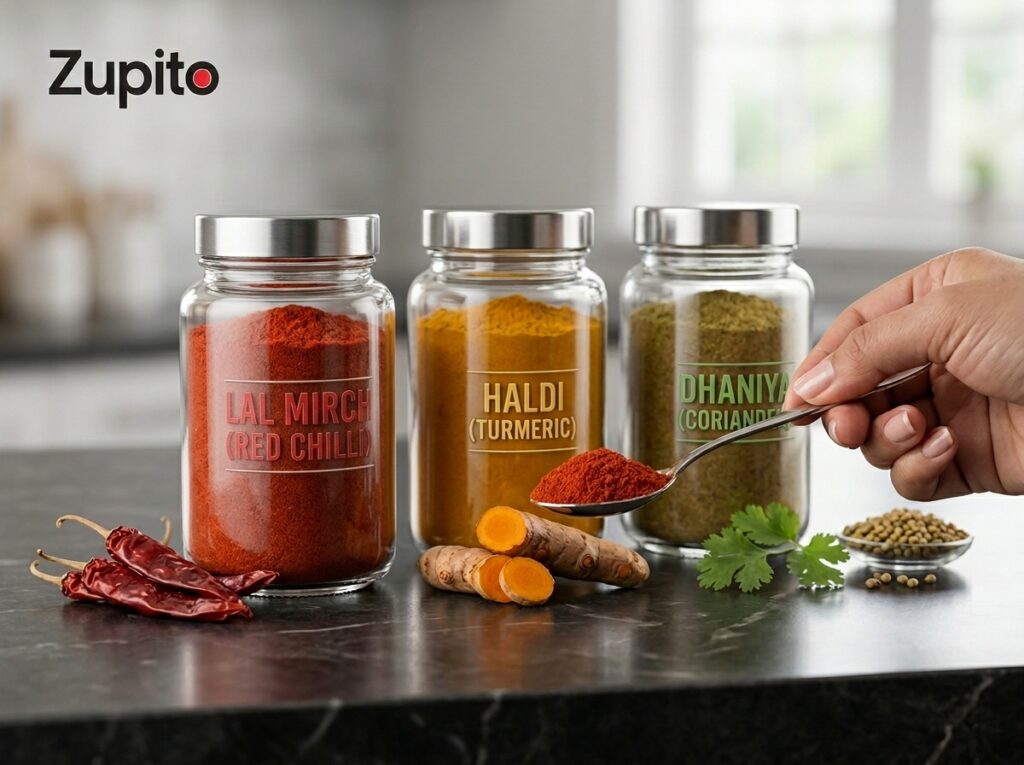
- Zupito Essential Everyday Combo: This pack brings together our high-aroma Dhaniya Powder, bright golden Haldi Powder, and mild Kashmiri Red Chilli Powder. It acts as the balanced bedrock for daily dals and subzis so you never overshoot your heat benchmarks.
- Zupito Royal Mathania Blend Combo: For lovers of traditional Rajasthani and Northwest frontier cooking, our signature cold-ground Mathania Red Chilli Powder combo packs offer vibrant native deep-red colors with a highly distinct, smooth, non-aggressive warmth.
- Read More Blogs: Learn the critical differences between cold-processed and factory-ground options in our detailed Whole Spices vs Ground Spices Guide or master flavor management via our Indian Spice Pairing Masterclass.
Advanced Kitchen Strategies: Thinking Like a Chef
To avoid needing an emergency curry too spicy fix in the future, try adopting these advanced professional seasoning habits:
The Golden Rule of Heat Layering
Professional chefs never dump their entire spice measurement into a dish at the very beginning. They layer the heat sequentially. Add a small amount during the initial oil tempering stage, monitor how it blooms, and adjust with minor pinches toward the middle of the cooking process. You can always add more spice to a dish, but pulling it out requires a lot of extra effort.
The Importance of Blooming Spices Right
When spices are sautéed gently in warm fat or ghee, it is called blooming. This activates the hydrophobic aromatic compounds inside the powder. If your cooking oil is smoking hot when you add your spices, you will flash-burn the delicate powders, creating a bitter, aggressively sharp heat. Keep your oil medium-warm to unlock smooth, balanced flavors.
Frequently Asked Questions
How to reduce spiciness in curry without adding dairy?
You can smoothly use full-fat coconut milk, cashew nut paste, unseasoned tomato purée, or a fine paste of boiled onions to dilute and mellow out the chili burn effectively.
Is it possible to use the “Raw Potato” trick for dry stir-fry dishes?
No, the potato trick works optimally for liquid-based gravies, curries, and dals. For dry vegetable stir-fries, adding neutral bulk like blanched carrots, bell peppers, or extra cooked grains is far more effective to reduce spiciness in curry applications.
Does adding water help in mirch kam karna?
Adding water is a mistake. Capsaicin is hydrophobic and does not mix with water. Water will only dilute the savory flavor notes and leave the hot oils floating on top of a thin, runny sauce.
Are there official FSSAI guidelines for checking spice heat levels?
While FSSAI establishes protocols for purity, adulteration checks, and basic consumption safety, specific flavor grading and heat testing are managed under the quality systems of the Spice Board of India.
Final Pro-Chef Summary
To successfully balance spices in food, you must treat your kitchen like an experiential flavor lab.
- Taste early and often: Always taste your base gravy before adding your final measures of salt and heavy finishing spices.
- Layer your heat profile: Add ground chilis in slow, small increments across the cooking timeline to avoid having to reduce spiciness in curry at the final table line.
- Keep your staples ready: Always keep full-fat yogurt, raw potatoes, and fresh lemons stocked in your pantry for immediate heat management.
Shop our Zupito Premium Spices and experience consistent, premium, chef-grade flavors every single time you cook.
Leave a Reply