

The arrival of the rainy season brings refreshing cool breezes, cozy weather, and instant cravings for hot tea and crispy evening snacks. However, for any Indian kitchen, it also introduces a persistent seasonal challenge: high atmospheric humidity that threatens your spice pantry. Applying dedicated monsoon spice care becomes essential to safeguard your daily cooking from hidden moisture damage.
During the humid months of Shravan and the broader rainy season, relative humidity levels surge dramatically. Damp air sneaks into tightly packed kitchen cabinets and spice containers every time a jar is opened. Without proper attention, kitchen staples suffer from clumping, loss of natural aroma, color degradation, and dangerous fungal growth.
While many households attempt quick fixes like adding dry rice grains to spice jars, these temporary tricks fail to address the root problem. High-heat commercial grinding strips away native botanical protection before the spice even reaches your shelf. To achieve true pantry longevity, understanding the mechanics of moisture defense and selecting resilient, unadulterated cold-milled spices is critical to prevent mold in spices.
According to health guidelines published by the World Health Organization (WHO), consuming food affected by invisible mold or fungal spores can trigger digestive discomfort, respiratory irritation, and systemic health risks. Ensuring clean, unadulterated ingredients during wet seasons is vital for family wellness.
By upgrading your pantry storage habits and choosing cold-ground botanicals that lock in natural essential oils, you can keep your kitchen completely safe throughout the rainy season. Sourcing unpolished pure haldi powder and high-grade coriander powder ensures your daily dishes retain their full flavor, vibrant color, and active health benefits. Following a structured lifestyle routine guarantees long-lasting kitchen freshness.
Table of Contents
The Science of Spoilage: Why Spices Degrade in Humid Weather
To implement effective monsoon spice care, we must first understand why ground masalas are particularly vulnerable to atmospheric moisture compared to whole spices.
When spices are milled into fine powders, their surface area increases exponentially. This massive surface area acts like a sponge, drawing moisture directly from humid room air. Without consistent storage discipline, atmospheric humidity enters a jar and three distinct stages of spice degradation begin:
1. Moisture Absorption & Clumping
Finely ground particles absorb water vapor rapidly. As moisture binds the particles together, smooth powders turn into hard, sticky lumps, making accurate cooking measurements nearly impossible.
2. Volatile Essential Oil Evaporation
Natural essential oils—such as curcumin in turmeric, linalool in coriander, and capsaicin in red chilli—give spices their characteristic aroma, taste, and antimicrobial power. Excessive humidity destabilizes these volatile compounds, making structured preservation vital to retain their original flavor.
3. Fungal Growth & Mycotoxin Risks
Microscopic mold spores thrive in warm, damp environments. When moisture content inside a spice jar exceeds safe levels, fungi can multiply. Knowing how to prevent mold in spices eliminates visible fungal patches, stale odors, and potentially harmful mycotoxins that contaminate your meals.
Because mass-market processing burns off protective natural oils during factory production, choosing unadulterated brands allows you to experience authentic cold ground spices benefits that naturally resist moisture penetration.
Atmospheric Physics and Botanical Vulnerability in High Moisture
The molecular dynamics of ground spices change rapidly when relative humidity crosses the critical threshold of 60%. Fine particles exhibit hygroscopic behavior, meaning they actively attract and hold water molecules from the surrounding environment.
In whole seeds like cumin or black pepper, a thick outer cellulose husk provides structural protection against moisture intrusion. However, once those seeds are pulverized, the protective cell walls break down. The delicate essential oils inside become directly exposed to ambient air oxygen and water vapor.
When unsealed ground spices absorb water, hydrolytic rancidity begins. This biochemical reaction degrades natural fat-soluble compounds, turning sweet, aromatic profiles into bitter, stale flavors within days. Practicing disciplined monsoon spice care prevents these chemical breakdowns before they spoil your entire pantry supply.
Cold-Ground Processing: Your Pantry’s Natural Shield
Not all spices behave identically when exposed to rainy weather. The underlying processing method plays a massive role in how well a spice withstands humidity.
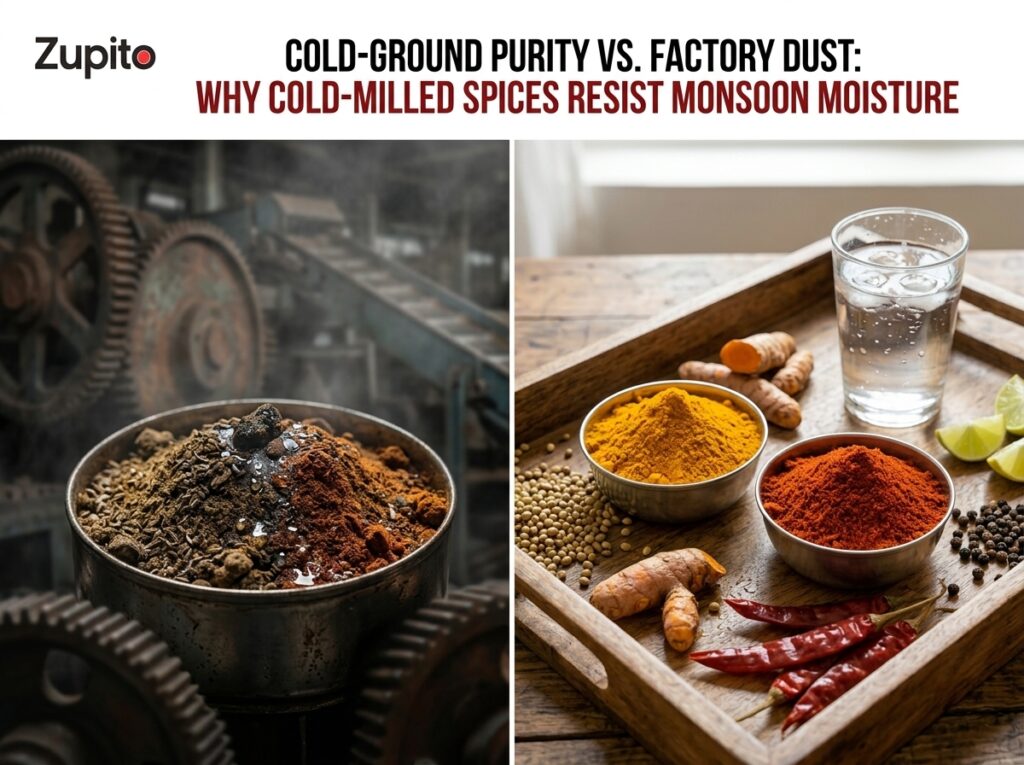
Standard industrial spice production relies on high-speed commercial hammer mills. These machines spin at extreme revolutions, generating intense friction heat upwards of 80°C to 90°C. This harsh thermal environment scorches delicate essential oils, leaving behind dry, vulnerable plant dust that absorbs humidity almost instantly.
In contrast, low-temperature cold grinding processes spices slowly below 30°C. Unlocking genuine cold ground spices benefits provides clear advantages during humid weather:
- Intact Essential Oil Barrier: Natural hydrophobic essential oils remain fully sealed within the spice particles, creating an internal barrier against air moisture as part of your overall pantry defense.
- Uncompromised Bio-Active Protection: Preserved curcumin, capsaicin, and linalool act as natural bio-preservatives, helping to prevent mold in spices and inhibiting bacterial growth inside the jar.
- Rich Color & Authentic Aroma: Because no thermal degradation occurs during milling, cold-ground masalas retain their natural deep colors and potent scents, maximizing the quality of your cooking.
Regulatory frameworks enforced by the Food Safety and Standards Authority of India (FSSAI) emphasize the importance of raw purity and strict moisture limits to ensure spices remain safe for everyday household consumption during rainy weather.
Comparative Analysis: Industrial Factory Powders vs. Cold-Ground Spices
Understanding processing differences helps health-conscious kitchens select ingredients that naturally endure seasonal humidity and support proper monsoon spice care:
| Quality Factor | Mass Corporate Factory Dust | Zupito Cold-Ground Standard |
|---|---|---|
| Essential Oil Content | Burned off by extreme friction heat (80°C+), leaving zero natural moisture protection. | 100% intact native oils that act as a natural hydrophobic barrier against dampness. |
| Humidity Resistance | Absorbs moisture rapidly, leading to heavy clumping and quick flavor degradation. | Naturally resists humidity absorption, delivering full cold ground spices benefits. |
| Fungal & Mold Safety | Higher risk of mold proliferation once exposed to humid room air. | Retains active botanical antimicrobials that help prevent mold in spices naturally. |
| Aroma & Taste Stability | Fades quickly within weeks; undermines your daily culinary results. | Delivers rich, potent aroma and taste with smaller cooking portions all season long. |
7 Essential Rules for Rainy Season Spice Storage
Along with choosing high-grade cold-milled spices, adopting disciplined rainy season kitchen tips ensures complete moisture protection throughout the season. Follow these seven essential rules to prevent mold in spices:
- Airtight Glass Jars: Transfer spices out of plastic pouches into non-reactive glass jars. Glass completely blocks external air moisture and forms the core foundation of long-term pantry storage.
- Zero Wet Utensil Contact: Never insert a damp spoon or wet fingers into spice jars. Microscopic moisture drops trigger rapid mold growth within 48 hours.
- Avoid Direct Cooking Steam: Never hold spice jars directly over boiling or steaming pots. Steam enters the open container and saturates the powder immediately.
- Dark Cool Cabinet Storage: Essential rainy season kitchen tips suggest storing spice jars inside closed wooden cabinets away from stove heat to help protect sensitive volatile oils.
- Small Batch Purchases: Avoid bulk stocking during peak rainy months. When you choose to buy pure haldi powder online in small, fresh batches, you guarantee high essential oil density.
- Use Silica Gel Packs (Outside Jars): Keep silica gel pouches inside your larger spice cabinet (not inside the spice jar) as part of your proactive monsoon spice care routine.
- Roast Whole Spices Before Storing: If storing whole seeds like Jeera or Coriander, dry roast them lightly on low heat to eliminate hidden surface moisture before storing.
Gut Health and Microbial Risk Management During Heavy Rains
The significance of maintaining clean, mold-free spices extends far beyond culinary taste; it is directly connected to gastrointestinal health. During the monsoon, human digestive capacity naturally slows down, leaving the gut microbiome more susceptible to infections.
When spices gather moisture and harbor microscopic fungi, consuming them introduces mycotoxins into the stomach. These toxic compounds can irritate the intestinal lining, leading to severe bloating, indigestion, or foodborne stomach upsets.
Using pure, cold-ground spices with high natural curcumin and capsaicin content provides an internal defense against harmful microbes. Curcumin acts as a natural anti-inflammatory agent, while capsaicin stimulates digestive enzymes to ensure smooth gut motility even during humid weather.
Actionable Inspection Protocol: How to Test Your Spices at Home
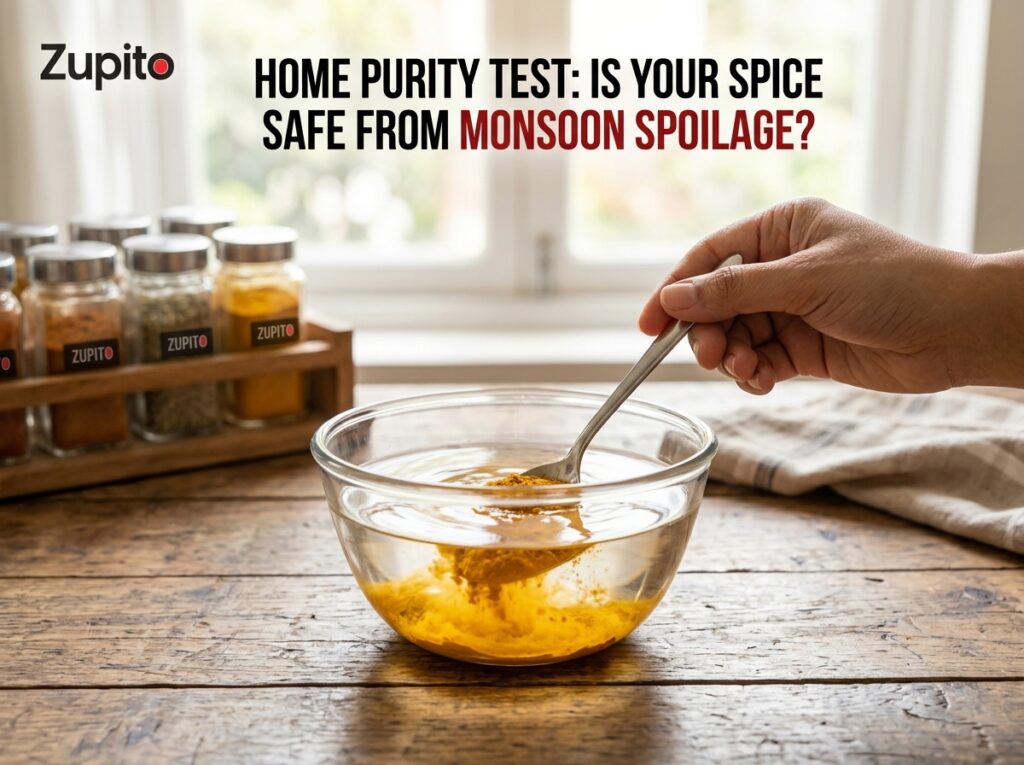
Not sure if your pantry staples have suffered moisture damage? You can perform three quick diagnostic checks at home without special equipment:
- The Water Float Test: Drop half a teaspoon of turmeric or chilli powder into a glass of warm water. Pure, unadulterated cold-ground spice will settle gradually at the bottom without leaving dark artificial color streaks or floating starch lumps.
- The Palm Friction Smell Test: Take a small pinch of spice between your palms and rub gently for five seconds. If the spice releases an immediate, rich aroma, its volatile oils are intact. A faint or dusty odor indicates heat degradation and moisture loss.
- The White Paper Blot Test: Press a small amount of spice onto clean white paper. High-quality cold-milled spices leave behind a slight oily residue due to intact essential oils, whereas factory-damaged dust leaves only dry pigment.
Integrating these quick inspection habits into your monsoon spice care schedule ensures that only pristine, bio-active ingredients enter your daily meals.
Protect Your Kitchen with Zupito Cold-Ground Spices
Your family deserves spices that are completely free from synthetic dyes, cheap starches, or heat-damaged factory dust. Perfecting your daily storage routine starts with choosing ingredients processed with care and precision to prevent mold in spices effectively.
Every Zupito spice selection is crafted below 30°C using advanced Cold Grinding technology, locking in volatile essential oils, vibrant natural colors, and deep authentic aromas. Elevate your home kitchen setup and experience maximum cold ground spices benefits today. When you buy pure haldi powder online from Zupito, you invest in pure flavor that stays fresh, dry, and flavorful all year round!
Frequently Asked Questions (FAQs)
1. Why do spices form hard lumps during the rainy season?
Hard lumps form when fine spice powders absorb water vapor from humid room air. As moisture enters the container, dry particles bind together into clumps. Following smart monsoon spice care and using cold-ground spices with intact essential oils minimizes moisture absorption significantly.
2. Can I consume spices if they have developed minor clumping?
If spices show minor clumping without any off-odors or discoloration, they are generally safe but may have lost some potency. Break up the lumps with a dry wooden spoon. However, if you detect a musty smell, web-like structures, or visible mold patches, discard the batch immediately to prevent mold in spices from affecting your health.
3. How do cold-ground spices naturally prevent fungal spoilage?
Cold-milling processes raw spices at low temperatures, retaining 100% of their native essential oils (such as curcumin and linalool). Experiencing real cold ground spices benefits means these volatile botanical compounds act as natural antimicrobials that strengthen your pantry storage.
4. Is it safe to store spices in the refrigerator during monsoon?
Refrigerating whole spices can extend shelf life, but storing ground spice powders in the fridge is not recommended. Taking cold jars out into warm room air creates internal condensation, introducing moisture directly inside the jar and accelerating spoilage.
Explore Zupito Knowledge Hub
- Turmeric Purity Validation: Stop consuming dangerous industrial text lines and master the core techniques of food security inside our master guide 7 Toxic Secrets: How to Spot Real Haldi vs Polished Powder.
- Chilli Powder Quality Metrics: Learn how to analyze industrial starches and trace real single-origin pigments in premium red peppers inside our live 7 Best Chilli Powder Types: Why Mathania Wins Master Guide.
- Sleep & Metabolic Night Recovery: Master how temperature-controlled bio-botanicals fix deep cellular rest by exploring our recipe teardown Spices for Better Sleep: The Ultimate Bedtime Haldi Routine.
- Spiciness Balancing Mechanics: Discover the underlying physical science of neutralizing excess oil capsicum and fixing errors in culinary bases within our live Zupito Spice Combo and Neutralization Assessment Guide.
- Authentic Spice Bundle Upgrade: Break free from mass-market corporate shortcuts and completely overhaul your kitchen setup with our primary guide The 7 Toxic Secrets of Grocery Spices: Why Smart Kitchens Look to Buy Authentic Indian Spices Bundle.
- Chilli Sourcing Mistakes: Learn the exact parameters to detect added artificial colorants and how to safely Buy Chilli Powder Online without falling for cheap factory traps.
- Foundational Curry Emulsions: Master how cold-milled coriander, turmeric, and high-potency oil lipids interlock to stabilize rich gravy structures in our upcoming regional spice integration modules at Shop Zupito Pure Spices & Combos Now.
Leave a Reply