
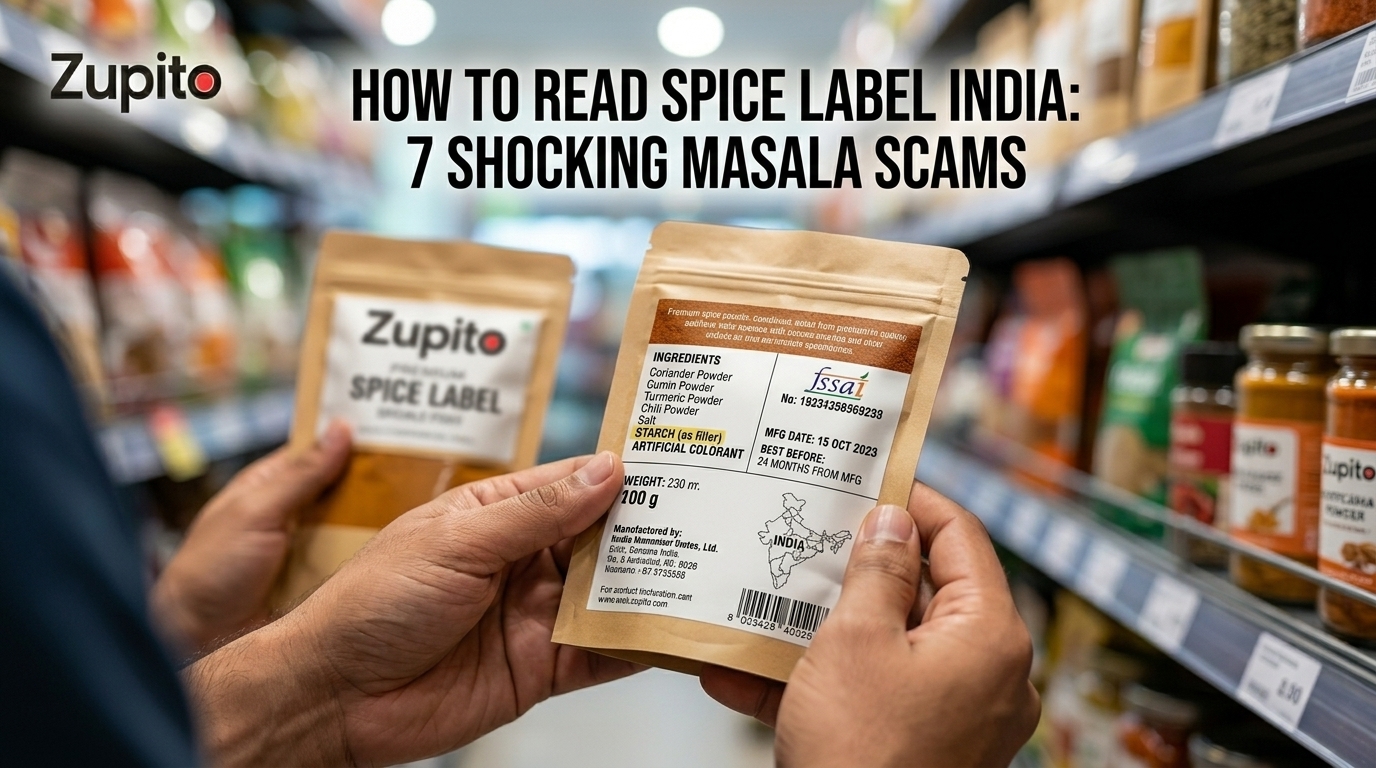
Flashed with marketing words like “100% Pure” or “Natural” on grocery racks, we often end up buying stale, chalky masalas with zero aroma. In a market crowded with over-processed options, learning exactly how to read spice label India products carry is your ultimate shield against low-grade ingredients. If you want to protect your family from compromised food, understanding how to read spice label India guidelines is the single most critical skill you need today.
Most consumers flip a packet over and only look at the Price or the Expiry Date. However, to truly safeguard your health, you need to treat that back panel as a detailed truth report. In this comprehensive buying guide, we skip past the flashy marketing claims on the front to show you how to audit a standard masala label check layout like an absolute expert. Here are the seven critical elements you must verify before buying your next batch.
Most consumers flip a packet over and only look at the Price or the Expiry Date. However, to truly safeguard your family’s health and capture genuine culinary value, you need to treat that back panel as a detailed truth report. In this comprehensive buying guide, we skip past the flashy marketing claims on the front to show you how to audit a standard masala label check layout like an absolute expert. From checking regulatory approvals to decoding manufacturing processes, learning how to read spice label India packaging rules will fundamentally transform the way you buy groceries. Here are the seven critical elements you must verify before buying your next batch.
Table of Contents
The Label Lie: Why What You See Isn’t What You Get
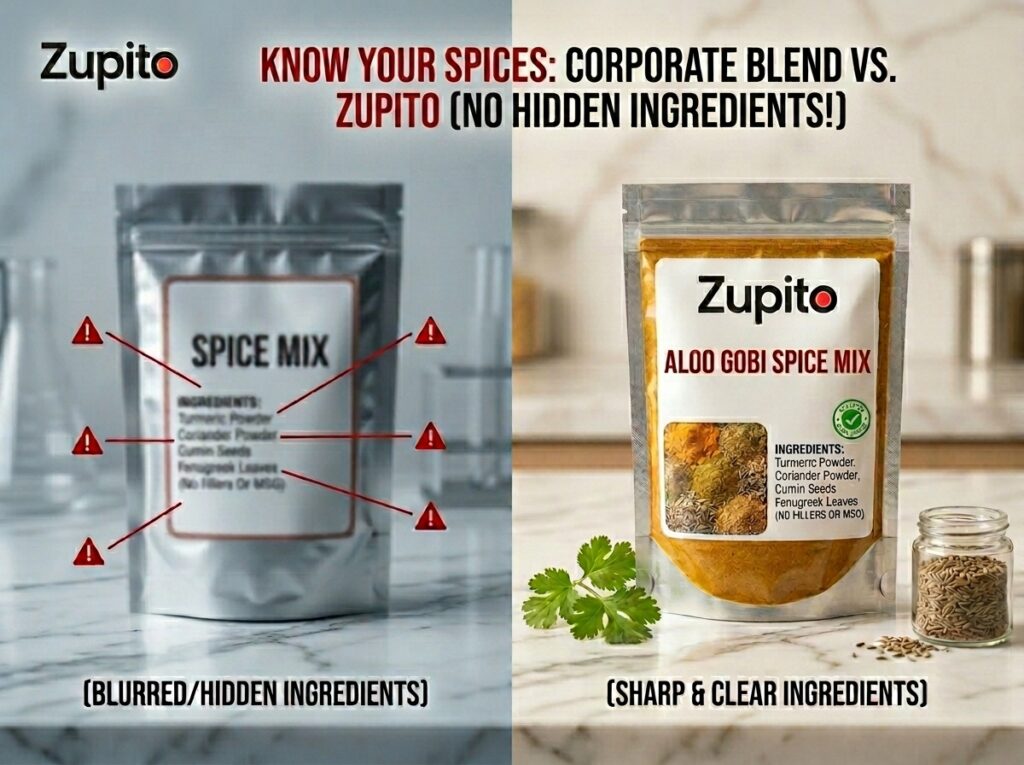
Before we dive into the specific check-list, we must expose the massive structural difference between front-of-pack marketing and back-of-pack truth. Phrases like “Grandmother’s Choice” or “Authentic Recipe” are unregulated marketing buzzwords designed to trigger emotional buys. They carry zero legal accountability. To identify real quality, your primary focus must shift entirely onto the legal declarations mandated under food safety frameworks. Executing a regular masala label check before checking out protects you from falling into these targeted corporate marketing traps.
When big industrial operations mass-produce ground spices, they routinely prioritize speed and long shelf life over health benefits and natural flavors. High-speed grinding machines create intense heat that completely burns off the delicate, therapeutic essential oils inherent to raw spices. To extend profit margins, some brands even sneak in cheap fillers, starches, or artificial dyes. By learning how to read spice label India requires on food packaging, you gain the upper hand. You will instantly learn to screen out stale, low-oil, or artificially bulked-up powders before they ever touch your food pan, ensuring you only bring home true spices for health boosters. Without a proper masala label check, you are essentially buying blind.
[ The Consumer Verification Loop ] Flashy Front Label Claims -> Flip The Pack -> Audit Back Panel Data -> Verify Certifications -> Informed Healthy Choice
7 Critical Things to Check on Every Masala Label in India
The next time you restock your pantry or evaluate a new brand online, make sure the packaging passes these seven strict quality checks:
1. The Ingredient Declaration (Look for Sneaky Fillers)
The very first step in a proper masala label check is examining the ingredient list, which by law lists components in descending order of weight. A premium spice pack should list exactly one ingredient—for example: “Pure Ground Turmeric.” If you spot terms like starch, rice flour, spent spices, or silicon dioxide (an anti-caking agent), put the packet right back. Learning how to read spice label India laws will show you that fillers mean you are paying premium prices for cheap, inert powder that adds nothing to your health or your recipes.
2. The FSSAI License Number & Logo
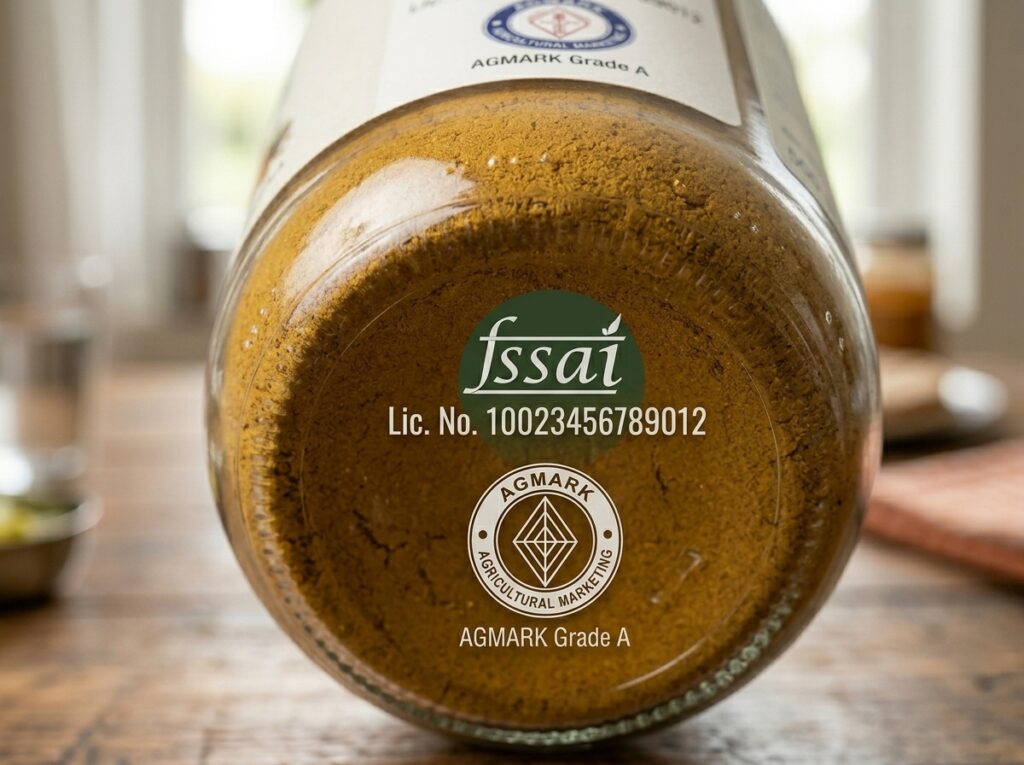
Never buy a spice packet that lacks a clear green logo and a valid 14-digit license number. You can verify these directly through the FSSAI Food Safety Compliance System (FoSCoS). The presence of a verified registration for FSSAI spicesproves the manufacturer complies with basic national hygiene, heavy metal limits, and regular facility audits. If a brand hides its license number or prints it unclearly, it fails the core requirement of how to read spice label India safety protocols.
3. The Processing Method (Look for Cold-Ground or Low Temperature)
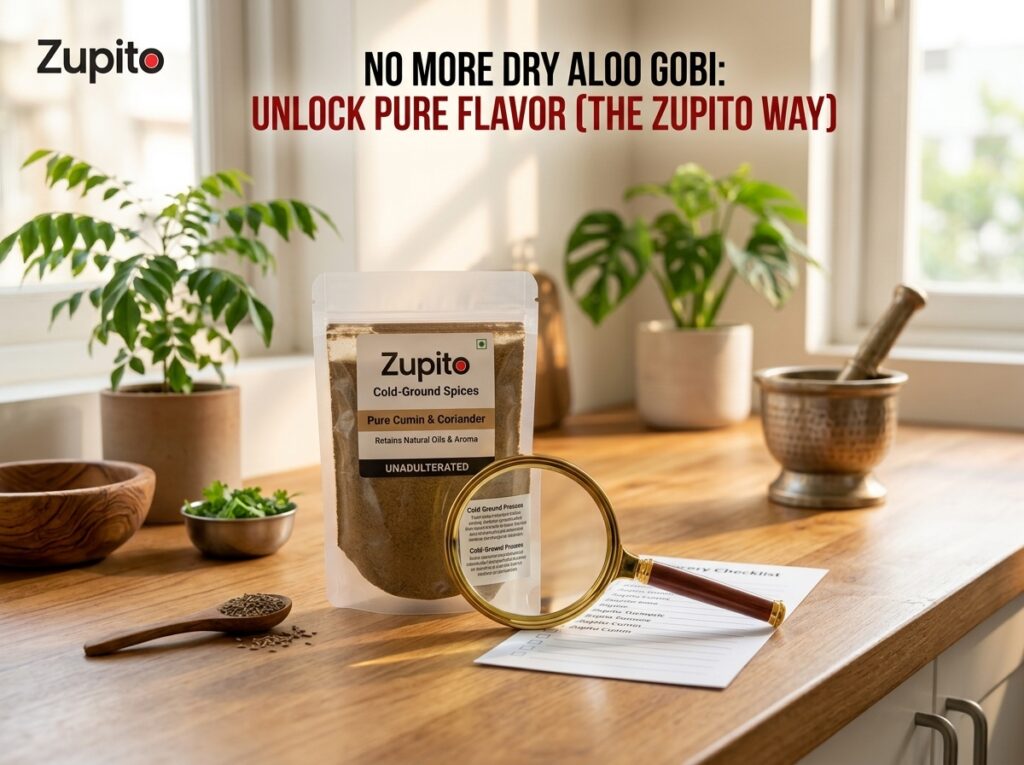
While not legally mandatory on every single pack, elite brands that care about real culinary results will clearly print their processing methodology on the label. Look for explicit mentions of “Cold-Ground Technology” or “Low-Temperature Grinding.” This single indicator tells you the spice was processed gently without the high-heat friction that dries out essential medicinal oils. Doing this vital step during your masala label check ensures you get maximum aroma and therapeutic benefits.
4. The AGMARK Purity Certification
To guarantee you are getting genuine, unadulterated grade quality, check the label for an authentic AGMARK seal. Run by the Directorate of Marketing & Inspection, you can track quality standards via the official AGMARK Net Portal. An official pure masale certificate under the AGMARK scheme verifies the batch has been rigorously tested for parameters like total ash, volatile oil content, and moisture limits. It provides an ironclad layer of third-party security that the contents inside are 100% pure.
5. Legal Metrology and Consumer Grievance Details
A transparent label must comply with the Department of Consumer Affairs guidelines. Check for a clearly printed consumer care email, toll-free number, and a verifiable manufacturing address. Under the National Consumer Helpline (NCH) framework, any brand selling food products in India must provide a clear mechanism for dispute resolution. If these details are missing during your masala label check, avoid the brand entirely.
6. The Specific Manufacturer Address vs. Marketer Data
A transparent label will always list the exact physical address of the manufacturing plant alongside the corporate marketer’s details. If a brand only lists a vague corporate office box and completely hides where the spices are actually sourced, cleaned, and ground, it indicates a lack of supply chain transparency. Knowing how to read spice label Indiaregulations helps you flag brands that refuse to disclose their actual sourcing origins.
7. The Date of Manufacturing and Lot Number
Always choose spice packs with a clear, legible Lot/Batch number and a recent manufacturing date. Spices do not technically spoil like milk, but their essential oils oxidize and break down continuously over time. When you analyze how to read spice label India timelines, buying a pack that has been sitting in a wholesale warehouse for over six months means you are losing a massive chunk of its natural aroma, flavor, and health properties.
Troubleshooting: Red Flags to Spot Instantly Online or In-Store
When shopping through digital marketplaces where you can’t physically touch the pack, zoom into the product back-panel images to check for these issues:
- “100% Natural” with zero certification numbers: If the front image screams natural but the back image lacks a clear registration for FSSAI spices or an AGMARK emblem, it is simple marketing fluff. Remember, a comprehensive how to read spice label India audit requires seeing hard regulatory numbers, not cartoon drawings of leaves.
- Vague Blend Explanations: For complex blends like Garam Masala or Chicken Masala, check that every component spice is named individually. Avoid labels that use lazy umbrella terms like “Contains Added Flavors” or “Spices & Condiments Mix” without being specific.
Why Quality Matters: The Zupito Purity Standard
The main reason home cooks struggle to get deep, authentic flavors is that mass-market commercial labels disguise highly processed, low-oil powders under flashy branding. When raw spices are subjected to high-speed commercial grinding mills, their therapeutic properties dry up completely, leaving behind an inert powder that offers nothing more than basic color.
At Zupito, we believe in absolute label transparency. Our signature Cold-Ground Technology processes raw spices at low, carefully controlled temperatures. This guarantees that every pinch of spice preserves its authentic volatile oils, rich traditional aroma, and deep medicinal potency. When you apply your knowledge of how to read spice label India rules to a Zupito label, you will find zero hidden fillers, zero artificial colors, and complete verification under the Spices Board of India framework, giving your family true access to premium kitchen purity.
Fuel Your Defensive Kitchen with Our Essential Bundles
- 🌿 Zupito Masale Combo: This core bundle features our premium, aromatic Dhaniya Powder, high-curcumin Haldi Powder, and vibrant Kashmiri Red Chilli. It establishes the perfect foundation for honest, healthy cooking.
- 🌶️ Zupito Mathania Red Chilli Powder: Experience the authentic flavor of traditional Rajasthan Mathania chillies, delivering brilliant color and a warm kick without harsh digestive irritation.
Frequently Asked Questions (FAQs)
How can I quickly check if a masala pack is genuine using how to read spice label India guidelines?
Always flip the pack over and instantly look for two main things: a valid 14-digit FSSAI license number and a clear, detailed ingredient list showing zero added starches, anti-caking agents, or artificial fillers. Performing a quick masala label check takes less than 10 seconds but saves your health.
What does a pure masale certificate like AGMARK signify on a spice label?
An AGMARK seal is an official government certification proving the batch has passed rigorous laboratory tests for purity, organic safety, and essential volatile oil content, ensuring it is completely free from adulteration.
Why are anti-caking agents listed on some commercial masala labels?
Mass-market brands add anti-caking agents (like silicon dioxide) to prevent the powder from clumping in damp warehouses. However, learning how to read spice label India layouts will show you that premium, naturally processed spices do not need these chemical additives if they use high-barrier packaging.
Final Pro-Chef Summary on Label Auditing
To ensure you always bring home the highest quality spice packs:
- Ignore the Front Panel: Never base your purchase on emotional buzzwords like “Premium” or “Handcrafted” printed on the front.
- Verify the FSSAI and AGMARK Foundations: Always make sure the pack displays a verified registration for FSSAI spices and a trusted pure masale certificate.
- Insist on Processing Transparency: Always look for cold-ground or low-temperature grinding declarations when learning how to read spice label India systems to guarantee the essential oils are completely intact.
Explore our Zupito Premium Spices Selection today and experience the incredible difference of 100% transparent, cold-ground kitchen purity.
📖 Explore the Zupito Knowledge Hub
- Best Masala Brand in India Comparison: Check out our definitive 2026 evaluation detailing how leading manufacturers stack up against core purity metrics.
- How to Check Pure Spices: Learn easy, reliable home tests to instantly catch hidden adulteration and fake color chemical scams.
- Whole Spices vs Ground Spices: Understand the deep processing differences and discover which option preserves the highest essential volatile oils for your kitchen.
Leave a Reply