
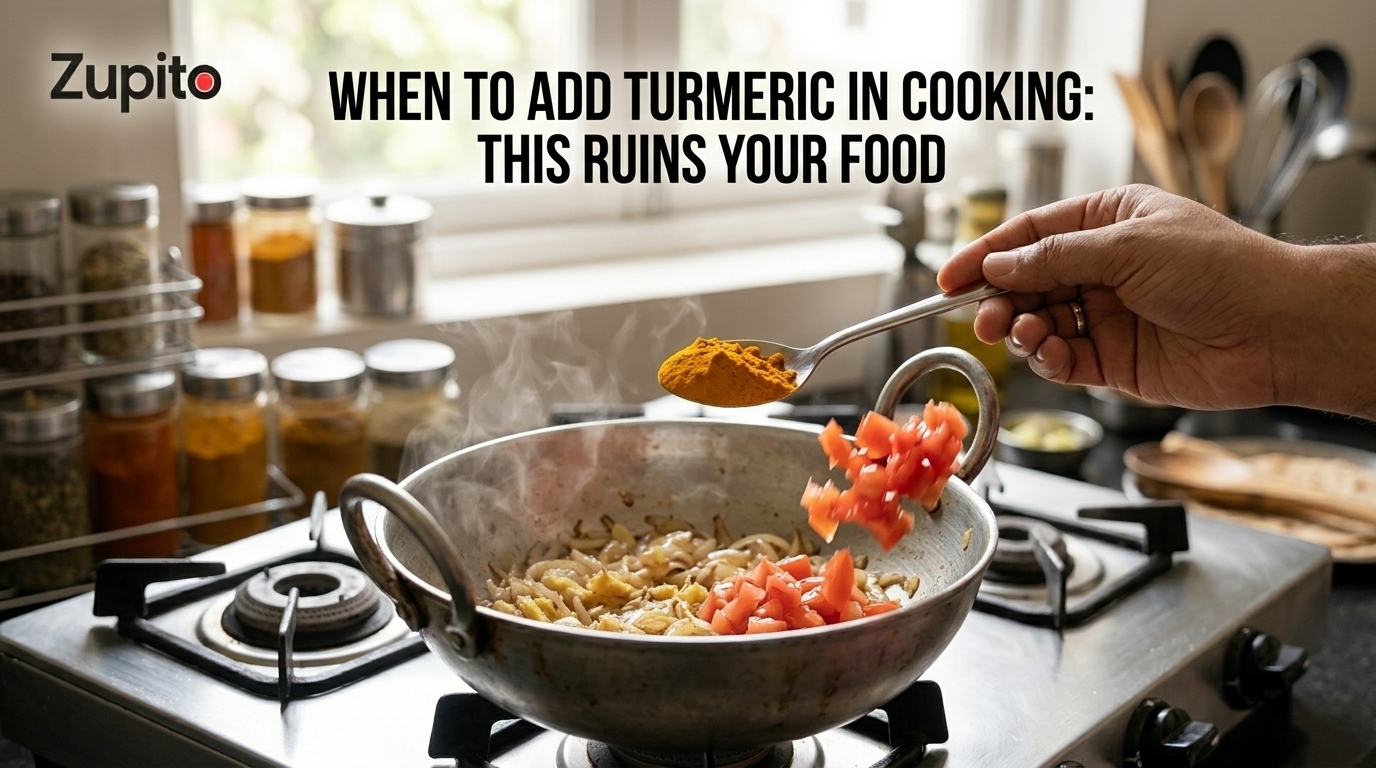
Flashed with marketing words like “100% Pure” or “Natural” on grocery racks, we often end up buying stale, chalky masalas with zero aroma. But even if you have the best quality pack, bad timing inside the kitchen can ruin everything instantly. Imagine heating up your cooking oil, tossing in your chopped onions, and immediately spooning a big heap of haldi straight into the hot pan. Within seconds, the golden powder darkens to an earthy, unappealing brown, a sharp acrid smell fills the room, and your final curry ends up with a bitter medicine-like aftertaste. Knowing exactly when to add turmeric in cooking is the ultimate missing link between an average, flat home dish and a masterfully balanced traditional recipe.
Most home cooks treat ground spices as interchangeable elements that can be thrown into a hot pan whenever it feels convenient. However, turmeric is an incredibly delicate, heat-sensitive root powder that responds aggressively to direct thermal exposure. In this kitchen tips guide, we skip past lazy cooking habits to look at the exact science behind the perfect operational timeline. From protecting fragile active curcumin compounds to avoiding harsh, burnt flavor notes, understanding when to add turmeric in cooking parameters is an absolute superpower for anyone who takes food seriously.
Table of Contents
The Chemistry of Haldi: Why Pre-Mature Cooking Destroys Your Food
To fix your daily cooking pattern, you must understand the underlying biochemistry of ground turmeric. Haldi is not just a basic coloring agent; it is a complex therapeutic marvel loaded with active volatile oils and a primary healing compound known as curcumin. When you choose to master exactly when to add turmeric in cooking steps, you are not just managing taste—you are actively preserving the nutritional density of your entire meal.
However, tossing it into screaming hot oil burns the fine powder instantly. When you subject delicate haldi to extreme heat without a liquid shield, two things happen that ruin your SEO value and dish quality:
- Flavor Ruined: The delicate essential oils scorch, turning turmeric’s native earthy sweetness into a sharp, metallic bitterness.
- Health Benefits Lost: Fragile curcumin and volatile oils completely vaporize under high heat before they ever reach your plate.
By mastering exactly when to add turmeric in cooking, you create a thermal buffer inside your pan. This ensures the spice cooks safely without losing its vibrant color or medicinal properties. Without a proper understanding of when to add turmeric in cooking, your premium organic ingredients will lose their value completely.
[ The Optimal Heat Windows ]
Searing Hot Oil (Destroys Haldi Oils) -> Simmering Liquid Base (Safely Infuses Curcumin) -> Final Dish Success
The Golden Window: Exactly When to Add Turmeric in Cooking
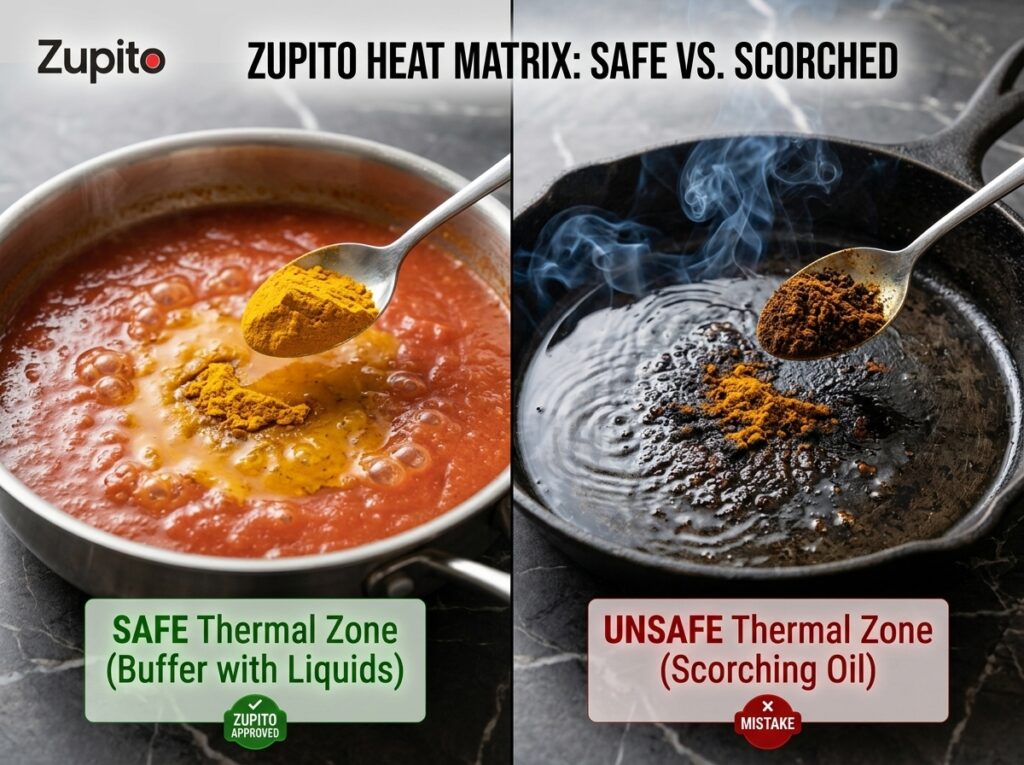
To stop making this critical error, you need to sync your ingredient additions with the moisture density of your pan. Use this comprehensive layout to nail your haldi add karne ka time across different everyday Indian cooking styles:
1. The Gravy and Curry Blueprint (The Liquid Buffer)
In classic North or South Indian gravies, never let your haldi hit dry, searing oil right at the start of your base prep. The absolute best window for when to add turmeric in cooking gravies is immediately after your aromatic paste (onions, ginger, garlic) has softened, and right as you introduce your wet liquid base—like pureed tomatoes, whipped yogurt, or a splash of water. This wet medium acts as a structural heat shield. It keeps the cooking pan temperature perfectly stable, allowing the turmeric to bloom gently and dissolve into the base fat without carbonizing the fine particles.
2. The Dry Sabzi Routine (The Late Addition Rule)
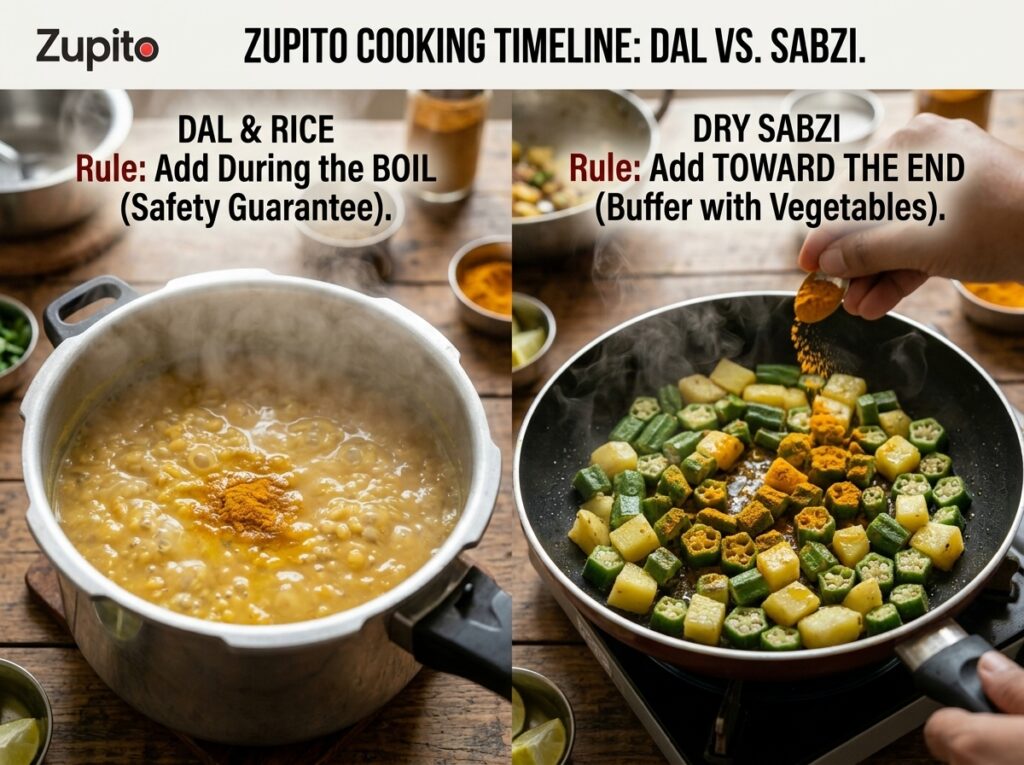
When cooking dry vegetarian stir-fries like bhindi, aloo gobi, or jeera aloo, adding turmeric too early guarantees scorched, dark spots on your vegetables. For these dry preparations, the ideal cooking tips haldi approach dictates adding your turmeric powder toward the middle or late stages of cooking, right before you cover the pan with a lid to steam. The natural internal moisture released by the vegetables will cook the haldi through safely without needing excess direct oil heat. This variation proves why knowing when to add turmeric in cooking changes with every single recipe you try.
3. The Dal and Rice Strategy (The Boiling Phase)
For boiled dishes like arhar dal, traditional khichdi, or aromatic pulao, the operational rules change completely. The absolute best turmeric in curry timing window is right during the initial pressure-cooking or boiling stage. Because the spice powder is completely submerged in water, the environment can never exceed $100^\circ\text{C}$. This safe thermal environment allows the curcumin to bond beautifully with the starches and proteins without any risk of scorching, yielding a stunning, uniform golden hue that forms the backbone of Indian comfort food.
Troubleshooting: Common Mistakes That Cause Bitterness
If your food still finishes with a harsh, medicine-like back-note, check your kitchen routine for these common missteps. Most execution issues vanish completely the moment you align your process with optimal when to add turmeric in cooking timelines:
- Blooming in Smoking-Hot Ghee: While blooming whole cumin seeds or mustard seeds in high-heat oil is great for a tadka, putting fine turmeric powder into smoking ghee burns it instantly. Always drop your pan temperature or add wet elements before introducing ground spices.
- Skipping the Fat Catalyst entirely: Curcumin is fat-soluble, meaning it absolutely requires a healthy lipid vehicle to dissolve and become bioavailable. If you simply stir turmeric into a completely oil-free boiling water soup without any ghee or cold-pressed oil, your body will struggle to absorb its native health benefits. This highlights why managing when to add turmeric in cooking requires balancing heat, moisture, and fats simultaneously.
Why Quality Matters: The Zupito Purity Standard
The reason many home cooks struggle to get consistent results even when following proper timing rules is that mass-market brands sell highly processed, low-oil powders. When raw turmeric is ground inside high-speed industrial mills, the intense friction generates heat that dries up the natural volatile components before the pack is even sealed, leaving behind an inert yellow powder that burns easily, tastes flat, and lacks structural resistance to pan heat.
At Zupito, we do things differently. Our signature Cold-Ground Technology processes raw, high-curcumin turmeric roots at low, carefully controlled temperatures. This guarantees that every pinch retains its authentic volatile oils, rich traditional aroma, and deep medicinal potency. When you combine our pure, unadulterated masalas with the correct knowledge of when to add turmeric in cooking, you unlock a smooth, gorgeous color and an authentic flavor profile that elevates every meal. You no longer have to worry about your spices burning into a bitter mess because our intact essential oils provide natural thermal resilience.
Fuel Your Defensive Kitchen with Our Essential Bundles
- 🌿 Zupito Masale Combo: This core bundle features our premium, aromatic Dhaniya Powder, high-curcumin Haldi Powder, and vibrant Kashmiri Red Chilli. It establishes the perfect foundation for honest, healthy cooking.
- 🌶️ Zupito Mathania Red Chilli Powder: Experience the authentic flavor of traditional Rajasthan Mathania chillies, delivering brilliant color and a warm kick without harsh digestive irritation.
- Zupito Turmeric Powder: Sourced from premium high-curcumin roots and processed using Cold-Ground Technology to retain its natural healing oils, vibrant golden color, and deep Ayurvedic wellness benefits.
- Zupito Pure Coriander Powder: Made from premium, shade-dried coriander seeds ground at low temperatures to lock in a rich, citrusy aroma and essential volatile oils that form the structural flavor base of authentic Indian gravies.
Safety & Quality Assurance
When selecting daily kitchen staples, tracking true quality is absolutely paramount for long-term health. Ensure your household spices strictly comply with FSSAI safety standards and trace their origin through the framework established by the Spice Board of India. Zupito strictly adheres to these rigorous national testing and manufacturing protocols, guaranteeing that every pack delivered to your home is entirely pure, unadulterated, and safe. Knowing when to add turmeric in cooking works best when you are starting with certified, uncompromised raw materials.
Frequently Asked Questions
What is the exact best when to add turmeric in cooking window for regular curries?
The golden window is right after your aromatic paste (onions, ginger, garlic) is cooked, at the exact moment you introduce a liquid base like tomatoes, yogurt, or water. This completely prevents the powder from burning while allowing it to dissolve perfectly into the fat.
Can you taste raw haldi if it is added too late in the dish?
Yes, absolutely. If you add turmeric during the final two minutes of cooking without a proper liquid simmer or a warm oil vehicle, it will not cook through. This leaves a harsh, chalky, and unpleasantly raw medicine taste in your curry that ruins the dish profile. Learning when to add turmeric in cooking means avoiding both early burning and late raw additions.
Does changing my turmeric in curry timing protect its health benefits?
Yes. Adding turmeric alongside a liquid or wet vegetable base prevents the pan temperature from soaring too high, protecting the fragile curcumin compounds from breaking down and vaporizing under intense dry heat.
What should I do if I accidentally add haldi to smoking hot oil?
If the powder turns dark brown instantly, it is burnt. The best step is to discard that small oil batch and start over. Adding liquids later will not fix the bitter, carbonized taste that will now run through your entire dish.
Final Pro-Chef Summary on Spice Timing
To maximize the flavor and health potential of your everyday cooking:
- Never Toss Haldi on Bare, Dry Pan Surfaces: Always make sure there is a moist base or a low-temperature oil vehicle waiting to receive the powder to avoid carbonization.
- Buffer with Liquids: Introduce your ground spices alongside tomatoes, yogurt, or water to keep the pan temperature safe, stable, and balanced.
- Trust Cold-Ground Purity: Always use premium, low-temperature processed spices to ensure the health benefits stay fully intact. Knowing when to add turmeric in cooking works flawlessly when your spice pack contains real, active volatile oils.
👉 Explore our Zupito Premium Spices Selection today and master the art of flavorful, healthy cooking with our elite, cold-ground range.
📖 Explore the Zupito Knowledge Hub
- Best Masala Brand in India Comparison: Check out our definitive 2026 evaluation detailing how leading manufacturers stack up against core purity metrics.
- How to Check Pure Spices: Learn easy, reliable home tests to instantly catch hidden adulteration and fake color chemical scams.
- Whole Spices vs Ground Spices: Understand the deep processing differences and discover which option preserves the highest essential volatile oils for your kitchen.
- Spice Pairing Masterclass: Learn how to balance flavor, color, and natural nutrition seamlessly in your vegetarian kitchen.
Leave a Reply