

Looking for the perfect aloo gobi recipe that delivers restaurant-style taste right at home? Aloo Gobi is the ultimate comfort food in every Indian household. When made right, the cauliflower is tender yet crisp, the potatoes are melt-in-your-mouth soft, and the spices form a rich, aromatic coating around every single piece.
But let’s be honest: how many times have you followed a standard aloo gobi recipe only to end up with a dry vegetable recipe where the gobi turns into a mushy paste, the potatoes taste bland from the inside, and the spices leave a raw, bitter aftertaste?
Making a perfect aloo gobi masala at home isn’t about using complex culinary techniques or secret ingredients. It is simply about mastering the science of spices. Today, we are going to break down the 5 exact spice mistakes that ruin your favorite Sunday lunch and show you how to fix them using premium, responsibly sourced ingredients.If you love exploring traditional Indian dishes, make sure to also check out our authentic Dal Tadka Spice Guide for more kitchen secrets.
Table of Contents
The Role of Spices in Dry Vegetable Recipes
Unlike curries that have tomato purees or yogurt bases to mask cooking errors, a dry vegetable recipe (sukhi sabzi) relies entirely on the quality and timing of your spices. According to guidelines by the Spices Board of India, pure spices contain essential volatile oils that dissolve in cooking fat (oil or ghee) to release their true flavor and aroma.
If your spices lack these oils, or if you burn them during the tempering (tadka) stage, your dry vegetable recipe will inevitably taste dusty, dry, and boring. Let’s look at the mistakes you might be making in your aloo gobi recipe and how to solve them the Zupito Way.
5 Spice Mistakes in Your Aloo Gobi Recipe & How to Fix Them
1. Burning the Turmeric in Sabzi (Overheating Haldi)
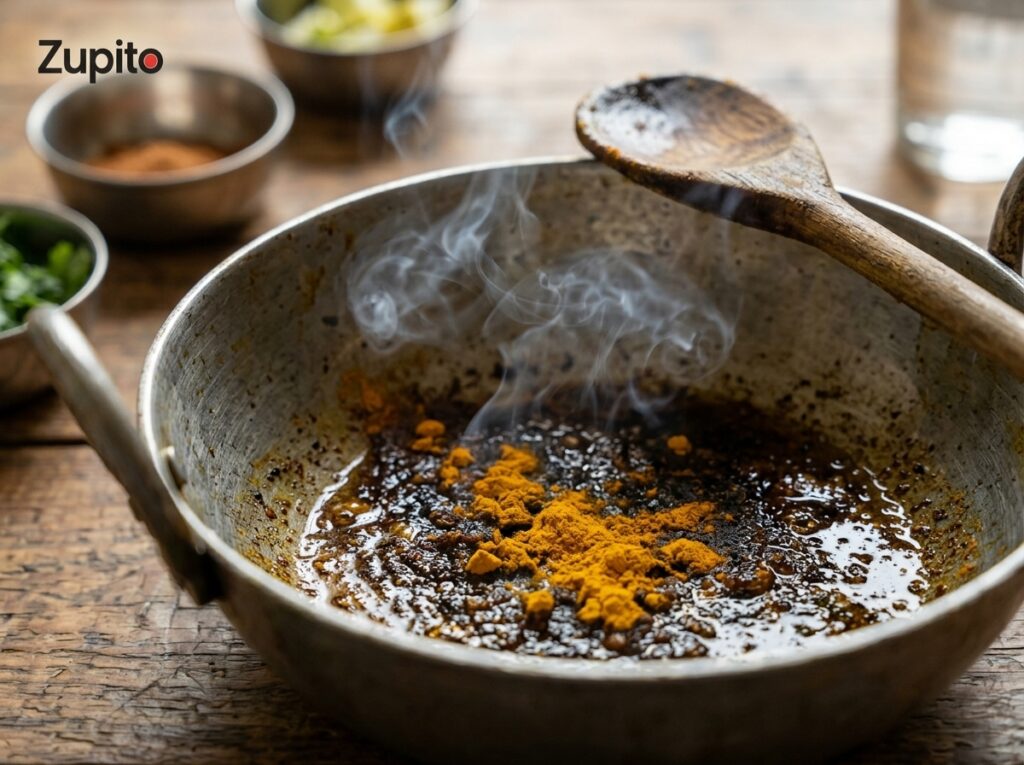
One of the most common mistakes in an aloo gobi recipe is throwing turmeric in sabzi directly into smoking hot oil right after the cumin seeds splutter. Turmeric is highly heat-sensitive. When exposed to extreme direct heat, the curcumin compounds burn within seconds, turning your bright yellow dish into a dark, bitter disappointment.
- The Zupito Fix: Never let haldi hit dry, scorching oil alone. Always add your turmeric in sabzi along with a splash of water, or introduce it immediately after adding chopped tomatoes. This lowers the temperature of the oil and preserves the beautiful golden color and health benefits of the spice. For the best natural color without any artificial polishing, always trust verified Zupito Pure Turmeric Powder.
Also Read: Want to know more about the incredible healing power and science behind this golden spice? Check out our deep-dive guide on Turmeric Powder Health Benefits
to learn why high curcumin content matters for your health.
2. Using Stale, Aroma-Less Coriander Powder
Coriander powder (dhaniya) acts as the primary thickening and binding agent in an aloo gobi masala. It creates that beautiful, semi-dry gravy that coats the florets. However, mass-market coriander powder often loses its natural oils due to high-heat industrial grinding, leaving behind a fibrous powder that absorbs all the moisture from your pan, making the dish texturally dry.
- The Zupito Fix: Use a coriander powder that retains its natural moisture-locking oils. The Zupito Way involves a strict cold-grinding process that keeps the volatile oils intact. When you add a teaspoon of our Pure Coriander Powder to your stir-fry, it binds with the residual steam to form a luscious coat instead of drying out the pan.This is a common issue we discussed in our guide on How to Identify Pure vs Adulterated Coriander Powder.
3. Adding the Red Chilli Powder Too Late
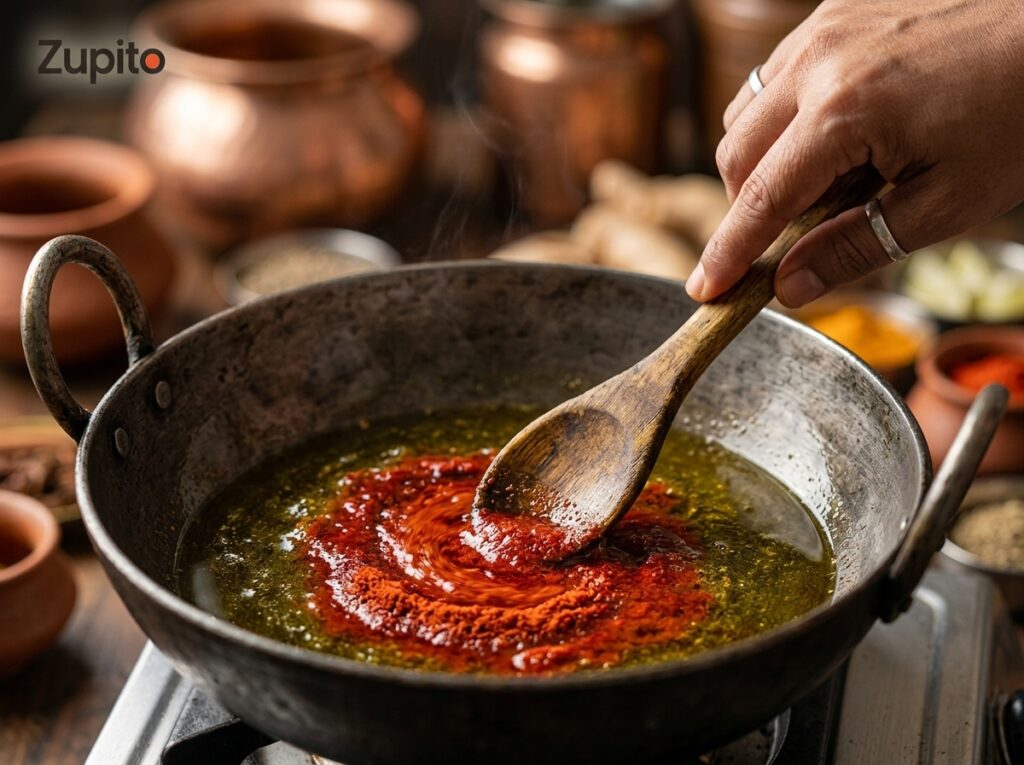
Many home cooks add red chilli powder right at the end of the cooking process, fearing the dish will become too spicy. This is a massive mistake for any aloo gobi recipe. Chilli powder needs time to cook in oil (bloom) to lose its raw, throat-irritating pungency and to release its natural fat-soluble pigments. Adding it late results in a dish that feels painfully sharp but looks pale and unappetizing.
- The Zupito Fix: Add your red chilli powder to the oil right alongside your ginger-garlic paste or tomatoes. This allows the heat to mellow out into a warm, full-bodied spice profile and gives your Aloo Gobi that vibrant, rich restaurant look. For that signature bright red color without high heat, try blending a premium variety like Zupito Mathania Red Chilli Powder.For spice lovers who want to master the art of tempering heat, don’t miss our comprehensive Guide to Different Indian Chilli Varieties.”
4. Skipping the “Moisture Bridge”
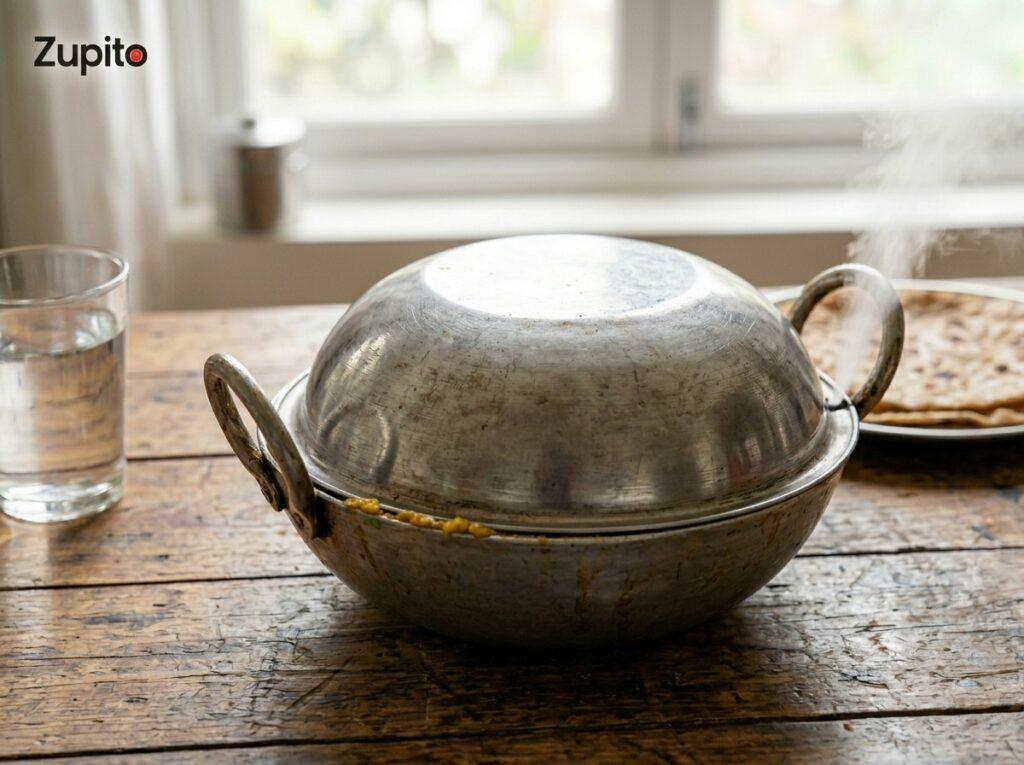
Because this is a dry vegetable recipe, people often avoid adding any water at all. This causes the powdered spices to sit on the surface of the pan, where they scorch and stick to the bottom, completely missing the inside of the thick potato chunks.
- The Zupito Fix: Create a “moisture bridge”. After tossing the potatoes, cauliflower, and spices together, splash exactly 2 to 3 tablespoons of warm water around the edges of the wok, then instantly seal it with a heavy lid. This small amount of water turns into trapped steam, forcing the hydrated aloo gobi masala deep into the core of the vegetables without making them soggy.
5. Forgetting the Final Freshness Lock
An authentic aloo gobi recipe needs a hit of freshness at the very end to break through the starch of the potatoes. Skipping a finishing spice means your dish will taste flat, no matter how well you did the initial tempering.
- The Zupito Fix: Once the vegetables are perfectly cooked, turn off the flame completely. Sprinkle a generous pinch of premium Garam Masala and a squeeze of fresh lemon juice over the top. Cover the pan immediately with a lid and let it rest undisturbed for 3 minutes before serving. This seals the delicate top-note aromas right into the dish.
Sourcing Safe and Pure Spices
Beyond technique, the absolute purity of what goes into your wok determines the final taste of your aloo gobi masala. Adulteration in daily ground spices is a major reason why homemade food sometimes lacks that traditional, authentic aroma. Always ensure your spices comply with the safety regulations set by the Food Safety and Standards Authority of India (FSSAI) to guarantee you are feeding your family chemical-free, unadulterated food.
At Zupito, our processing facility follows strict hygiene protocols, ensuring every single grain of spice is free from artificial colors, fillers, or added starch.
🙋♂️ Frequently Asked Questions (FAQs)
Q1. Why does my cauliflower turn mushy in an Aloo Gobi recipe?
Answer: This happens due to trapped moisture or over-stirring. To avoid mushy gobi, shallow fry or roast the cauliflower florets separately in a teaspoon of oil before adding them to the main aloo gobi masala. Also, avoid stirring the sabzi too frequently once the florets are tender.
Q2. When should I add turmeric in sabzi to get the best yellow color?
Answer: Turmeric in sabzi should be added right after your onions turn translucent or along with your tomato puree. Never add it to smoking, empty oil, as it burns instantly and loses its bright yellow color.
Q3. How can I make my dry vegetable recipe more flavorful without adding water?
Answer: The secret lies in using high-quality spices rich in natural volatile oils, like Zupito Masale, and using a heavy-bottomed pan with a tight lid. Cooking on low heat allows the vegetables to cook beautifully in their own natural juices.
Q4. Can I do dhaniya online shopping safely from Zupito?
Answer: Yes! You can easily buy 100% pure, cold-ground coriander powder, turmeric, and chilli powder directly from our official storefront at Zupito Masale with guaranteed fast, hygienic shipping.
Conclusion: The Secret to Perfect Aloo Gobi Masala
Mastering a restaurant-style aloo gobi recipe doesn’t require secret culinary skills—it simply requires respecting the science of Indian spices. By avoiding these 5 common mistakes, keeping your turmeric in sabzi safe from high heat, and using a strategic “moisture bridge”, you can easily transform a simple dry vegetable recipe into a legendary household favorite.
But remember, even the best technique will fail if your spices are stale, adulterated, or stripped of their natural oils. True aroma and taste only come from 100% pure, unadulterated ground spices that retain their natural essence.
🛒 Upgrade Your Kitchen with Zupito’s Pure Spices
Why settle for ordinary, low-quality market alternatives when you can cook the Zupito Way? Elevate your daily meals with our premium, cold-ground spices that guarantee uncompromised purity and unmatched flavor.
If you are ready to fix your kitchen layout and bring out the best flavors, start with our Zupito Pure Coriander Powder, which is cold-ground to lock in volatile oils and bind your aloo gobi masala perfectly without drying it out. Complete your dhaniya online shopping today and pair it with our Zupito Pure Turmeric Powder—100% natural, unpolished haldi with high curcumin content for a rich golden color. Don’t forget to add Zupito Mathania Red Chilli Powder, sourced from the heart of Rajasthan, offering a vibrant red color and authentic, well-rounded heat to every dry vegetable recipe you craft.
Explore the Full Zupito Shop Online & Order Fresh Packs Today!
Leave a Reply