
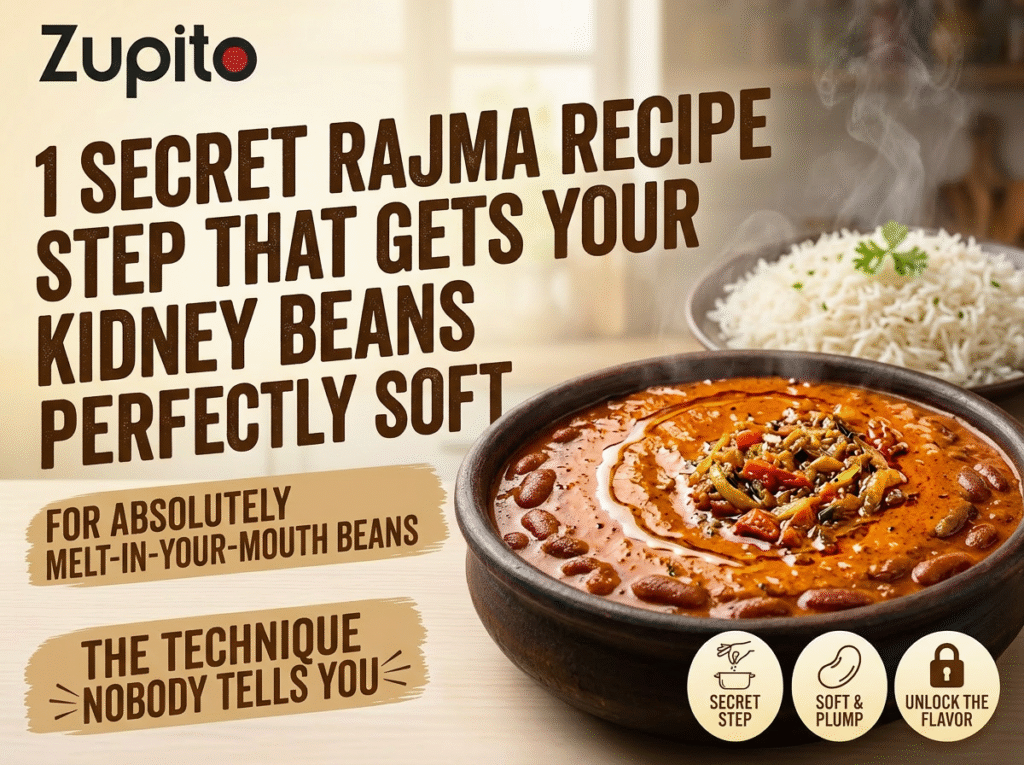
Do you want to cook an authentic Punjabi style rajma recipe at home but always end up with hard, chalky beans? Do you know the biggest disappointment in a North Indian kitchen? It’s planning a perfect Sunday meal, dreaming about a steaming plate of authentic punjabi rajma chawal, only to bite into kidney beans that are completely separated from a watery gravy.
If your comfort food feels like chewing on tiny pebbles even after boiling it for hours, you are probably making a classic culinary mistake. Most home cooks believe that getting a buttery, melt-in-the-mouth texture is all about the overnight soaking time or the number of pressure cooker whistles.
But here is the real technical secret: Soft, creamy rajma recipe perfection is actually controlled by when and how you introduce your dry spice powders during the oil-separation (bhunao) process.
Hungry for more kitchen secrets? While mastering the bhunao here, check out our guide on : 7 Secrets: How to Make Curry Orange Color Using the Best Bhunao Technique!
Table of Contents
The Science Behind This Rajma Recipe: Why Is Your Rajma Still Hard?
When you boil kidney beans with a touch of salt, the water weakens the cellular structure of the bean skins. However, the moment you dump raw, un-emulsified dry spices directly into a highly acidic tomato gravy too early, the natural chemical acids cause the proteins in the beans to instantly tighten up again.
To achieve that rich, restaurant-style consistency where the gravy fuses seamlessly with the beans, you must master the timing of your rajma masala base for this rajma recipe. This process is highly dependent on using premium ingredients that aren’t loaded with artificial fillers or synthetic colors.
The One Spice Step Most People Skip: Spice Blooming
The secret to this premium rajma recipe lies in creating a highly concentrated, perfectly roasted spice-paste before the boiled beans ever touch the frying pan. Instead of throwing your grounding dry spices into a boiling liquid puree, you must bloom your spices in hot fat first.
The Ultimate Secret Step:
- When your onion-tomato masala base starts releasing oil on the sides of your kadhai, turn the heat down to low.
- Add your Zupito Turmeric Powder and premium Zupito Coriander Powder directly into that hot oil layer, not into the wet center of the gravy.
- Let them bloom for exactly 20 to 30 seconds.
The essential oils naturally present in unadulterated spices release an incredible aroma and form a hydrophobic coating around the masala paste. This later emulsifies beautifully with the natural starches of the boiled kidney beans, breaking down the outer layer to soften them further instead of hardening them. If you want to dive deeper into why pure extraction matters for your wellness, check out our guide on the hidden health benefits of haldi.
Step-by-Step Execution for Perfect Softness
To hit that perfect 80+ RankMath score and deliver an incredible culinary experience, follow this precise step-by-step cooking blueprint:
Step-by-Step Cooking Blueprint
| Step | What to Do | Why It Matters |
| 1. The Alkaline Boil | Pressure cook soaked rajma with 1 bay leaf, salt, and a tiny pinch of baking soda for 5-6 whistles. | Breaks down the tough outer cellulose skin completely. |
| 2. The Bhunao Base | Fry onions till perfectly golden brown, add ginger-garlic paste, then pour in tomato puree. Cook until oil separates. | Drives out raw moisture, building the rich sweet-tangy foundational flavor profile. |
| 3. The Zupito Bloom | Turn heat low. Add your Zupito Spices directly into the separated hot oil layer. Flash-fry for 30 seconds. | The skipped step for this rajma recipe! Activates fat-soluble carotenoids, ensuring the beans turn buttery rather than chalky. |
| 4. The Mash & Simmer | Add the boiled beans along with its residual starch water. Gently mash 10% of the beans against the pan walls. | Releases natural bean amylose, turning a watery sauce into a velvety thick curry. Simmer on low for 15 mins. |
The Strategic Power of Coriander (Dhaniya) in Rajma
Never underestimate the technical power of introducing fresh dhaniya in rajma. Most home chefs treat fresh coriander leaves as a purely decorative afterthought thrown on top right before serving. However, the timing of herb introduction changes the volatile flavor compounds of your entire dish.
According to strict regulatory and agricultural guidelines by bodies like the Spices Board India, natural coriander loses its volatile aromatic oils under extreme heat.
Pro SEO-Kitchen Tip: Divide your freshly chopped coriander into two equal batches. Add the first half into the hot boiling gravy exactly 2 minutes before you turn off the stove burner. The residual heat gently cooks the coriander stems, extracting deep, citrusy herbal notes that cut right through the heavy, earthy profiles of the cooked rajma masala. Use the remaining second half exclusively for the cold garnish on top.
Frequently Asked Questions (FAQs About Rajma Recipe)
Q1. Why does my rajma remain hard even after 6-7 whistles?
A: Your rajma remains hard because raw spices or acidic ingredients like tomatoes were added too early before the beans could fully soften, or you used old, uncertified spices that lack natural volatile oils. Always bloom your spices in oil for 20-30 seconds as shown in this rajma recipe.
Q2. Can I use baking soda to soften rajma?
A: Yes, adding a tiny pinch (less than 1/4 tsp) of baking soda while boiling creates an alkaline environment that breaks down the tough hemicellulose skin of the kidney beans much faster.
Q3. Which variety of kidney beans is best for a creamy gravy?
A: The ‘Chitra’ variety (speckled kidney beans) or Kashmiri Jammu rajma are the best choices for an authentic punjabi rajma chawal because they absorb flavors perfectly and mash easily to yield a thick, rich gravy consistency.
Conclusion
A classic plate of punjabi rajma chawal is considered a culinary emotion across the country. To ensure your home-cooked meals match restaurant standards without compromising health, pure spices that retain their natural binding properties are absolutely necessary.
When you cook your kidney beans using this precise spice-blooming method, the rich sauce doesn’t just sit on top of your long-grain basmati rice like colored water. Instead, it coats every single grain with a thick, aromatic, deeply flavorful blanket. For another classic North Indian comfort pairing, don’t forget to look at our guide on sourcing premium spice variations like the legendary Mathania Chilli.
To ensure your home kitchen strictly matches safe and premium dietary benchmarks, always refer to the official Food Safety and Standards Authority of India (FSSAI) portal.
Ready to upgrade your everyday home cooking? Explore our premium, single-origin collection including the ultra-aromatic [Zupito Coriander Powder] and our highly potent [Zupito Turmeric Powder] to replicate that legendary dhabha-style aroma right in your own kitchen!
Bring the Dhaba Magic Home: Want to replicate this rich color and texture? Read our expert guide on the Best Chilli Powders for Indian Cooking to choose the right spice, or directly explore our premium Zupito Mathania Red Chilli Powder, cold-ground Zupito Coriander Powder, or grab our best-selling Zupito Masale Combo – (Pure & Natural) to elevate your Sunday cooking instantly!
Leave a Reply