
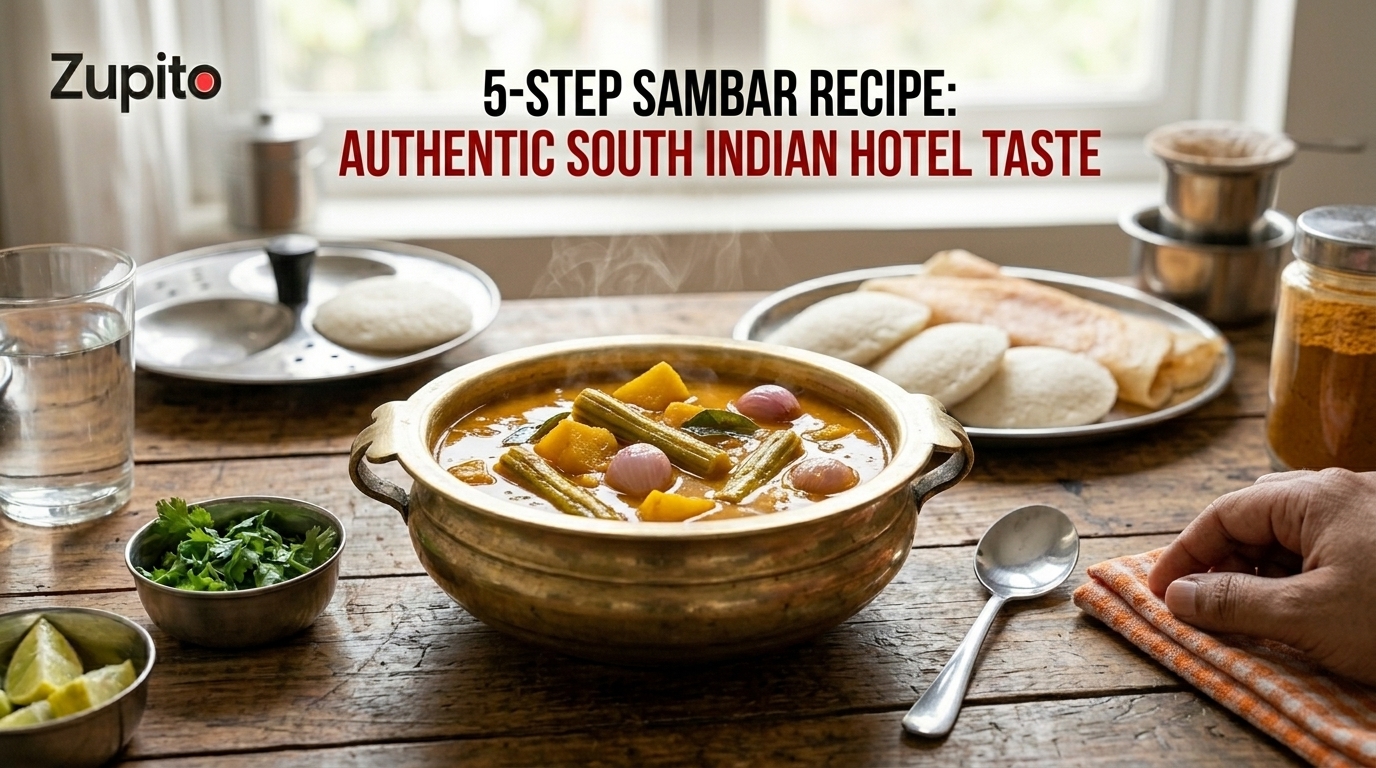
Craving that unmistakably rich, aromatic, and tangy comfort bowl you get at top-tier South Indian restaurants, but your home attempts always turn out like a flat, watery dal? You are not alone. Cooking an authentic, restaurant-grade recipe requires mastering a delicate balance of complex spices, souring agents, and healthy lipids. Learning this definitive, step-by-step sambar recipe is the ultimate shortcut to elevating your homemade vegetarian meals into an unforgettable, high-potency culinary experience. To break away from basic home stews, executing a structured sambar recipe allows you to manipulate real, unadulterated spice layers without losing structural vegetable body.
In this masterclass guide, we break away from corporate instant-mix shortcuts to unlock the genuine science of traditional slow-simmered perfection. From achieving the ideal consistency of premium arhar dal to unlocking the full medicinal potential of real haldi in sambar, we will explicitly show you how to layer flavors like a traditional chef to craft a truly soul-satisfying south Indian curry right in your own kitchen. Following this comprehensive sambar recipe ensures that every single serving replicates the signature brightness of a traditional South Indian kitchen counter.
Table of Contents
The Spice Matrix: Why Cold-Grounding Fixes Your Sambar
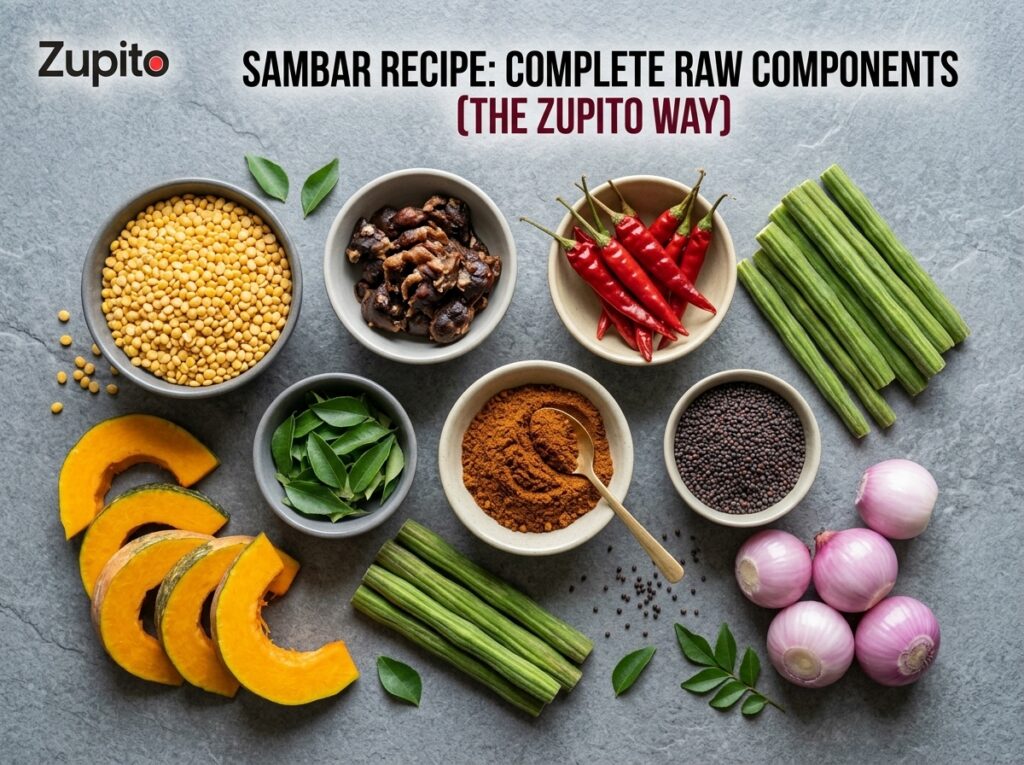
To understand why hotel-style variations taste so unbelievably distinct, we must closely look at the volatile essential oils bound within the seasoning matrix. A true South Indian sambar is much more than a vegetable soup; it is a meticulously layered therapeutic broth designed to balance your digestive system. Implementing a proper, authentic sambar reciperequires understanding how these different structural layers communicate inside the boiling liquid.
However, using generic, store-bought powders usually destroys the magic. When mass-market factories grind whole spices at extreme commercial speeds, the intense friction generates high heat that completely burns away the delicate, healing oils. To experience real depth of flavor, your sambar masala must retain its native aromatic structures. When you build your broth using fresh, unadulterated, cold-ground spices, the active compounds fuse perfectly with the warm tamarind base. This creates a smooth, aromatic synergy that stimulates digestive enzymes and brings out that signature, lip-smacking tang. Without these oils, your favorite sambar recipe will taste flat, chalky, and dry.
Think of your cooking pot as an active flavor extraction chamber. Combining nutrient-dense vegetables, protein-rich lentils, and the vital antioxidant protection of cold-ground haldi in sambar sets up an incredible wellness foundation. By mastering the sequence of these elements within our structured sambar recipe, you turn an everyday recipe into a daily health asset for your family.
[ Traditional Sambar Flavor Matrix ] Creamy Boiled Toor Dal + Tangy Tamarind Extract + Cold-Ground Roasted Sambar Masala + Authentic Ghee Tadka = Better Than Hotel Sambar
The Complete 5-Step Breakdown of Our Sambar Recipe
To replicate a truly professional restaurant profile, you need to break your cooking session down into distinct operational blocks. This detailed segment of the sambar recipe ensures you achieve an incredibly rich consistency without burning the underlying aromatics.
Core Ingredients Needed:
- Lentils & Produce: 1 Cup of premium Toor Dal (Arhar Dal), 1 Cup of mixed vegetables (Drumsticks, Pumpkin, Shallots/Madras Onions, and Okra), 1 Medium Tomato, and a lemon-sized ball of raw Tamarind (soaked in warm water to extract juice).
- The Aromatic Ground Base: 1.5 Tablespoons of pure, cold-ground sambar masala, 1/2 Teaspoon of pristine Zupito Haldi Powder, and a tiny pinch of Hing (Asafoetida).
- The Tempering (Tadka): 1 Tablespoon of pure grass-fed ghee or unrefined coconut oil, 1 Teaspoon of mustard seeds, 2 dry red chillies, and a handful of fresh curry leaves.
Pro-Chef Execution: The 5-Step Technique
Step 1: The Lentil Base Prep Pressure cook your toor dal with a splash of water, a drop of oil, and half your cold-ground haldi in sambar. Mash it thoroughly with a whisk until it forms a perfectly creamy texture. This step forms the thick, structural foundation of our traditional sambar recipe.
Step 2: Tamarind & Vegetable Extraction In a deep pot, cook your chopped vegetables directly in the tangy tamarind water along with the remaining turmeric and salt until they are tender yet firm. Do not let them overcook at this stage.
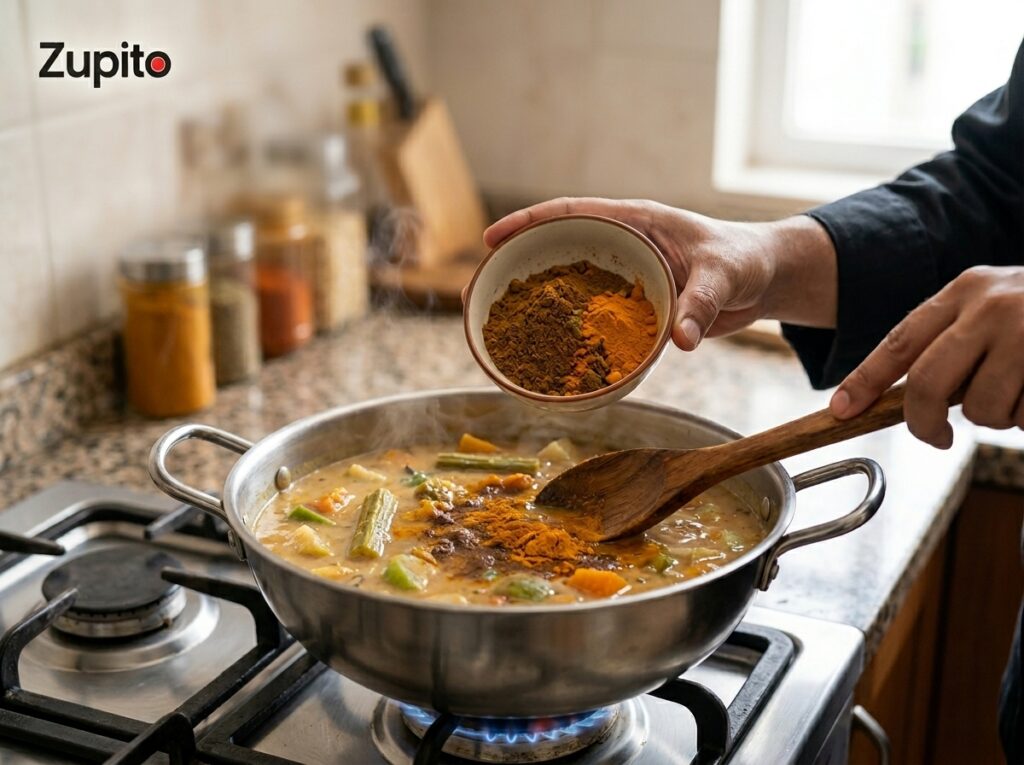
Step 3: Integrating the Aromatic Base Pour the mashed dal into the simmering vegetable pot. Whisk in your premium aromatic spices slowly. Let the entire south Indian curry simmer on low heat for 10 minutes to let the flavors marry completely as outlined in this specific sambar recipe.
Step 4: Crafting the Golden Tadka In a small pan, warm your ghee or oil over a low flame. Toss in your mustard seeds until they crackle gently, then add the dry red chillies and curry leaves. Let them release their essence into the lipid medium.
Step 5: The Seal and Finish Pour this hot, aromatic oil directly into the simmering pot and cover with a lid immediately for 2 minutes to trap the volatile oils. This explosive finish is what defines a true restaurant-style sambar recipe.
Troubleshooting: Common Pitfalls That Ruin Your Broth
To capture the absolute best results from your kitchen sessions, steer clear of these frequent preparation missteps that can degrade your custom sambar recipe:
- Overcooking the Vegetables: Leaving drumsticks or pumpkin in a rolling boil for too long turns them into mush, clouding the clarity of the broth. Always cook your vegetables until they are just fork-tender before introducing the heavy lentil paste into your sambar recipe workflow.
- Using Stale Spice Powders: If your seasoning powder has been sitting open in a cabinet for months, the active oils are completely gone, leaving you with a bitter, chalky aftertaste. Always insist on cold-ground freshness to guarantee that classic restaurant aroma when executing this sambar recipe.
- Rushing the Lentil Mashing Phase: If you add un-mashed lentils directly into the soup, the water will separate from the solids. A critical rule of this sambar recipe is achieving a completely uniform base.
Why Quality Matters: The Zupito Purity Standard
The unfortunate reason many home cooks fail to replicate authentic restaurant flavors is that commercial spices are stripped of their natural oils and filled with cheap fillers. Without those natural aromatics, your homemade sambar recipecan turn out flat or overly pungent.
At Zupito, our specialized Cold-Ground Technology carefully keeps processing temperatures low, preserving the full natural essential oils and vibrant pigments of our raw ingredients. When you choose to enhance your daily cooking and execute a proper sambar recipe with our pure, unadulterated spice range, you will immediately unlock a gorgeous aroma and a smooth, comforting, traditional flavor profile that turns any simple meal into a gourmet experience.
Fuel Your Kitchen with Our Essential Bundles
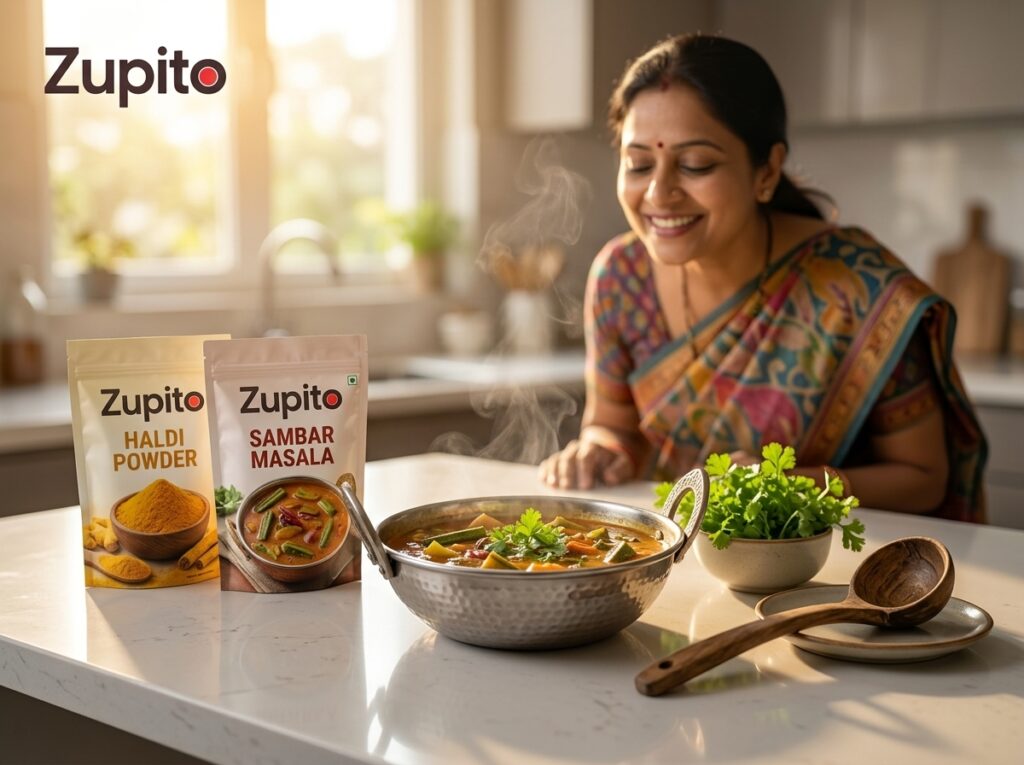
- 🌿 Zupito Masala Combo: This core bundle features our premium, aromatic Dhaniya Powder, high-curcumin Haldi Powder, and vibrant Kashmiri Red Chilli. It establishes the perfect base for your gourmet curries.
- 🌶️ Zupito Mathania Red Chilli Powder: Experience the authentic flavor of traditional Rajasthan Mathania chillies, delivering brilliant color and a warm kick without harsh digestive irritation.
Safety & Quality Assurance
When selecting daily kitchen staples, tracking true quality is absolutely paramount. Ensure your household spices strictly comply with FSSAI safety standards and trace their origin through the framework established by the Spice Board of India. Zupito strictly adheres to these rigorous national testing and manufacturing protocols, guaranteeing that every pack delivered to your home is entirely pure, unadulterated, and safe to use across every single sambar recipe session.
Frequently Asked Questions
Why does adding cold-ground haldi in sambar make such a huge difference?
Pure turmeric acts as an essential color and flavor anchor. Adding high-quality turmeric during the lentil-boiling phase removes the raw profile of the lentils and activates their protein bonds, ensuring a rich, golden base for your sambar recipe iterations.
Can I use readymade powders, or should I grind my sambar masala fresh?
While fresh grinding is great, utilizing a premium, cold-ground spice blend preserves the necessary volatile oils just like a fresh paste, giving you that authentic hotel-style punch instantly without the extra labor required by a standard home-style sambar recipe.
What gives this south Indian curry its signature tangy and balanced profile?
The flawless balance comes from combining the natural sourness of raw tamarind extract with the smooth, earthy undertones of boiled lentils and tempered spices. Mastering this harmony is the most crucial part of an authentic sambar recipe.
How long can I store leftover broth made from this traditional sambar recipe?
You can easily refrigerate it for up to 2 to 3 days. The flavors actually deepen over time as the roasted spices and tamarind continue to settle into the vegetable matrix.
Final Pro-Chef Summary on Authentic Sambar
To master the absolute peak delivery of this legendary South Indian comfort food:
- Mash Your Lentils Completely: Always ensure your toor dal is whisked smooth before adding it to the pot to prevent a separated, watery consistency.
- Never Rush the Simmer: Let the spice powders simmer with the tamarind and dal on low heat to ensure the flavors penetrate deep into the vegetables as detailed in our comprehensive sambar recipe.
- Trap the Tadka Aroma: Always cover the pot immediately after pouring the hot ghee tempering to trap the essential oils inside the broth.
Explore our Zupito Premium Spices Selection today and elevate your family’s daily meals with the unmatched purity of cold-ground ingredients.
Explore the Zupito Recipe Hub
- Perfect Aloo Gobi Spice Balance: Master the art of balancing taste, color, and nutrition seamlessly in your everyday vegetarian cooking.
- Rajma Recipe for perfectly soft Rajma: Learn how to make perfectly soft rajma in Dhaba style.
- Masala Mastery for Indian Gravies/Curry: Discover the perfect pairing rules to avoid making your curries bitter or overly pungent.
- The Golden Milk Recipe Guide: Craft the ultimate traditional turmeric recovery drink with the ideal bioavailability hacks.
- Secrets to a Perfect Dal Makhani Recipe: Achieve that signature deep, smoky depth of flavor requires more than just boiling lentils.
Leave a Reply