
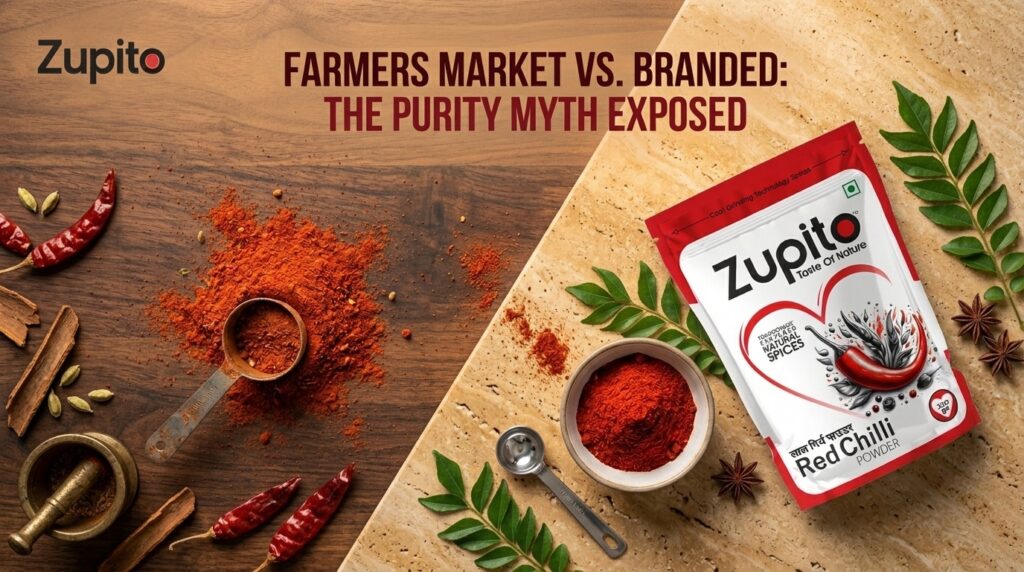
The contemporary wellness movement has catalyzed a massive structural shift toward open-air sourcing, leading thousands of households to believe that raw agricultural produce purchased directly from local vendors is inherently superior to engineered commercial goods.
Within the culinary landscape, this clean-eating philosophy has sparked an intense systemic debate regarding the physical safety, purity, and chemical composition of farmers market spices vs branded operations.
For the average consumer, walking past vibrant, aromatic heaps of unsealed ground materials creates a powerful illusion of pastoral authenticity, small-batch care, and superior bio-available health benefits.
However, beneath this rustic surface lies an alarming, untracked reality that conventional market influencers deliberately hide from the general public who face the dilemma of farmers market spices vs branded products daily.
The operational truth is that unverified sourcing lines present massive systemic dangers, frequently delivering hazardous levels of heavy metal toxicity, chemical color enhancement, and industrial starch adulteration directly to your family’s dinner plates.
When you start to deeply analyze the risk matrix of farmers market spices vs branded setups, you quickly realize that visual aesthetics in local bazaars are completely detached from biological purity protocols.
According to strict nutritional tracking metrics evaluated by international health networks like the World Health Organization (WHO), consuming contaminated dietary components over extended periods completely compromises human metabolic function and long-term cellular integrity.
To establish real baseline protection for your household, you must look clean past aesthetic market values and master the underlying physical differences between open supply pathways and managed factory distribution lines defining the farmers market spices vs branded spectrum.
By understanding how regulatory auditing scales protection, any domestic kitchen can easily avoid hidden grocery traps and separate genuine farm quality from cheap, dangerous roadside dust.
Let us break down the exact biological risks, legal compliance standards, and mechanical processing differences that dictate why the ongoing battle of farmers market spices vs branded packaging is completely transforming modern food security rules.
Ultimately, making an informed choice between farmers market spices vs branded batches requires looking closely at scientific material logs rather than romanticized local organic marketing claims.
Table of Contents
The Hidden Dangers of Open Sourcing: Loose Masale vs Packed
The primary systemic failure behind raw, unsealed agricultural inventory stems from a total lack of environmental isolation during long storage cycles, making the evaluation of farmers market spices vs branded logistics highly critical.
When analyzing the physical safety of loose masale vs packed selections, the very first variable you must evaluate is the ambient exposure rate of the processing environment.
Open heaps inside busy farmers markets are continuously subjected to fluctuating humidity levels, direct sunlight, airborne dust particles, and pest infestations that accelerate structural rot.
As moisture continuously seeps into these unsealed mounds, it triggers rapid micro-biological activation, allowing dangerous strains of Aspergillus fungi to populate the material and release highly carcinogenic aflatoxins.
Because there is no protective atmospheric sealing, these dangerous molds multiply completely unseen right within the center of the spice stacks, increasing the risks when comparing farmers market spices vs branded uncertified options.
Furthermore, without strict chemical testing at the source, unscrupulous middlemen regularly add industrial starches, wood flour, and synthetic chemical brighteners to bulk up their profits.
When you pit unverified loose masale vs packed alternatives against each other, the unsealed variants systematically lack any paper trail or manufacturing accountability, leaving you with zero legal recourse if an illness strikes.
This stark absence of validation is why the safety profile of farmers market spices vs branded goods swings so heavily in favor of professional milling layouts.
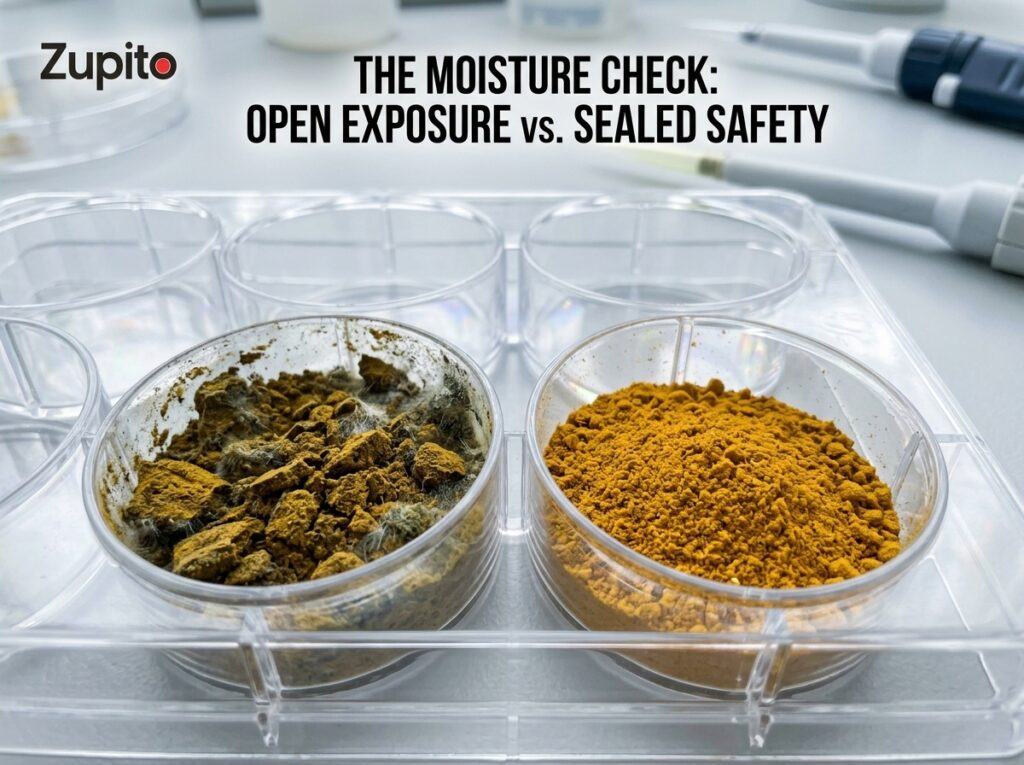
In contrast, fully enclosed, nitrogen-flushed packages ensure that external moisture, oxidation vectors, and biological contaminants are entirely locked out from day one.
By shifting your kitchen away from unsealed, hazardous piles and ending your reliance on unverified farmers market spices vs branded open stocks, you safeguard your family’s daily meals from invisible chemical additions and toxic mold accumulation.
Establishing Regulatory Compliance: The Crucial Need for FSSAI Certified Spices
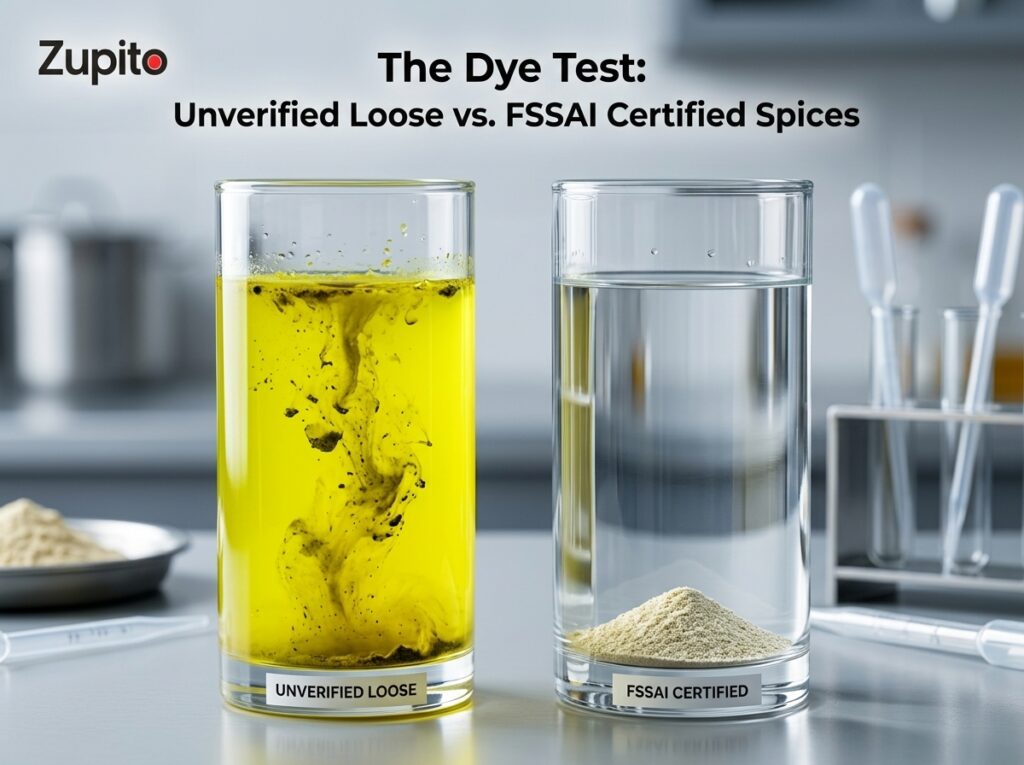
The single most definitive baseline separator between hazardous agricultural dust and premium, clean kitchen ingredients is the presence of rigorous government auditing, which completely reframes the farmers market spices vs branded debate.
Choosing verified, FSSAI certified spices ensures that every single ounce of material has successfully cleared extensive multi-tier chemical clearances before hitting the market shelves.
The national oversight framework deployed by the Food Safety and Standards Authority of India (FSSAI) enforces strict maximum permissible limits for heavy metals like lead, arsenic, and cadmium.
Open local market vendors completely bypass these vital validation steps, meaning their vibrant yellow turmeric or deep red chili powders could secretly be laced with dangerous chemical dyes, proving the structural flaw of unmonitored farmers market spices vs branded choices.
This massive regulatory gap is exactly why leaning blindly into the allure of open-air farmers market spices vs branded goods can inadvertently introduce aggressive neurotoxins into your children’s daily food supply.
Genuine certification requires brands to continuously track physical, chemical, and microbiological data across their entire supply chain, ensuring absolute purity from seed to pack.
To learn how to protect your household pantry from these dangerous industrial chemical enhancements often hidden in the farmers market spices vs branded selection pool, explore our master diagnostic guide over at 7 Toxic Secrets: How to Spot Real Haldi vs Polished Powder.
When you mandate that your kitchen only consumes fully audited, FSSAI certified spices, you automatically block out unauthorized blending factories and cheap industrial fillers.
This clear regulatory filter acts as a constant biological shield, giving you absolute peace of mind that your daily seasonings are 100% pure botanical matter.
By forcing transparency, clean labeling completely eliminates the core safety anxieties that naturally plague the unverified farmers market spices vs branded open supply networks.
The Trust Blueprint: How to Identify the Best Masala Brand Trust
As modern grocery aisles become flooded with deceptive clean-label marketing, cultivating a reliable method to evaluate brand integrity is absolutely essential for health-conscious consumers sorting through farmers market spices vs branded arguments.
True, long-term best masala brand trust cannot be purchased through expensive television advertisements or flashy celebrity endorsements; it must be built entirely on open scientific transparency and strict material handling standards.
A premier provider demonstrates its dedication to the community by actively publishing independent laboratory batch analysis reports and showing exactly where their crops are grown, which completely changes the dynamics of farmers market spices vs branded comparisons.
1. High-Essential-Oil Preservation Metrics
Authentic quality parameters mandate that raw ingredients preserve their native botanical cell structure and volatile terpene concentrations throughout the entire processing sequence.
To observe how temperature-controlled cold processing protects these vital volatile components from factory destruction, analyze our small-batch extraction system at Zupito Pure Dhaniya Powder and our primary ground lines.
2. Zero Chemical Filler Integration
Building real best masala brand trust requires an absolute ban on industrial flow agents, synthetic anti-caking residues, and cheap artificial texturizers that pollute the farmers market spices vs branded raw sector.
To see how single-origin, unpolished chilis retain deep natural crimson plant pigments without relying on illegal chemical colorings, evaluate our flagship botanical asset at Zupito Mathania Lal Mirch Powder.
When you establish this level of operational clarity, deciding between farmers market spices vs branded premium alternatives becomes an easy task rooted in laboratory facts rather than marketing buzzwords.
Why High-Heat Factory Mills Destroy Even the Finest Crops
The ultimate operational bottleneck in the standard spice industry is not just where you purchase your ingredients, but the exact physical mechanics used to pulverize them, adding another deep layer to the farmers market spices vs branded equation.
Even if an open-air merchant manages to procure high-quality whole ingredients, their lack of temperature control during processing completely ruins the finished product.
Conventional mass-market processing installations push raw harvests through high-speed commercial hammer mills spinning at thousands of rotations per minute.
This intense mechanical action creates extreme friction spikes that routinely push temperatures inside the milling core anywhere from 85°C to 100°C, literally burning out the medicinal qualities of the crop and flattening the potential of farmers market spices vs branded agricultural assets.
The formal quality directives published by the national regulatory network at the Spices Board of India explicitly state that maintaining strict low-temperature processing controls is vital to prevent the loss of delicate, health-promoting volatile oils.
This harsh thermal shock completely vaporizes the volatile oils, turning what should be a health-promoting superfood into a dry, flavorless organic dust that adds zero value to your meals.
To unlock the true therapeutic value of pure herbs without falling into the mechanical traps of standard farmers market spices vs branded commercial avenues, your household must pivot away from high-heat industrial milling and transition toward managed cold-grinding infrastructure.
Comparing the Structures: Loose Markets vs. Zupito Standards
Protecting your kitchen from chemical adulteration requires looking directly past clever package designs and analyzing actual material metrics.
Keep these structural differences in mind whenever you are evaluating your family’s sourcing options during a farmers market spices vs branded purchase decision:
| Sourcing Parameter | Farmers Market Loose Materials | Zupito Cold-Ground Packages |
|---|---|---|
| Heavy Metal Auditing | Completely untracked; high risk of lead chromate and arsenic contamination within the unverified farmers market spices vs branded pool. | 100% audited batch lines meeting strict heavy metal safety rules under FSSAI certified protocols. |
| Biological Isolation | Zero protection; constant exposure to open humidity, dust, and toxic fungal molds. | Hermetically sealed, nitrogen-flushed packs that completely block out biological rot. |
| Grinding Core Temperature | Uncontrolled local milling that scorches vital essential oil networks. | Strictly managed cold processing maintained safely below 30°C to lock in native oils. |
| Traceability & Accountability | Zero paper trail; anonymous middlemen with no legal food safety liability. | Full batch traceability built directly on complete corporate transparency. |
Reclaim Complete Food Security: Switch to Zupito
You should never have to gamble with your family’s long-term health or wonder if your daily dinner bowls are secretly packed with toxic synthetic brighteners, industrial starches, or heavy metal residues common in unmonitored settings.
Stepping away from unverified roadside vendors and upgrading to a fully transparent, certified provider removes all guesswork from your clean-eating journey and settles the conflict of farmers market spices vs branded bulk buying.
Every single batch of our curated inventory is processed using advanced Cold Grinding infrastructure that keeps core temperatures strictly below 30°C, fully preserving the native plant cells and locking in maximum bio-available wellness benefits.
This absolute commitment to rigorous laboratory testing, pristine processing, and full accountability is why health-conscious families trust our ecosystem to secure their daily meals.
Stop risking your family’s safety on unsealed, untracked market piles and switch your household to a premium spice layout built entirely on ethical farm partnerships and elite quality controls that clear the confusion surrounding farmers market spices vs branded consumer pipelines.
Give your home the timeless gift of clean, vibrant, and incredibly safe culinary heritage by choosing our curated selections today.
Make the smart transition to buy pure, cold-ground ingredients online and maximize your body’s natural antioxidant delivery by selecting premium Zupito Turmeric Powder for your daily cooking needs.
By pairing ancient botanical wisdom with ironclad modern food safety validations, you ensure that your household consumes nothing but pristine, unadulterated healing molecules with every single bite of your preferred farmers market spices vs branded selection.
Frequently Asked Questions (FAQs)
1. Why are farmers market spices vs branded options a major safety concern for home cooks?
Farmers market spices vs branded packs present severe safety concerns because open, unsealed spices are continuously exposed to environmental humidity, dust, and pests. This lack of isolation leads to hidden fungal mold growth and the release of highly carcinogenic aflatoxins, whereas branded, sealed items are completely protected from external contamination.
2. Are loose masale vs packed spices more prone to chemical adulteration?
Yes, analyzing loose masale vs packed options reveals that unsealed bulk spices are prime targets for fraudulent additions. Because loose sellers lack batch accountability, middlemen frequently mix in dangerous industrial starches, wood flour, and highly toxic dyes (like lead chromate or metanil yellow) to artificially boost weight and color for profit.
3. Why should consumers strictly prioritize FSSAI certified spices over open market varieties?
Prioritizing FSSAI certified spices guarantees that the product has undergone extensive laboratory testing to clear strict government safety thresholds. These evaluations verify that the spices contain zero toxic chemical dyes, harmful pesticide residues, or dangerous heavy metals (like lead and arsenic) that are commonly found in unverified open market goods.
4. How does a company build genuine best masala brand trust in the modern food industry?
A brand establishes the best masala brand trust by ensuring complete supply chain transparency, publishing independent batch analysis reports, and using temperature-controlled cold grinding (milled below 30°C). This setup ensures that the native healing essential oils are completely preserved without the use of synthetic anti-caking agents or chemical fillers.
Explore Zupito Knowledge Hub
- Turmeric Purity Validation: Stop consuming dangerous industrial text lines and master the core techniques of food security inside our master guide 7 Toxic Secrets: How to Spot Real Haldi vs Polished Powder.
- Chilli Powder Quality Metrics: Learn how to analyze industrial starches and trace real single-origin pigments in premium red peppers inside our live 7 Best Chilli Powder Types: Why Mathania Wins Master Guide.
- Sleep & Metabolic Night Recovery: Master how temperature-controlled bio-botanicals fix deep cellular rest by exploring our recipe teardown Spices for Better Sleep: The Ultimate Bedtime Haldi Routine.
- Spiciness Balancing Mechanics: Discover the underlying physical science of neutralizing excess oil capsicum and fixing errors in culinary bases within our live Zupito Spice Combo and Neutralization Assessment Guide.
- Authentic Spice Bundle Upgrade: Break free from mass-market corporate shortcuts and completely overhaul your kitchen setup with our primary guide The 7 Toxic Secrets of Grocery Spices: Why Smart Kitchens Look to Buy Authentic Indian Spices Bundle.
- Chilli Sourcing Mistakes: Learn the exact parameters to detect added artificial colorants and how to safely Buy Chilli Powder Online without falling for cheap factory traps.
- Foundational Curry Emulsions: Master how cold-milled coriander, turmeric, and high-potency oil lipids interlock to stabilize rich gravy structures in our upcoming regional spice integration modules at Shop Zupito Pure Spices & Combos Now.
Leave a Reply