
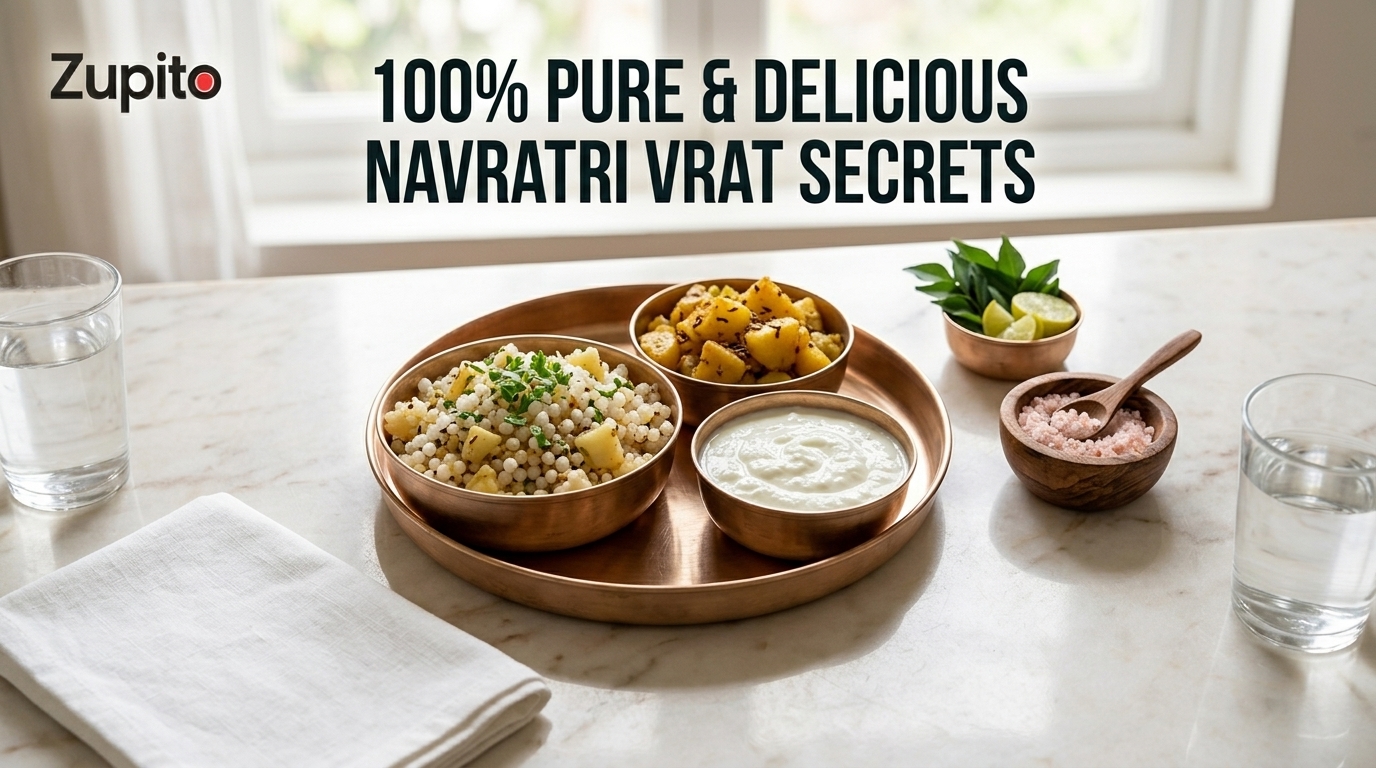
The culinary philosophy of traditional Indian fasting relies on a deep physiological transition, shifting the human digestive tract away from heavy grains to light, mineral-rich, and bio-available plant matrices.
During the holy days of cleansing, preparing a pristine menu of Navratri vrat recipes stands as the absolute test of a kitchen’s ability to deliver clean, delicious meals while strictly honoring sacred purity rules.
When executed traditionally, these fasting dishes utilize gluten-free grains like amaranth, water chestnut flour, and sago, creating a beautiful metabolic rest cycle for your entire biological system.
However, millions of households prepare these festive items every season only to end up with flat, heavy, or intensely greasy dishes that leave them feeling bloated, tired, and physically drained during their fasts.
The underlying issue is never the absence of regular grains; it is the systemic failure of using mass-market corporate spices that are heavily cross-contaminated with wheat flours or loaded with synthetic anti-caking residues.
According to strict dietary tracking metrics monitored by international bodies like the World Health Organization (WHO), consuming unadulterated, mineral-dense foods during restrictive eating periods is critical to sustain metabolic energy and support cellular detoxification pathways.
To experience the true strength-giving power of traditional navratri fasting food, you must bypass cheap commercial shortcuts and master the direct physical relationship between pure minerals, cold-ground botanicals, and high-energy fasting ingredients.
By shifting your pantry toward certified, single-origin elements, any domestic kitchen can easily recreate the rich, comforting, and deeply satisfying flavors of sacred heritage cooking.
Let us dissect the precise physical science, botanical choices, and ancestral thermal techniques required to turn your standard Navratri vrat recipes into a majestic, high-vibrational sensory explosion.
Every single step of this process must be treated as a pure kitchen ritual, ensuring that your raw ingredients remain completely free from external grain dust and industrial additives.
Table of Contents
The Cross-Contamination Crisis: Why Ordinary Seasonings Ruin Your Fast
The baseline safety foundation of authentic fasting cuisine begins long before any pan ever touches your active stovetop burner.
To successfully execute pure Navratri vrat recipes, every single element must be strictly isolated from gluten, standard salt processing loops, and common grain packaging lines.
Most home cooks do not realize that mainstream commercial spice factories process wheat, lentils, and table salt on the exact same mechanical conveyor lines used for daily grinding.
This massive manufacturing overlap creates an alarming risk of cross-contamination, allowing microscopic gluten particles to settle deep within standard grocery powders and compromise your sacred spiritual vows.
To eliminate this threat and protect your household throughout the holy days, you must transition to dedicated, certified pure vrat masale that are processed inside strictly isolated, grain-free environments.
Furthermore, standard table salt undergoes intense chemical bleaching, processing spikes, and synthetic anti-caking additions (like potassium ferrocyanide) that completely strip away its natural therapeutic values.
By actively replacing these industrial chemical shortcuts with unrefined, crystal-pure mineral salts, you build a clean, nutrient-rich base for your custom sendha namak recipes.
When you compare uncertified local market goods with fully audited packaging lines, the difference in cellular energy, digestion comfort, and spiritual purity is immediately clear.
Enclosing your ingredients in nitrogen-flushed, hermetically sealed packages ensures that external humidity, grain dust, and environmental biological contaminants are entirely locked out from day one.

This strict physical isolation allows you to enjoy your favorite navratri fasting food with absolute peace of mind, knowing your digestive tract and your sacred intentions are fully protected.
The Mineral Anchor: Transforming Taste with Sendha Namak Recipes
To successfully elevate your fasting potatoes, sago khichdi, and amaranth flatbreads past bland flavor barriers, your kitchen layout demands the high-mineral punch of real rock salt.
Standard grocery table salts completely fail inside slow-simmered Navratri vrat recipes because their essential macro-minerals have been aggressively wiped out, leaving a harsh, flat sodium profile that dehydrates the body.
When executing your next holy menu, focus exclusively on the raw mineral quality, extraction principles, and thermal processing metrics of these three foundational vrat masale:
1. Pristine Pink Himalayan Salt (Sendha Namak)
Unlike refined table salt, authentic rock salt contains over 84 essential trace minerals, including potassium, calcium, magnesium, and iron, which naturally stabilize human electrolyte levels during long fasting windows.
When introducing this raw mineral into your sendha namak recipes, it delivers a incredibly smooth, round, and deeply savory taste profile that enhances the natural sweetness of sweet potatoes and pumpkins without triggering water retention.
To see how temperature-controlled processing protects these vital trace minerals from industrial damage, you can explore our certified pure lineup at Zupito Pure Spices.
2. High-Essential-Oil Jeera (Cumin Powder)
Pure cumin acts as an essential metabolic catalyst inside traditional navratri fasting food, bringing a warm, earthy depth that stimulates digestion and prevents the gas often associated with high starch intakes (like sago or potatoes).
Using single-origin, cold-ground cumin ensures your dishes get a rich, slow-blooming aroma and a steady release of volatile cuminol without causing internal digestive acidity.
Industrial brands routinely wash, polish, and chemically alter their cumin crops or grind them alongside standard wheat lines to save operational costs.
To protect your household from these dangerous factory shortcuts that ruin your holy Navratri vrat recipes, learn how to run home validation checks inside our master guide 7 Toxic Secrets: How to Spot Real Haldi vs Polished Powder.
3. High-Piperine Black Pepper (Kali Mirch)
A classic fasting sequence demands a sharp, warming kick of heat to activate the metabolism and balance the cooling properties of dahi-based salads and fruit bowls.
Using unadulterated, cold-ground black pepper ensures your meals get a beautiful, clean kick of piperine that actively helps the body absorb the minerals inside your sendha namak recipes.
The Ghee-Blooming Technique: Capturing Pure Volatile Flavors
If you lack access to traditional heavy-bottom iron woks or slow-burning clay stoves, achieving a truly rich, satisfying aroma inside your Navratri vrat recipes can seem difficult on modern cooktops.
To resolve this, ancient Vedic culinary science developed a brilliant, low-temperature fat-blooming sequence designed to lock volatile plant oils directly into pure cow ghee.
Because fasting food does not use heavy onions, garlic, or tomatoes, the entire flavor structure of your navratri fasting food depends entirely on how well you extract your spices into lipids.
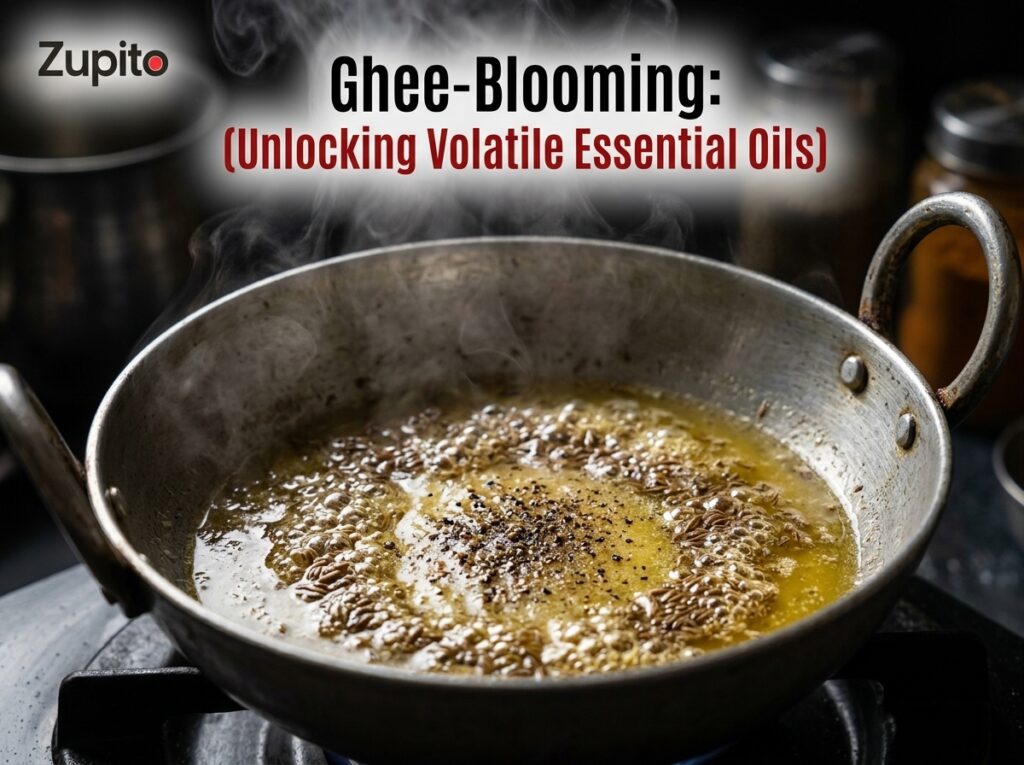
Heat exactly one tablespoon of pure cow ghee in a heavy pan over a low flame until it shimmers gently, then introduce your whole cumin seeds.
As the seeds crackle, immediately add your cold-ground vrat masale, such as black pepper and a pinch of rock salt, keeping the temperature strictly below the burning point.
The hot lipid will instantly dissolve the volatile spice oils, creating a highly fragrant, amber-colored fat base that carries the seasoning uniformly through your boiled potatoes or sago pearls.
This precise timing prevents the delicate spices from scorching, ensuring they release a smooth, comforting taste instead of a harsh, bitter burn.
To guarantee complete food safety and ensure zero toxic polymer leakage during high-heat domestic processing, national regulatory frameworks like the Food Safety and Standards Authority of India (FSSAI) continuously audit consumer manufacturing lines.
By pairing the traditional ghee-blooming technique with clean, unadulterated ingredients, you turn simple, humble fasting ingredients into incredibly satisfying gourmet masterpieces.
Why High-Speed Industrial Grinding Kills Fasting Nutrition
The primary reason why your homemade fasting meals can end up tasting flat, dry, and uninspiring instead of rich and deeply aromatic lies inside massive corporate factory mills.
Mainstream commercial spice operations pass raw agricultural harvests through high-velocity industrial hammer mills spinning at thousands of rotations per minute, ruining any chance of building a premium taste profile.
This violent mechanical action creates intense internal friction spikes that routinely hit temperatures ranging from 85°C to 100°C right inside the milling core, permanently scorching your chosen raw powders.
This harsh thermal shock completely boils off the delicate volatile oils, leaving behind an odorless, dead organic dust that ruins the delicate balance of your Navratri vrat recipes from the very first pinch.
The official quality directives published by the Spices Board of India explicitly state that keeping low-temperature control during processing is absolutely vital to protect native essential plant oils.
When you dump dead, heat-damaged powders into your navratri fasting food, you are forced to add excess fat and sugar just to make the meal taste passable.
To reclaim the authentic, healing profiles of real heritage cooking, you must shift your pantry toward a dedicated provider that honors cold-milling standards and protects volatile organic assets.
Comparing the Standards: Mass-Market Dust vs. Zupito Pure Spices
Protecting your household from commercial filler shortcuts requires looking clean past attractive grocery labels and analyzing real structural processing metrics.
Evaluate these physical properties whenever you are sourcing high-end raw ingredients for your next traditional Navratri vrat recipes setup:
| Quality Metric | Mass-Market Corporate Brands | Zupito Cold Ground Standard |
|---|---|---|
| Gluten Isolation | High risk of cross-contamination; processed on shared grain lines. | 100% isolated, grain-free manufacturing lines dedicated to absolute purity. |
| Grinding Core Temperature | High frictional spikes up to 100°C that scorch volatile plant oils. | Strictly managed cold processing kept safely below 30°C to protect your vrat masale. |
| Mineral Integrity | Chemically bleached table salt with synthetic flow agents. | 100% natural, hand-harvested rock salt rich in 84 essential trace minerals. |
| Fat-Binding Affinity | Fails to fuse with ghee fats, leaving a gritty, chalky text profile instead of a smooth blend. | Binds instantly with warm ghee to maximize the flavor and health value of your navratri fasting food. |
Stop Consuming Dead Factory Dust: Upgrade to Zupito
You should never have to sacrifice your family’s long-term metabolic health or wonder if your sacred fasting foods are secretly contaminated with cheap industrial grains, chemical bleaching agents, or toxic synthetic brighteners.
Bringing home a single-origin, temperature-controlled harvest completely removes the ongoing anxiety of trying to find genuine health benefits on unverified corporate grocery shelves.
Every single batch of our custom ground ingredients is processed using state-of-the-art Cold Grinding infrastructure that keeps core temperatures strictly below 30°C, fully shielding the native plant cells and locking in maximum therapeutic value for your Navratri vrat recipes.
This strict commitment to absolute raw purity is why health-conscious families trust our ecosystem whenever they want to cook authentic navratri fasting food for their loved ones.
Stop wasting your hard-earned time and money on mass corporate brands and transition your household to a premium spice layout built around complete corporate transparency, ethical farm sourcing, and pristine processing standards.
Give your home the timeless gift of rich, authentic culinary heritage by upgrading your kitchen pantry with authentic, cold-ground cooking selections today.
Make the smart switch to buy pure, cold-ground ingredients online and unlock the complete range of bio-available health benefits by selecting premium Zupito Turmeric Powder for your daily cooking lines.
By choosing an authentic provider that honors ancient botanical balance alongside rigorous modern quality control, you ensure that your household consumes nothing but pure, unadulterated healing molecules with every single bite of your signature Navratri vrat recipes.
Frequently Asked Questions (FAQs)
1. Why is cross-contamination a major risk during Navratri vrat recipes preparation?
Cross-contamination is a severe risk because mainstream commercial factories process wheat, grains, and common lentils on the same machinery used to grind spices. For authentic Navratri vrat recipes, you must use certified grain-free vrat masale processed in strictly isolated, gluten-free facilities to maintain spiritual and physical purity.
2. How does using authentic sendha namak recipes benefit the body during a fast?
Utilizing genuine rock salt (sendha namak) during fasts is highly beneficial because unlike heavily bleached table salt, raw rock salt contains over 84 essential trace minerals like potassium and magnesium. These minerals naturally stabilize your body’s electrolyte balance and keep you energized throughout the fasting days.
3. What is the ghee-blooming technique, and why is it crucial for navratri fasting food?
The ghee-blooming technique involves gently warming cold-ground spices in pure cow ghee over a low flame before adding your main fasting ingredients. Since navratri fasting food completely avoids heavy flavor bases like onions and garlic, blooming your spices in warm ghee is essential to release their volatile oils and coat the food evenly.
4. Why do standard store-bought spices make fasting dishes taste flat or bitter?
Standard store-bought spices are milled in high-speed commercial hammer mills where temperatures spike up to 100°C. This harsh thermal shock vaporizes the delicate, flavorful essential oils, leaving behind dry, odorless organic dust that makes your fasting dishes taste flat and chalky.
Explore Zupito Knowledge Hub
- Turmeric Purity Validation: Stop consuming dangerous industrial text lines and master the core techniques of food security inside our master guide 7 Toxic Secrets: How to Spot Real Haldi vs Polished Powder.
- Chilli Powder Quality Metrics: Learn how to analyze industrial starches and trace real single-origin pigments in premium red peppers inside our live 7 Best Chilli Powder Types: Why Mathania Wins Master Guide.
- Sleep & Metabolic Night Recovery: Master how temperature-controlled bio-botanicals fix deep cellular rest by exploring our recipe teardown Spices for Better Sleep: The Ultimate Bedtime Haldi Routine.
- Spiciness Balancing Mechanics: Discover the underlying physical science of neutralizing excess oil capsicum and fixing errors in culinary bases within our live Zupito Spice Combo and Neutralization Assessment Guide.
- Authentic Spice Bundle Upgrade: Break free from mass-market corporate shortcuts and completely overhaul your kitchen setup with our primary guide The 7 Toxic Secrets of Grocery Spices: Why Smart Kitchens Look to Buy Authentic Indian Spices Bundle.
- Chilli Sourcing Mistakes: Learn the exact parameters to detect added artificial colorants and how to safely Buy Chilli Powder Online without falling for cheap factory traps.
- Foundational Curry Emulsions: Master how cold-milled coriander, turmeric, and high-potency oil lipids interlock to stabilize rich gravy structures in our upcoming regional spice integration modules at Shop Zupito Pure Spices & Combos Now.
Leave a Reply