
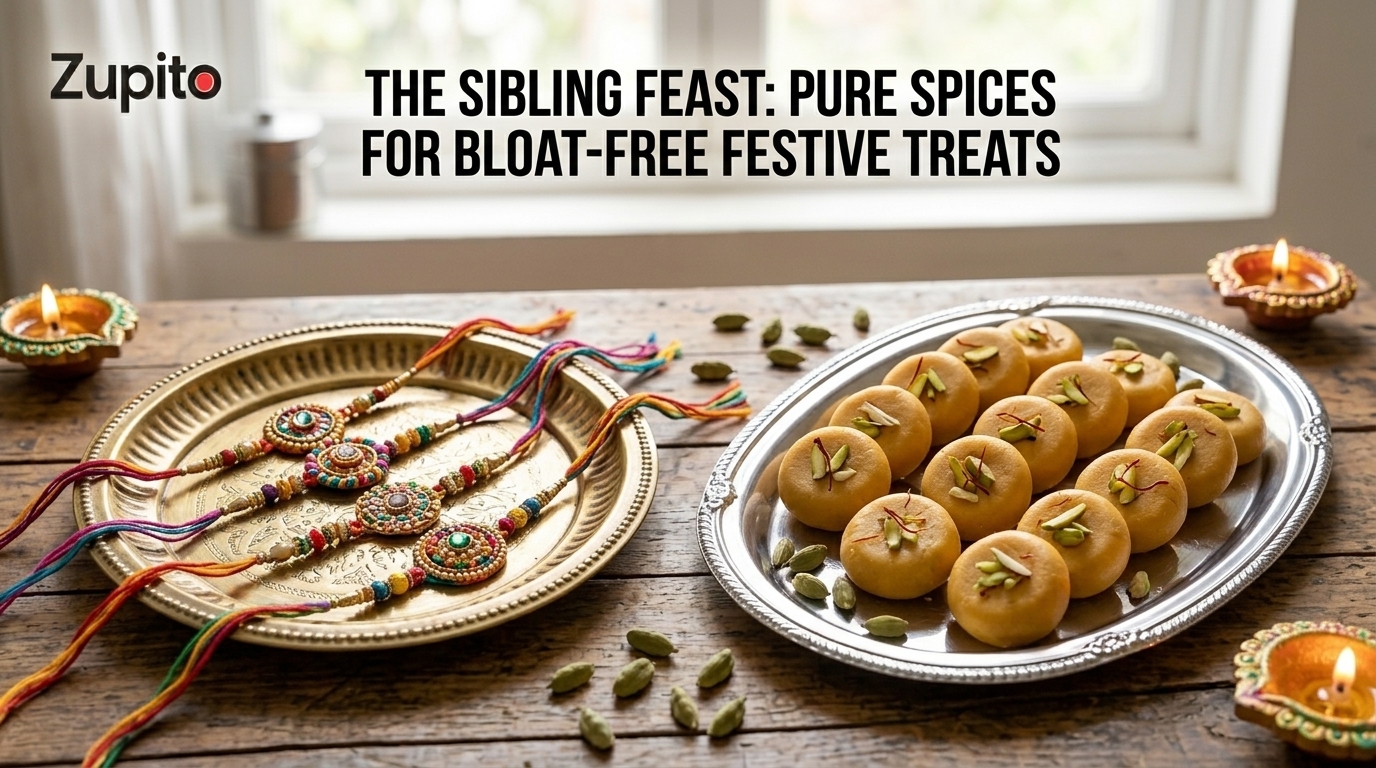

The traditional core of Indian festive dining relies on balancing rich dairy fats, slow-caramelized sugars, and complex aromatic spices that define family legacy celebrations.
During the beautiful celebration of the sibling bond, preparing a perfect menu of Raksha Bandhan recipes stands as the ultimate test of a home cook’s ability to balance rich textures with high-purity therapeutic spices.
When prepared traditionally, heritage items like melt-in-the-mouth mawa roll, flaky kesar gujiya, and spiced kachoris work together to create a beautiful, highly digestible festive platter.
However, millions of families prepare these holiday meals every year only to end up with flat, overly sweet desserts or heavy savories that leave everyone feeling bloated, tired, and uncomfortably full.
The core issue is rarely your choice of dairy products or ghee volume; it is the systemic failure of using dead, industrial corporate spice powders that lack the native essential oils needed to spark true flavor.
According to clinical dietary metrics monitored by international networks like the World Health Organization (WHO), incorporating pure, unadulterated plant botanicals into dense, high-calorie festive meals dramatically optimizes metabolic ease and nutrient breakdown.
To unlock the true depth of traditional rakhi special food, you must move past mass-market grocery shortcuts and master the physical science of blooming unpolished aromatics in warm fats and sugars.
By shifting your pantry toward high-purity, single-origin botanical elements, any home cook can effortlessly recreate the rich, clean, and deeply memorable flavor profiles of ancient royal kitchens.
Let us break down the exact chemical rules, organic spice choices, and time-honored techniques needed to turn your standard festival Indian sweets workflow into an exceptional, cold-ground culinary experience.
Every single step of this process must be treated as a precise extraction, ensuring that your heavy milk fats and complex sugars bind perfectly with the incoming volatile oil networks for a true pure spices celebration.
Table of Contents
The Physics of Sibling Feasts: Elevating Rakhi Special Food
The baseline culinary framework of authentic Indian festive cooking begins with understanding how premium whole fats interact with your chosen dry ingredients.
To deliver an incredible selection of rakhi special food, heavy elements like pure cow ghee, condensed milk solids (khoya), and refined flour matrices must be handled with precise temperature controls.
This careful management serves a vital physiological purpose: the heavy saturated fats common in festival cooking require highly active, oil-rich carminative spices to stimulate gastric enzymes and ease digestion.
Without these active botanical catalysts, dense sweets like deep-fried kachoris and heavy milk pedas will sit heavily in the stomach, turning a joyful family gathering into a sluggish, uncomfortable afternoon sleep.
To successfully cut through these rich fat layers and keep the palate feeling clean, your kitchen setup requires highly targeted, pristine pure spices celebration profiles.
However, this vibrant experience can easily turn flat or artificial if your festive mixtures are choked by heat-damaged, synthetic corporate dust during the primary blending sequences.
Once your sweet doughs and milk mixtures are ready for assembly, adding raw, freshly ground cardamoms and saffron creates a beautiful flavor contrast that anchors your entire Raksha Bandhan recipes suite.
Mass commercial operations routinely ignore these steps by using artificial chemical essences, which strip away the deep therapeutic benefits and ruin the natural balance of your rakhi special food.
By protecting these rich fat bases with cold-milled, oil-rich spices, you allow the authentic aromas to disperse evenly through the fats, creating a long-lasting, premium finish that defines real quality.
The Aromatic Framework: Mastering Festival Indian Sweets
To successfully elevate your sweet and savory combinations past basic sugar dominance, your kitchen layout demands absolute clarity on the specific role of your foundational festival Indian sweets elements.
Standard grocery store packets completely fail inside traditional Raksha Bandhan recipes because their internal volatile oils are wiped out during high-speed factory grinding, leaving behind zero aroma.
When preparing your next classic monsoon festival menu, focus heavily on the raw selection, oil retention, and chemical purity of these essential therapeutic spices:
1. Pure Green Cardamom (Elaichi Powder)
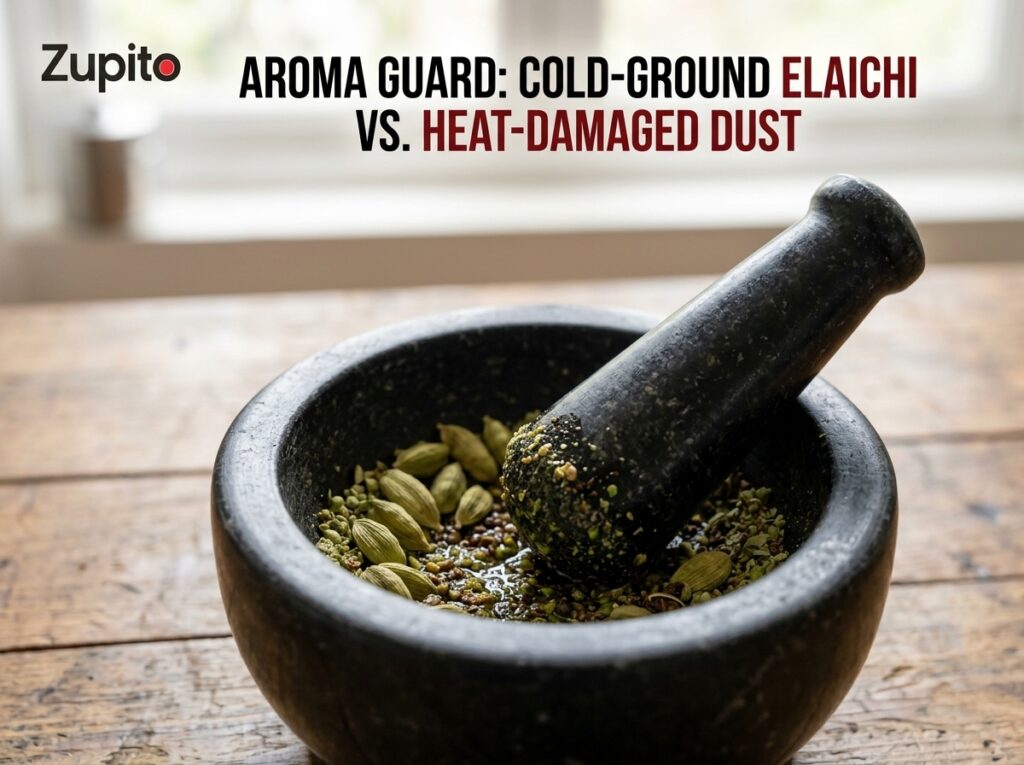
Pure green cardamom contains high concentrations of *terpinyl acetate*, a volatile oil that delivers a sweet, cooling, and intensely uplifting aroma to heavy milk desserts.
When you fold cold-ground elaichi into warm mawa or sugar syrup, these native oils bloom instantly inside the fats, creating a luxurious depth that flat, store-bought dust simply cannot provide.
To see how temperature-controlled cold processing preserves these vital aromatic compounds from industrial damage, you can browse our small-batch lineup over at Zupito Pure Spices.
2. Royal Saffron (Kesar) & Fennel (Saunf)
The precise use of real fennel inside traditional rakhi special food dictates the ultimate metabolic success of the meal; it acts as the primary digestive spark against heavy sugars.
Using unadulterated, cold-ground fennel inside your sweet syrups and savory doughs ensures a bright, clean taste and a proper hit of natural digestive ease without irritating the stomach lining.
Corporate brands frequently source low-grade, oil-extracted berries and chemically treat them with starches or artificial dyes to maximize profit margins.
To protect your family from these dangerous industrial production shortcuts that ruin the structural balance of your festival Indian sweets, check out our home validation guide 7 Toxic Secrets: How to Spot Real Haldi vs Polished Powder.
3. Real Hing & Coriander (The Savory Balance)
Classic Raksha Bandhan recipes demand a sharp, contrast-filled savory snack like spiced dal kachoris or dry aloo rasedar to reset the palate after eating heavy, syrupy sweets.
Using unadulterated, single-origin coriander and strong asafoetida (hing) ensures a rich, digestive-friendly release that gives the savory dishes their signature aromatic punch and activates your underlying digestive tract.
The Kinetic Blooming Sequence: Locking in Fragrant Sugar Matrices
If you do not have access to traditional thick copper cauldrons or open-air slow charcoal pits, capturing a truly authentic, heritage-grade aroma inside modern Raksha Bandhan recipes can feel impossible on standard gas burners.
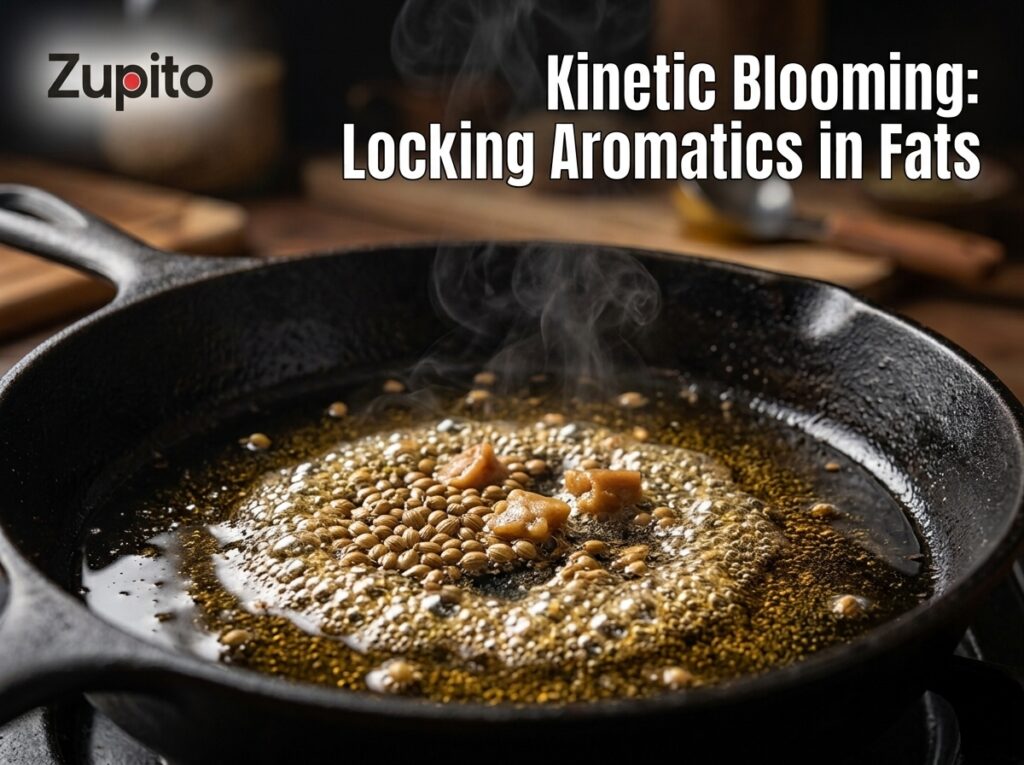
To overcome this limitation, traditional Indian culinary practice developed a brilliant, low-temperature spice blooming sequence designed to lock volatile plant oils directly into warm sugar matrices.
The initial blooming phase begins during the mawa roasting step, where a pinch of cold-ground green cardamom is introduced to the warm milk solids to establish a deep, rich fat foundation before the sugar is added.
The second, critical aromatic infusion happens during the cooling phase, right before you shape the festive milk pedas or stuff the flaky kachoris.
Allow the roasted milk solids or savory fillings to drop safely down to room temperature, then carefully fold in your remaining premium pure spices celebration ingredients, along with raw nuts and organic sugar crystals.
To capture the full flavor profile during your rakhi special food workflow, avoid adding delicate ground spices to boiling-hot sugar syrups, which instantly destroys their fragile aromatic structures.
By folding your pure spices into the cooling fat-and-sugar mix, the oils bind cleanly with the dairy lipids, creating a stable flavor profile that stays fresh for weeks without losing its incredible smell.
Cover the mixing bowls tightly with a clean cloth immediately, keeping the trapped air stable for ten minutes to allow the natural ingredients to settle perfectly within your signature Raksha Bandhan recipes layout.
To guarantee public health safety and prevent toxic adulteration across modern domestic supply chains, national regulatory bodies like the Food Safety and Standards Authority of India (FSSAI) continuously audit industrial food processing sectors.
By matching this delicate low-temperature blooming method with pure, unadulterated ingredients, you transform simple holiday treats into brilliant, hyper-authentic culinary art.
Why High-Velocity Industrial Processing Ruins Festive Cooking
The primary reason your homemade festival snacks can end up tasting flat, dusty, and artificial instead of rich and deeply aromatic lies inside massive corporate factory mills.
Mainstream commercial spice processors pass delicate agricultural harvests through high-velocity industrial hammer mills spinning at thousands of RPMs, destroying your chances of building a true pure spices celebration profile.
This aggressive mechanical grinding creates intense friction spikes that regularly drive temperatures up to 85°C to 100°C right inside the milling center, burning your precious raw ingredients.
This intense heat shock boils away the fragile volatile plant oils, leaving behind an odorless, dead organic powder that completely fails to spark life in your festival Indian sweets from the very first bite.
Official quality guidelines issued by the Spices Board of India state clearly that maintaining low processing temperatures is absolutely critical to protect natural essential oils.
When you dump these dead, burnt corporate powders into your delicate Raksha Bandhan recipes, you are forced to use massive amounts of sugar and heavy synthetic syrups just to give the food some taste.
To reclaim the authentic, healing profiles of real heritage cooking, you must move your kitchen toward a dedicated spice maker that honors low-temperature cold-milling standards.
Quality Comparison: Mass-Market Dust vs. Zupito Pure Standards
Protecting your household from dangerous corporate fillers means looking past flashy commercial labels and tracking actual processing metrics.
Check these physical properties whenever you source raw ingredients for your upcoming traditional Raksha Bandhan recipes menu:
| Quality Metric | Mass-Market Corporate Brands | Zupito Cold Ground Standard |
|---|---|---|
| Grinding Core Temperature | High friction spikes up to 100°C that burn away delicate aromatic plant oils. | Strictly controlled cold processing kept safely below 30°C to protect your recipes. |
| Volatile Oil Retention | Vaporized during factory grinding, leaving dry, flavorless dust that ruins your pure spices celebration experience. | Fully preserved native oils that deliver a beautifully rich, aromatic release into thick festive fats. |
| Chemical Fillers | Packed with industrial starch fillers, anti-caking compounds, and fake color enhancers. | 100% pure botanical matter with absolutely zero artificial chemicals or starches. |
| Fat-Binding Affinity | Fails to fuse with milk solids, leaving a gritty, chalky text profile instead of a smooth blend. | Binds instantly with dairy lipids to maximize the flavor and health value of your festival Indian sweets. |
Stop Using Dead Corporate Dust: Upgrade to Zupito
You should never have to compromise your family’s metabolic health or worry if your festive holiday sweets are packed with cheap starches, chemical texturizers, and toxic color dyes.
Bringing single-origin, cold-milled spice harvests into your home completely removes the anxiety of trying to find genuine health benefits on commercial grocery shelves.
Every single batch of our custom ground selections is handled using advanced Cold Grinding technology that keeps internal temperatures strictly below 30°C, protecting the raw plant cells and locking in full flavor for your Raksha Bandhan recipes.
This absolute commitment to raw purity is why health-conscious homes trust our ecosystem whenever they want to prepare traditional rakhi special food for their loved ones.
Stop wasting your time and money on cheap corporate brands and shift your pantry to a premium spice layout built on clear transparency, honest sourcing, and pristine milling standards.
Give your home the timeless gift of true culinary heritage by upgrading your kitchen pantry with our authentic, cold-ground selections today.
Make the smart decision to buy pure, cold-ground ingredients online and unlock the full power of healthy cooking by choosing premium Zupito Spice Selections for your daily meals.
By selecting an authentic spice partner that respects ancient botanical balance alongside rigorous modern quality checks, you ensure your family enjoys nothing but clean, healing nutrients with every single bite of your holiday feast.
Frequently Asked Questions (FAQs)
1. Why do festive milk-based sweets cause digestive heaviness, and how do pure spices help?
Festive milk-based sweets (like pedas and mawa roll) are dense in fats and complex proteins, which slow down digestion. Adding high-essential-oil cardamom (elaichi) and fennel to your Raksha Bandhan recipes acts as a natural carminative, sparking digestive enzymes and making these heavy desserts much lighter on the stomach.
2. How does the quality of spices impact rakhi special food like dal kachori?
For rakhi special food like kachoris or rasedar aloo, spices are the core flavor drivers. Mass-market spice powders have their natural essential oils vaporized during high-speed factory grinding. Using cold-ground coriander, black pepper, and cumin preserves these volatile oils, helping them bind with warm fats to deliver a rich, comforting taste.
3. What is the correct way to add cardamom to festival Indian sweets?
To preserve the delicate aroma of green cardamom in festival Indian sweets, avoid adding it to boiling-hot sugar syrups or milk bases. Instead, fold cold-ground elaichi powder into the warm mawa or flour mixture during the cooling phase. This prevents the fragile volatile oils from evaporating, locking the fragrance into the sweet.
4. Why is a “pure spices celebration” important during Raksha Bandhan cooking?
A pure spices celebration ensures that the dishes you prepare for your siblings are free from chemical dyes, starch fillers, and cross-contamination. Many commercial brands use industrial processing that burns the spices and reduces their health benefits, whereas pure, cold-milled spices protect your family’s metabolic health during festive feasting.
Explore Zupito Knowledge Hub
- Turmeric Purity Validation: Stop consuming dangerous industrial text lines and master the core techniques of food security inside our master guide 7 Toxic Secrets: How to Spot Real Haldi vs Polished Powder.
- Chilli Powder Quality Metrics: Learn how to analyze industrial starches and trace real single-origin pigments in premium red peppers inside our live 7 Best Chilli Powder Types: Why Mathania Wins Master Guide.
- Sleep & Metabolic Night Recovery: Master how temperature-controlled bio-botanicals fix deep cellular rest by exploring our recipe teardown Spices for Better Sleep: The Ultimate Bedtime Haldi Routine.
- Spiciness Balancing Mechanics: Discover the underlying physical science of neutralizing excess oil capsicum and fixing errors in culinary bases within our live Zupito Spice Combo and Neutralization Assessment Guide.
- Authentic Spice Bundle Upgrade: Break free from mass-market corporate shortcuts and completely overhaul your kitchen setup with our primary guide The 7 Toxic Secrets of Grocery Spices: Why Smart Kitchens Look to Buy Authentic Indian Spices Bundle.
- Chilli Sourcing Mistakes: Learn the exact parameters to detect added artificial colorants and how to safely Buy Chilli Powder Online without falling for cheap factory traps.
- Foundational Curry Emulsions: Master how cold-milled coriander, turmeric, and high-potency oil lipids interlock to stabilize rich gravy structures in our upcoming regional spice integration modules at Shop Zupito Pure Spices & Combos Now.
Leave a Reply