
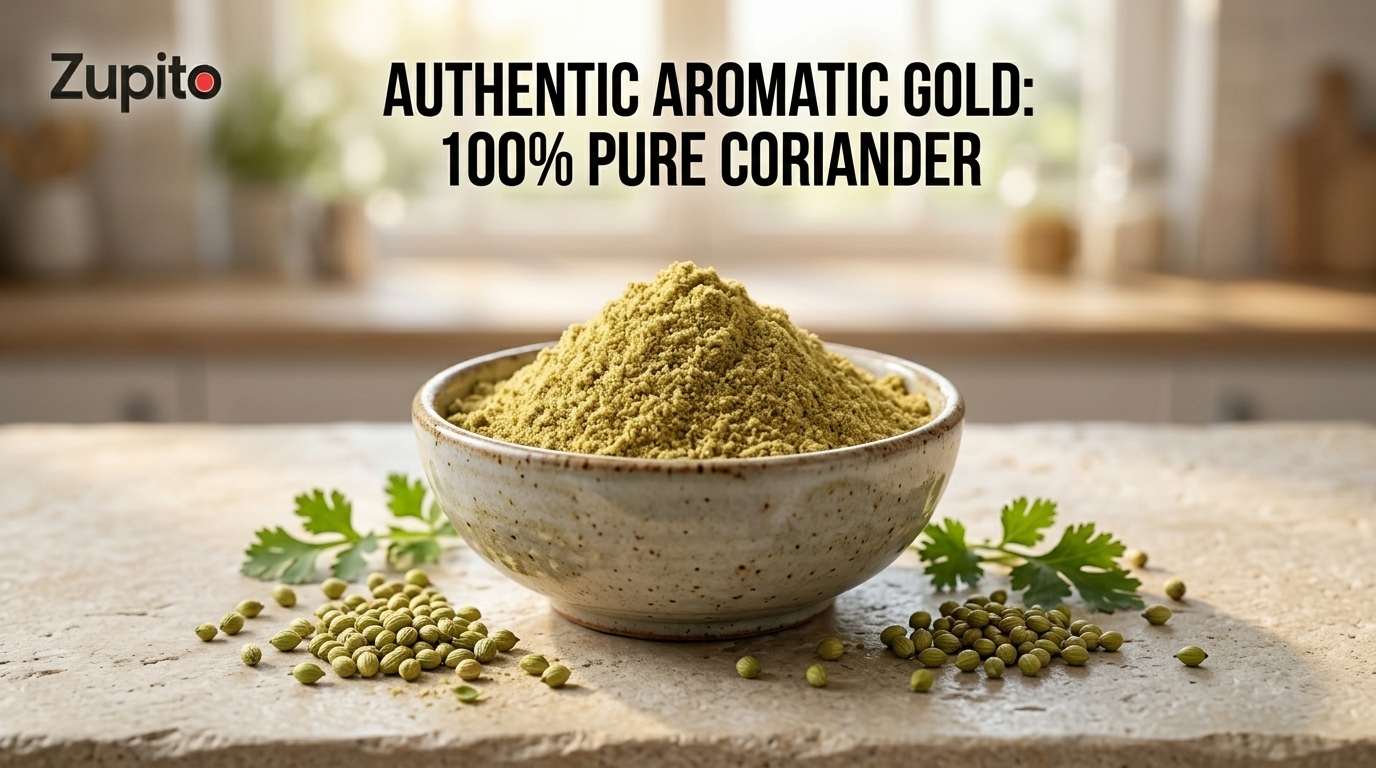
When you prepare a traditional Indian meal, the baseline body, texture, and foundational aroma of your gravy depend entirely on one humble kitchen workhorse: coriander powder. However, when browsing digital grocery apps or scanning supermarket shelves, the most dominant factor that alters your final purchasing behavior is the visible dhaniya powder price. With choices ranging from highly discounted bulk packets to premium, aromatic single-origin alternatives, it is incredibly easy to simply choose the cheapest bag available. After all, if the dust is green-brown and thickens your curry, it must be doing its job, right?
Wrong. A silent, highly sophisticated industrial scam is currently running inside the mass-scale spice processing sectors. The cheap powder packed inside ordinary, low-cost grocery packets isn’t authentic, oil-rich culinary gold—it is frequently a mix of spent seed waste, foreign starch fillers, and highly unhygienic organic matter.
When you evaluate a foundational kitchen ingredient solely based on the retail dhaniya powder price, you are missing the most critical culinary factor: the biological survival of volatile essential aromatic oils. Finding the best coriander powder in india requires looking far past cheap cardboard packaging and understanding how high-speed factories process low-grade crops. Let’s break down the dark operational economics behind the commercial spice trade and see why a suspiciously low upfront dhaniya powder price is actually a direct compromise on your family’s gut health and your kitchen’s culinary integrity.
Table of Contents
1. The Spent Seed Scam: What Cheap Price Tags Hide
To understand why ordinary commercial spice brands can afford to advertise such a low dhaniya powder price, you need to look at what happens behind heavy factory doors long before the grinding stage begins. The true wealth of a pure coriander seed lies in its internal volatile oil matrix, primarily composed of a natural aromatic compound called Linalool. Linalool gives dhaniya its distinct herbal, sweet-citrusy aroma and acts as a natural digestive enzyme stimulant.
However, high-end pharmaceutical, cosmetic, and perfumery corporations buy bulk coriander seeds solely to extract this high-value Linalool oil through steam distillation. Once the oil is completely stripped away, what remains is a mountain of exhausted, physically hollow, and completely scentless agricultural waste known in the industry as “Spent Seeds.”
Mass-market commercial brands buy this worthless spent waste from industrial oil factories at rock-bottom liquidation costs. Because these dead seeds have zero natural flavor, color, or aroma left, factories run them through complex chemical processing lines. They add artificial green-brown colorants, synthetic fragrance enhancers, and bulk starch fillers to mimic the physical profile of true pure coriander powder.
They then launch these compromised batches into the retail market at a deceptively discounted dhaniya powder pricethat clean, traditional spice mills cannot mathematically match without operating at a heavy loss. When you select a product based only on a cheap retail tag, you are essentially paying for spent industrial waste that has been stripped of its organic nutritional identity.
2. 3 Dangerous Fillers Hiding in Cheap Coriander Dust
When a manufacturer forces their production lines to meet an impossibly low retail dhaniya powder price, they cannot afford to mill clean, whole coriander seeds. Instead, they introduce non-food industrial bulking elements into the processing loop to artificially multiply their output volume. If your spice cabinet contains a generic, cheap brand, independent safety reports suggest it could contain one of these three dangerous industrial adulterants:
1. Powdered Horse Dung and Organic Husk Fillers
To match a cheap wholesale dhaniya powder price, corrupt processors historically mix finely sieved horse dung, donkey manure, and wild grass husks into the milling vats. Because dried horse dung matches the naturally fibrous texture, earthy color, and weight of ground coriander perfectly, it blends seamlessly without triggering immediate visual suspicion. According to food safety guidelines enforced by the Food Safety and Standards Authority of India (FSSAI), the integration of animal excreta and non-food organic husks in ground spices constitutes a highly hazardous, punishable food adulteration offense.
2. Wild Starch, Rotten Rice Flour, and Wheat Dust
To dilute high-quality whole crops, manufacturers dump tons of cheap industrial starch, sweepings from flour mills, and damp-ridden, moldy rice flour into the continuous crushing streams. While these carbohydrate fillers effectively lower the bulk production costs—allowing the brand to maintain an attractive dhaniya powder price—they completely alter the behavior of your food. This is why cheap powders instantly absorb immense amounts of water and turn your curries into a thick, sticky, slime-like paste that lacks real depth of flavor.
3. Toxic Chemical Green Dyes and Sulfur Fumigation
When spent seeds or starch fillers turn a dull, dusty gray color, factories use industrial synthetic green-yellow dyes and carry out intense sulfur dioxide fumigation to bleach out insect damage. Regular ingestion of these artificial chemical coatings can trigger chronic respiratory issues, severe digestive disruptions, and cumulative toxic overloads inside your liver’s filtration pathways. A suspiciously low consumer dhaniya powder price is a major warning sign that the product contains these low-cost aesthetic correctors designed to hide dead, decayed fibers.
3. High-Heat Destruction: Where Aromatic Linalool Vaporizes
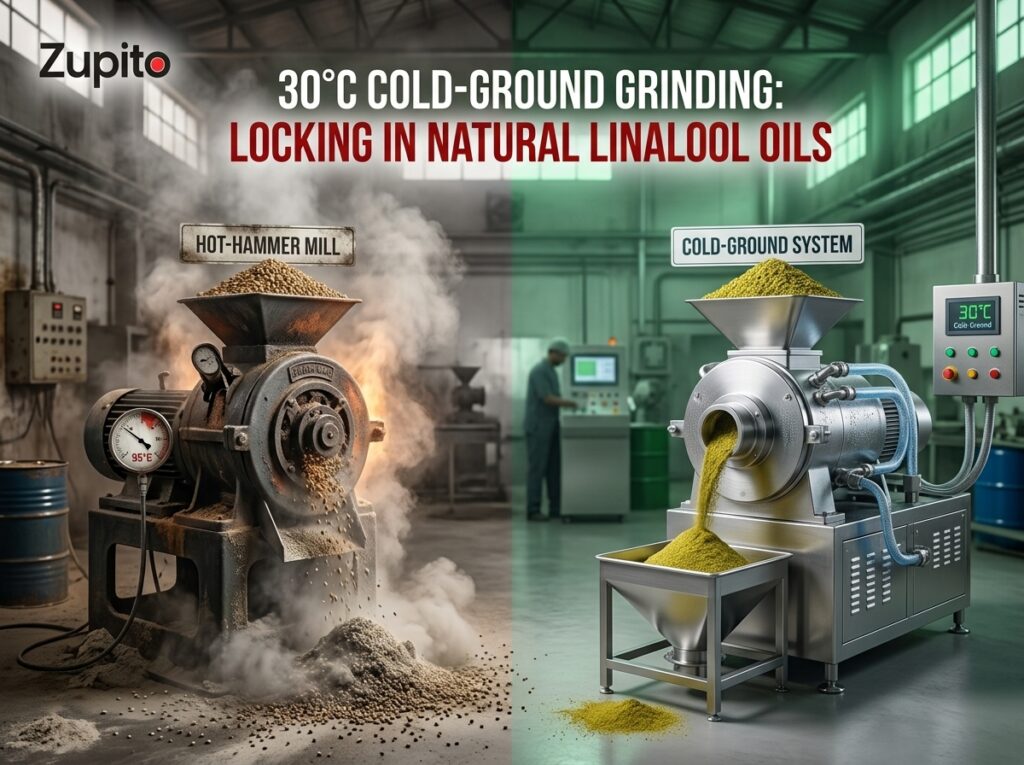
Even if a mass-market brand manages to source reasonable whole seeds, their mechanical production methods completely destroy the spice’s molecular integrity to sustain a cheap retail dhaniya powder price. Mass-production spice factories prioritize massive volume turnarounds over quality preservation. They process whole coriander seeds using high-speed industrial hammer mills that run continuously without structural cooling intervals.
The immense mechanical friction and pressure inside these heavy-metal crushing chambers generate extreme thermal energy, frequently pushing core processing temperatures way past 85°C to 95°C.
Subjecting delicate, oil-heavy biological seeds to this level of dry heat causes immediate, irreversible damage to the underlying structure of the spice:
- Volatile Oil Vaporization: Natural Linalool and Pinene essential oils have extremely low boiling thresholds. Under 90°C factory heat, they evaporate instantly into the extraction vents, leaving the final powder dry and scentless.
- Cellular Matrix Charring: The delicate seed husks get microscopic thermal burns, turning the flavor profile bitter, flat, and ash-like.
Because these essential aromatic and therapeutic components are cooked out during production to save factory time, the low upfront dhaniya powder price reveals its true hidden deficit.
To compensate for the absolute lack of inherent aroma and taste in heat-damaged powders, you are forced to dump multiple large spoonfuls into your daily subzis just to get a basic earthy background notes. When you calculate this high volume consumption rate, the cheap upfront dhaniya powder price quickly turns into a long-term economic drain on your household grocery allowance.
4. The Cold-Ground Advantage: Preserving Natural Volatile Oils
The only definitive mechanism to safeguard the true nutritional power and authentic flavor density of coriander is to completely abandon old-school high-speed hammer mills and switch to advanced low-temperature production lines. To be recognized as the best coriander powder in india, the whole seeds must be processed using specialized, water-cooled cold-grinding chambers that strictly lock processing temperatures below 30°C.
The Spices Board India continuously champions these modern low-temperature setups because they keep the intrinsic quality metrics and volatile oil footprints of Indian spices completely uncompromised. By keeping the milling chambers completely cool, the delicate outer cells of the seed are ground gently without triggering thermal stress. This process seals 100% of the native Linalool essential oils and natural lipids safely inside every single ground grain.
+-------------------------------------------------------------+
|              CORIANDER PROCESSING VALUE MATRIX              |
+-------------------------------------------------------------+
| Metric               | Zupito Cold-Ground | Industrial Dhaniya|
+----------------------+--------------------+-----------------+
| Essential Oil Source | 100% Intact Linalool| Vaporized / None|
| Grinding Temp        | Strictly Below 30°C| 85°C to 95°C    |
| Bulking Fillers      | Absolute Zero      | Dung / Starch   |
| Texture Performance  | Fluffy, Oil-Rich   | Sticky, Mud-Like|
| Flavor Extraction    | One Tiny Pinch     | Multiple Spoons |
+-------------------------------------------------------------+
When you look far past the deceptive baseline dhaniya powder price and buy a verified cold-ground spice, your daily cooking dynamic transforms completely. Because the natural digestive oils are completely intact, the powder releases its deep, refreshing, citrusy-herbal aroma the exact millisecond it interacts with warm cooking fat.
You no longer need to waste massive quantities of spices to build character in your gravies. A single tiny pinch of premium, cold-ground dhaniya powder online delivers immense flavor and body, proving that a realistic, honest dhaniya powder price provides superior financial longevity.
5. Financial Reality Check: The True Cost of Cheap Spices
Let’s run the exact household math calculations behind your monthly kitchen grocery bills and systemic healthcare expenses. Many cost-conscious shoppers look at a premium dhaniya powder price and dismiss it as an unnecessary, high-end lifestyle luxury. However, when you analyze the usage lifecycle and hidden toxicological risks, the numbers reveal a completely different reality.
High-Yield Kitchen Efficiency Calculation
Because mass-market powders are heavily diluted with spent seeds and non-food starches to keep the retail dhaniya powder price artificially low, their coloring and flavoring yield is incredibly weak. A typical family of four burns through a standard 200g commercial pack in less than a month because they have to use huge amounts to get any flavor.
In contrast, a high-yield, premium pure coriander powder retains its full essential oil density. Because a single pinch provides intense aroma and thickens gravies naturally, the exact same bag lasts up to three times longer. Therefore, investing in a realistic dhaniya powder price saves you from constant supermarket replacement cycles.
Eliminating Hidden Healthcare Systems Costs
Consuming chemical colorants, lead-treated starches, and contaminated animal dung residues every day just to save a few rupees on the upfront dhaniya powder price causes silent, compounding damage inside your digestive tract. Over time, these toxic industrial fillers irritate the delicate stomach lining, leading to chronic gut inflammation, acid reflux, painful ulcers, and heavy toxin filtration strain on your liver.
Clinical research updates tracking global food safety by the World Health Organization (WHO) highlight that the ingestion of adulterated spices poses severe, long-term toxicological threats to human health. Investing in clean, certified pure coriander powder completely eliminates these hidden healthcare costs, showing that a rock-bottom dhaniya powder price often carries a massive hidden medical bill.
6. How to Run a Coriander Purity Test in Your Own Kitchen
If you have already purchased an option based on its cheap dhaniya powder price and want to verify its safety, you do not need an advanced laboratory setup. You can catch common starch fillers, spent seeds, and animal dung scams using simple household diagnostics:
The Clear Water Flotation Test
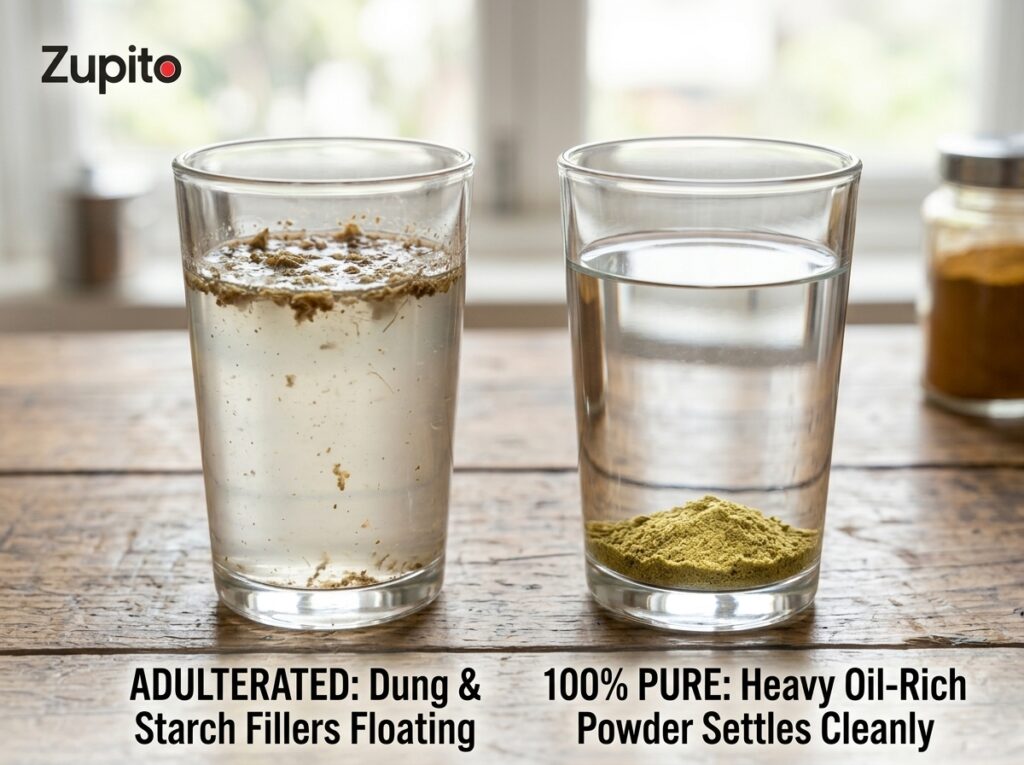
Take a clean glass filled with room-temperature water. Gently sprinkle one teaspoon of your current spice across the surface of the water. Do not stir it. Observe it closely for 10-15 minutes.
Pure, oil-rich pure coriander powder is clean and dense; it will stay on the surface briefly and then slowly sink to the bottom, leaving the water clear. If you see brown fibers or small particles instantly floating on the surface while releasing a foul, musty odor, your low dhaniya powder price was achieved by mixing in highly unhygienic powdered horse dung or dry crop husks.
The Iodine Starch Detection Check
Take a small bowl, mix a teaspoon of the spice with two tablespoons of water, and boil it for two minutes. Let it cool down completely, then add 2-3 drops of regular liquid tincture of iodine.
Authentic, unadulterated coriander powder will retain its natural brownish-earthy color under the iodine reaction. If the mixture instantly turns an intense, deep blue-purple color, it means the manufacturer has heavily loaded the batch with cheap industrial starch, rotten rice flour, and sweepings to lower their wholesale dhaniya powder price.
7. The Zupito Purity Promise: 100% Aromatic & Unadulterated Gold
At Zupito, we do not participate in market polishing tricks, spent seed dilution schemes, or high-heat processing shortcuts just to display a deceptive, ultra-cheap dhaniya powder price. We source our raw whole coriander seeds directly from single-origin farm belts where traditional, clean cultivation methods are protected. Our production lines use dedicated Cold-Ground Technology to ensure that our fine powder never faces thermal destruction or oil vaporization during processing.
When you invest in Zupito, you are paying a fair, transparent, and honest dhaniya powder price for 100% pure, unadulterated therapeutic gold. Our small batches are strictly unpolished, free from synthetic coloring chemicals, and hold premium safety verifications that guarantee active volatile oil retention. It is easily the best coriander powder in indiafor homes that refuse to compromise on authentic clean living, deep culinary yield, and true ancestral healing.
Bring Real Healing to Your Home
- 🌿 Zupito Pure High-Aroma Coriander Powder: Processed with low-temperature water-cooled technology to lock in high active Linalool essential oils and natural lipids. Perfect for building rich, aromatic gravy bases, everyday immune support, and authentic culinary thickness without hidden chemical fillings or spent seeds.
Frequently Asked Questions (FAQs)
Why does the retail dhaniya powder price vary so much between brands?
Cheap options rely on mass-scale industrial hammer mills that overheat and destroy active nutrients, often using low-grade spent seeds mixed with chemical fillers to cut costs. Premium brands use slow, specialized cold-ground processing lines to preserve native volatile oils and aromatic layouts, which requires higher-quality sourcing. Therefore, a premium dhaniya powder price reflects the cost of keeping nutrients intact.
How do I know if I am buying the best coriander powder in india for daily health?
Look closely at the color, aroma, and processing description. The best coriander powder in india will feature a natural, light golden-greenish brown hue and a deep refreshing citrusy aroma rather than a flat, musty smell. It should explicitly state low-temperature or cold-ground manufacturing to guarantee essential oil survival, proving that a realistic dhaniya powder price matches true quality.
What are the side effects of consuming cheap options with a low dhaniya powder price?
Low-grade options often contain toxic polishing agents, industrial starches, or unhygienic animal dung to hide crop damage and offer a cheap dhaniya powder price. Regular consumption of these industrial additives can trigger chronic gut lining inflammation, severe digestive disruption, ulcers, and toxicity loads inside your liver.
Can buying a pure coriander powder reduce long-term grocery expenses?
Yes, significantly. Because unadulterated, cold-ground pure coriander powder retains its natural oil profile, its flavor and aromatic yield is highly concentrated. You only need a fraction of the amount compared to ordinary factory dust, meaning a single premium pack lasts up to three times longer than cheap options with a low dhaniya powder price.
Final Summary for the Smart Family
To maximize your kitchen health ecosystem and choose the right product:
- Reject Dull Musty Smells: Natural, high-quality coriander powder is rich in citrusy Linalool aroma, not a flat, musty scent designed to justify a low dhaniya powder price.
- Check the Temperature Standards: Ensure your manufacturer uses verified cold-milling technology to safeguard delicate plant cell compounds.
- Value Yield Over Cheap Tags: A raw, unadulterated choice lasts longer and keeps toxic additives out of your daily meals, proving that the real dhaniya powder price is measured in longevity.
👉 Explore Zupito Pure Coriander Powder Selection today and add the real aromatic power of unpolished, cold-ground spices to your family’s daily diet.
📖 Explore the Zupito Knowledge Hub
- When to Add Turmeric in Cooking Timing Guide: Master the crucial temperature rules to prevent burning your healthy spices inside the pan.
- How to Check Pure Spices at Home Easily: Read our step-by-step diagnostic guide to catch industrial starch and dye scams in your kitchen.
- Whole Spices vs Ground Spices Deep Analysis: Learn how different processing methods alter the essential oil footprints of your daily food.
Leave a Reply